Owner’s manual
 Error Codes



How to remove bottom grille on GE refrigerator?
On the GE PDS22SISBRSS bottom-mount refrigerator, we remove the bottom (base) grille by grasping it at the bottom edge and pulling it straight out. It’s a snap-in grille that releases from prongs seated in the cabinet holes; no screws are used for normal removal. See the owner's manual for the base grille removal and reinstallation details.
Steps to remove the bottom grille
- Unplug the refrigerator (recommended anytime you’re working near wiring or the condenser fan area).
- Open the fresh-food doors for better access.
- Grab the grille at the bottom edge with both hands.
- Pull straight out toward you to pop the grille prongs free.
- Set the grille aside on a non-scratching surface.
How to reinstall the grille
The grille installs by aligning the prongs on the back of the grille with the holes in the cabinet, then pushing forward until it snaps into place.
| Task | What you do | What you should feel/hear |
|---|---|---|
| Remove grille | Pull straight out from the bottom | Prongs release with a firm pop |
| Reinstall grille | Align prongs, push forward | Grille snaps into place |
Why it matters
The base grille helps direct airflow across the condenser area and also provides access for cleaning and service. Removing it correctly prevents broken grille prongs and helps you avoid bending the lower skirt area.
Last updated: February 2026
What are the disadvantages of a bottom freezer refrigerator?
Bottom-freezer refrigerators like the GE PDS22SISBRSS keep fresh food at eye level, but the tradeoff is that frozen items sit lower in a pull-out drawer. That design can mean more bending, heavier drawer loads, and a few maintenance and organization drawbacks compared with top-freezer styles.
Common disadvantages to expect
- More bending for frozen food: you typically crouch to reach baskets and items at the back of the freezer drawer.
- Heavier, bulkier freezer access: a fully loaded drawer can feel heavy and can be harder for kids or some users to open smoothly.
- Drawer alignment matters: if the refrigerator is not level, the freezer drawer can feel “off,” and doors or drawers may not close as they should.
- Less “shelf-style” freezer organization: drawers can stack food, so smaller items are easier to lose underneath larger packages.
- Potentially higher repair complexity: drawer slides, seals, and airflow components can add complexity versus a simple swing door.
What to check on your GE PDS22SISBRSS if convenience is the issue
Use these quick checks before assuming something is wrong:
- Confirm the refrigerator is level so doors and the freezer drawer track correctly.
- Avoid overloading the freezer drawer; redistribute weight so it glides evenly.
- Keep packages clear of drawer edges so the gasket can seal.
- If food is freezing in the fresh-food section, move items away from rear air vents and adjust temperature settings.
- If you suspect a temperature sensing issue, a failed sensor can cause poor temperature control.
Parts that can matter (when symptoms show up)
If you are troubleshooting temperature or drawer-related complaints, these model-compatible parts are commonly involved:
| Symptom | What it can point to | Example part for this model |
|---|---|---|
| Fresh food too warm or inconsistent temps | Temperature feedback problem | Refrigerator temperature sensor WR55X10025 |
| Frosting, warm temps, or weak airflow | Airflow control issue | Damper asm g WR14X10239 |
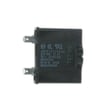
| Warm cabinet, poor cooling, noisy rear area | Condenser airflow problem | Refrigerator condenser fan motor WR84X10055 |
Why it matters
Bottom-freezer designs are built around fresh-food convenience, but they rely on good leveling, smooth drawer operation, and stable airflow. When any of those are off, you feel it immediately as harder drawer use, temperature swings, or food organization frustration.
For model-specific use and care tips (including door and drawer handling), follow the owner's manual.
Last updated: February 2026
What is the most common problem with GE PDS22SISBRSS refrigerators?
The most common issues we see with the GE PDS22SISBRSS bottom-mount refrigerator are cooling complaints (fresh food too warm or freezer not holding temperature) and ice maker or water system problems. These often trace back to airflow restrictions, temperature sensing, or electronic control issues; use the owner's manual to confirm control settings and basic checks.
Most common symptoms (and what they usually point to)
- Fresh food section warm but freezer cold: damper or airflow problem (often the damper asm g WR14X10239)
- Both sections warm or temps swing: temperature sensing or control issue (often the GE profile refrigerator temperature sensor WR55X10025 or a control board)
- Runs a lot or seems to never shut off: door left open, warm room, dirty condenser area, or controls set too cold
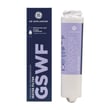
- No ice or slow ice: ice maker issue, water filter restriction, or low water flow (check the GE smartwater refrigerator water filter GSWF)
- Lights out in the compartment: bulb or socket issue (often the refrigerator light bulb 40A15 or refrigerator lamp receptacle WR02X11656)
Quick checks we recommend before replacing parts
- Verify temperature controls are set correctly (the manual notes incorrect settings can cause “not cold enough” complaints).
- Make sure doors fully close and nothing is holding them open.
- Allow time after loading groceries; longer run times are normal after adding warm food.
- Clean the grille and condenser area so the unit can shed heat properly.
- If the unit is completely dead, check the outlet and home breaker or fuse.
Common parts that match these problems
| Symptom | Likely area | Example part for this model |
|---|---|---|
| Warm fresh food, freezer OK | Airflow/damper | Damper Asm G WR14X10239 |
| Temps inaccurate or unstable | Thermistor/sensor | GE Profile Refrigerator Temperature Sensor WR55X10025 |
| No ice or slow ice | Water filtration | GE Smartwater Refrigerator Water Filter GSWF |
| No interior light | Lighting circuit | Refrigerator Light Bulb 40A15 |
Why it matters
Cooling and ice maker problems are usually connected: restricted airflow or incorrect temperature feedback can cause frost, warm spots, long run times, and poor ice production. Catching a dirty condenser, a stuck damper, or a drifting sensor early helps prevent bigger failures like compressor stress.
Last updated: February 2026