 Installation guide
 Owner’s manual





Does a GE dishwasher have a filter that needs to be cleaned?
Yes. Most GE dishwashers, including model GSD2100V35BB, use a filter or screen area in the bottom of the tub that should be checked and cleaned periodically to prevent gritty residue, poor cleaning, and drain problems. Use the steps in the GSD2100V35BB owner's manual for the exact filter access and removal method.
- Turn off power at the breaker (or wall switch, if your dishwasher uses one).
- Remove the lower rack.
- Inspect the bottom of the tub around and under the lower spray arm for debris.
- If your model has a removable filter or screen, unlock and lift it out.
- Rinse the filter under warm water; use a soft brush for stuck-on soil.
- Reinstall the filter fully seated, then reinstall the rack.
What to avoid
- Don’t run the dishwasher with the filter loose or missing.
- Don’t use harsh abrasives that can damage fine mesh.
- Don’t ignore glass shards; remove them carefully to protect the pump.
- Food particles left on dishes
- Cloudy glasses or gritty residue
- Standing water or slow draining
- Unusual grinding or rattling sounds during wash
- Weak spray action (especially on the lower rack)
| Symptom | Often filter-related | Also check |
|---|---|---|
| Dishes not clean | Yes | Water temperature (target 120°F to 150°F), loading, detergent |
| Dishwasher not draining | Sometimes | Drain hose routing, drain solenoid |
| Noisy wash | Sometimes | Pump impeller damage, debris in sump |
If you’re also dealing with a drain issue, the dishwasher drain hose WD24X10014 is a common part to inspect for kinks, clogs, or improper routing.
A clean filter helps the circulation system move water efficiently, which improves wash performance and reduces strain on the pump and motor assembly.
Last updated: February 2026
What is the most common problem with a GE dishwasher?
The most common GE dishwasher problem we see is a “won’t run” or “won’t drain” complaint caused by a power issue (tripped breaker or wall switch), a door switch/latch problem, or a drain restriction. For GE model GSD2100V35BB, start with the quick checks in the GSD2100V35BB owner's manual.
- Dishwasher won’t start or run: tripped breaker, blown fuse, wall switch off, or a failed door switch
- Not draining: drain path restriction, drain solenoid issue, or drain hose problem
- Not cleaning well: spray arm blockage, loading issues, or circulation/pump performance
- Leaking: door seal wear, installation leveling, or oversudsing
- Odd noises: normal drain valve and motor/timer sounds, or debris contacting a spray arm
- Reset power at the breaker for 1 minute, then try a cycle.
- Check for a wall switch that controls dishwasher power (often near the disposer switch).
- Close the door firmly; if the unit acts dead or stops mid-cycle, test the door latch circuit.
- If it won’t drain, inspect the sink/disposer connection and look for kinks in the drain line.
- Confirm detergent and rinse aid use; hard water can cause buildup that leads to poor washing and valve issues.
| Symptom | Likely part area | Example part for this model |
|---|---|---|
| Won’t start / stops when door moves | Door interlock | Dishwasher door switch WD21X10261 |
| Won’t drain | Drain system | GE dishwasher drain solenoid assembly WD21X10268 or dishwasher drain hose WD24X10014 |
| Poor cleaning | Wash action | Dishwasher spray arm, lower WD12X10244 or GE dishwasher pump and motor assembly WD26X10051 |
| Leaks at the door | Door sealing | Dishwasher door seal WD08X10057 |
Start and drain problems can look like major failures, but they are often caused by simple power interruptions, a door interlock that is not closing consistently, or a restricted drain path. Catching the root cause early helps prevent standing water, odors, and repeat cycle failures.
Last updated: February 2026
How to reset dishwasher after error code?
To reset a GE GSD2100V35BB dishwasher after an error code, we recommend canceling the cycle with START/RESET, then restoring power with a short breaker reset if the control error returns. This clears many control-related faults and lets you restart a fresh wash cycle.
- Press START/RESET once to start, or if it is already running, press START/RESET to stop the cycle.
- Wait while the dishwasher drains and resets (this is normal after pressing START/RESET).
- If the unit is beeping and the CLEAN light is flashing, press START/RESET to stop the beeper and allow the dishwasher to attempt a reset.
- If the error comes back, turn OFF power at the circuit breaker for 30 seconds, then turn it back ON.
- Restart a normal cycle and monitor for the same error.
The manual describes a “control error” condition where the dishwasher may beep and the CLEAN light may flash. Use the table below to choose the right reset.
| Symptom on GSD2100V35BB | What to do | What to expect |
|---|---|---|
| START/RESET was pressed | Let it drain and reset | You can start a new cycle after it finishes draining |
| CLEAN light flashing plus beeping | Press START/RESET to stop beeper; unit attempts reset | If it repeats, do a breaker reset |
| Control error repeats after reset | Breaker OFF 30 seconds, then ON | If it returns, service is needed |
An error code is the dishwasher telling you it detected a real problem (for example, a control fault, a drain issue, or a door-related interruption). Resetting is useful, but if the code returns, troubleshooting the cause prevents repeat shutdowns and incomplete cleaning.
- Use the reset and indicator-light guidance in the GSD2100V35BB owner’s manual.
- If your model displays electronic fault codes, match the code to the fix in GE dishwasher error codes.
Last updated: February 2026
What are the commonly replaced parts in a dishwasher?
In the GE GSD2100V35BB dishwasher, the parts we see replaced most often are wash and drain components (pumps, hoses, solenoids), door safety and sealing parts, and wash-coverage parts like spray arms and racks. These typically fail from normal wear, clogs, leaks, or mechanical binding; routine cleaning helps reduce repeat failures.
- Wash performance: spray arms, circulation pump, pump impeller
- Draining: drain hose, drain solenoid
- Starting and safety: door switch
- Loading and rust/wear: upper and lower dishracks
- Leaks: door seal, shaft seal
| Symptom | Common suspect part | What it does |
|---|---|---|
| Not draining or leaves water | Dishwasher drain hose WD24X10014 | Carries wastewater to the sink drain/disposer |
| Won’t drain at end of cycle | GE dishwasher drain solenoid assembly WD21X10268 | Opens the drain path during drain portion |
| Poor cleaning, weak spray | Dishwasher spray arm, lower WD12X10244 | Distributes water across the lower rack |
| Leaks at the door | Dishwasher door seal WD08X10057 | Seals the tub to the door to prevent drips |
| Won’t start when door closes | Dishwasher door switch WD21X10261 | Confirms the door is latched for operation |
- Disconnect power before any inspection or service (turning the dishwasher off is not the same as disconnecting power).
- Clear food debris from the sump area and check spray-arm holes for blockage.
- Confirm the door closes firmly and the latch area is not obstructed.
- Look for kinks in the drain hose and verify the drain setup uses a high loop or air gap when required.
- Make sure the dishwasher is level in the opening; an uneven install can contribute to leaks and door alignment issues.
Replacing the right part the first time prevents repeat leaks, poor cleaning, and drain problems. Installation details also matter; for example, the installation guide notes drain hose length limits and that a high drain loop or air gap may be required, depending on local code and plumbing height.
For wiring, grounding, and safety precautions specific to this model, follow the GSD2100V35BB owner’s manual.
Last updated: February 2026
What is the average life expectancy of a GE dishwasher?
A GE dishwasher typically lasts 10 to 12 years with normal household use. For your GE GSD2100V35BB, consistent cleaning, correct detergent use, and fixing small leaks or drain issues early are the biggest factors that help it reach (or exceed) that average; see the GSD2100V35BB owner's manual for care and cleaning guidance.
Most dishwashers fall into a broad 8 to 15 year range. Where your GSD2100V35BB lands depends mainly on usage and maintenance.
- Loads per week: more cycles equals more wear on the pump, motor, and seals
- Water quality: hard water speeds up mineral buildup and can affect valves and spray performance
- Detergent and rinse aid habits: using dishwasher-specific detergent and rinse aid helps reduce film and spotting
- Drain and leak prevention: keeping the drain path clear helps protect the motor and wiring
- Door sealing: a worn seal can cause chronic leaks and cabinet damage
These habits help extend life and reduce common failures.
- Run hot water at the sink before starting a cycle (helps wash performance)
- Use the right amount of detergent for your water hardness
- Keep the door seal clean and inspect it for tears or flattening
- Check for standing water after cycles and address slow draining early
- Clean spray arm holes if you see poor cleaning or gritty residue
| Symptom | Often related to | What it can lead to |
|---|---|---|
| Water on floor near door | Door sealing | Leaks, swelling cabinets |
| Poor cleaning, food left behind | Spray pattern or circulation | Longer cycles, strain on motor |
| Won’t drain or drains slowly | Drain path components | Odors, pump stress |
| Loud grinding or humming | Pump/motor area | No wash action, no drain |
If you’re troubleshooting electronic indicators on GE units, our GE dishwasher error codes guide can help you narrow down the failure faster.
Knowing the expected lifespan helps you decide whether to repair or replace. If your GSD2100V35BB is near the 10 to 12 year mark, investing in maintenance and addressing leaks or draining problems quickly can prevent a small issue from turning into a major breakdown.
Last updated: February 2026
Can I replace dishwasher parts myself?
Yes, for the GE GSD2100V35BB dishwasher, we recommend DIY replacement for many mechanical parts (racks, spray arms, door seals, hoses) as long as you shut off power and water first and follow the steps in the GSD2100V35BB owner's manual. For wiring, grounding, or complex electrical troubleshooting, use a qualified technician.
Usually DIY-friendly
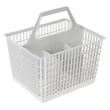
- Replace a rack: dishwasher dishrack, lower WD28X31819 or dishwasher dishrack, upper WD28X31820
- Replace a wash component like the dishwasher spray arm, lower WD12X10244
- Replace a leak item like the dishwasher door seal WD08X10057
- Replace a drain path item like the dishwasher drain hose WD24X10014
- Replace a simple access part behind the toe panel (after power is off)
Better for a technician
- Hard-wiring, grounding, or any electrical supply work
- Diagnosing timer/control issues (intermittent operation, burning smell, repeated tripping)
- Motor or pump electrical diagnosis (even if the assembly is replaceable)
- Turn off the breaker; turning the dishwasher off at the controls does not remove power
- Shut off the water supply valve under the sink
- Protect the floor; keep towels ready for hose or pump work
- If you pull the unit out, keep it level and avoid kinking hoses
- Reinstall the correct screws in the correct locations (access panel and toekick)
| Symptom | Common DIY check | Part that often fixes it (if worn/damaged) |
|---|---|---|
| Leaks at the door | Inspect gasket for tears, flattening, gaps | Dishwasher door seal WD08X10057 |
| Poor cleaning | Check spray arm holes for clogs, cracks | Dishwasher spray arm, lower WD12X10244 |
| Not draining | Check drain hose routing and clogs | Dishwasher drain hose WD24X10014 |
DIY repairs can save time and restore performance, but dishwashers combine water and electricity. Following the manual’s safety guidance and installation requirements (like proper drain setup and clearances) helps prevent leaks, shock risk, and repeat failures.
Last updated: February 2026





