 Owner’s manual
 Error Codes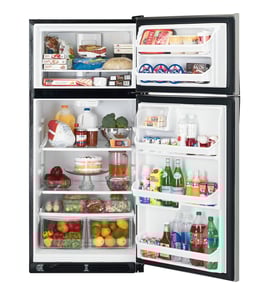



What is the top part of a fridge called?
In a Kenmore 11161215611 top-mount refrigerator, the top section is the freezer compartment (often just called the freezer). It’s the coldest area and is designed to keep foods frozen and support ice-making features when equipped.
Common names you’ll see
- Freezer compartment
- Freezer section
- Top freezer
- Freezer door (the upper door)
- Freezer liner (the interior walls)
What the top freezer does (and what’s inside)
The freezer compartment typically includes several components that work together to maintain freezing temperatures:
- Evaporator coil (creates cold air)
- Evaporator fan (moves cold air through the freezer and into the fresh-food section)
- Defrost heater and thermostat (prevents heavy frost buildup)
- Shelves/bins (storage and airflow spacing)
- Optional ice maker (some versions support an ice maker and water supply)
Quick reference: top freezer vs. refrigerator section
| Section | Typical temperature | Main purpose |
|---|---|---|
| Freezer (top) | 0°F | Long-term frozen storage |
| Refrigerator (bottom) | 37°F | Fresh-food storage |
Why it matters
Knowing the correct name helps when you’re troubleshooting cooling issues (for example, freezer cold but refrigerator warm) and when you’re matching diagrams and instructions in the 11161215611 owner’s manual.
If you’re looking up display codes or beeps related to cooling, we recommend using the model-specific guide: Kenmore 111 model top freezer refrigerator error codes. For parts shopping by model, use the parts list for this model first, or search by model number on Sears PartsDirect.
Last updated: February 2026
How to tell what model Kenmore refrigerator?
Your Kenmore refrigerator’s model number is printed on the appliance ID label, usually inside the fresh food (refrigerator) compartment. Once you find it, match that exact number when looking up parts and specs; for this page, the model is 11161215611.
Where to look for the model and serial label
Check these common spots first (use a flashlight and look along the cabinet walls):
- Inside the refrigerator section on a side wall
- On the ceiling of the fresh food compartment
- Behind or beside a crisper drawer (you may need to slide the drawer out)
- Along the door frame area (near the gasket)
- Behind the lower kick plate or front grille (if your unit has one)
What the model number looks like (and what to write down)
Copy the model number exactly as shown on the label. For Kenmore units, it is typically a long number string.
| What to record | Example for this model page | Why it matters |
|---|---|---|
| Model number | 11161215611 | Ensures the correct parts diagrams and compatible replacement parts |
| Serial number | (varies by unit) | Helps identify production details when comparing parts revisions |
Quick tips to avoid common mix-ups
- Use the full model number, not just the first 3 digits.
- Don’t use numbers from the energy label or a store receipt; use the appliance ID label.
- If the label is worn, take a photo and zoom in; sometimes the ink is faint.
Why it matters
Kenmore refrigerators can look similar across series, but parts like door bins, shelves, thermostats, and ice maker components can differ by model. Using the exact model number prevents ordering the wrong part and helps you confirm key specs in the documentation.
For model-specific details (dimensions, capacity, and safety information), check the 11161215611 owner's manual. For ordering, search by your exact model number on Sears PartsDirect.
Last updated: February 2026
What are the common problems with Kenmore Elite refrigerators?
Common Kenmore Elite refrigerator problems include weak or no cooling, frost buildup in the freezer, unusual fan noises, and water leaks from a restricted defrost drain. For your Kenmore model 11161215611, use the safety and operating guidance in the 11161215611 owner's manual, and use Sears PartsDirect to look up replacement parts by model.
Most common symptoms and what they usually point to
- Not cooling or weak cooling: dirty condenser coils, evaporator fan not running, blocked air vents, or a defrost failure icing over the evaporator
- Frost or ice buildup: door gasket not sealing, frequent door openings, or a defrost system problem
- Loud buzzing, rattling, or grinding: evaporator fan blade hitting ice, condenser fan noise, or the refrigerator not level
- Water under the refrigerator or inside the fresh food section: defrost drain restriction, ice melt overflow, or a door left slightly open
- Ice maker or water issues (if equipped): low inlet water pressure, frozen fill tube, clogged filter, or water inlet valve problems
Quick checks we recommend before replacing parts
- Set temperatures to 37°F (fresh food) and 0°F (freezer), then allow 24 hours to stabilize
- Make sure food packages are not blocking supply or return vents
- Clean condenser coils and confirm the condenser area has good airflow
- Check door alignment and gasket contact all the way around the cabinet
- Look for heavy frost on the freezer back panel (often points to a defrost or airflow issue)
Symptom-to-cause guide
| Symptom | Most likely cause | What to do first |
|---|---|---|
| Fridge warm, freezer OK | airflow restriction, evaporator fan issue | clear vents, listen for fan operation |
| Both sections warm | coils dirty, condenser fan issue, compressor/start device issue | clean coils, verify fans run |
| Frost on freezer back wall | defrost system problem or door leak | inspect gasket, check for blocked vents |
| Water puddles | defrost drain restricted | clear drain path and melt any ice in the trough |
Why it matters
Cooling and defrost problems often cascade: frost blocks airflow, temperatures rise, and fans get louder as they contact ice. Catching coil, airflow, and door-seal issues early helps prevent food spoilage and repeat icing.
Helpful DIY resources
Last updated: February 2026
What is Accela Chill?
Accela Chill is a rapid-cooling feature name used on some Kenmore refrigerators; it increases cold-air circulation for a short time to bring temperatures down faster after you load warm groceries. For Kenmore model 11161215611, use the normal temperature controls described in the 11161215611 owner's manual.
How to handle “fast cool” needs on model 11161215611
This top-mount refrigerator is designed to recover temperature using its standard cooling system and temperature settings.
- Set the refrigerator control slightly colder for a few hours after a large grocery load
- Keep the freezer set to the recommended range; the freezer setting affects fresh-food cooling on many top-mount designs
- Avoid overpacking; leave space in front of air vents for airflow
- Let hot foods cool to room temperature before placing them inside
- Minimize door openings until temperatures stabilize
What to expect after loading groceries
| Situation | Normal behavior | Typical recovery time |
|---|---|---|
| Large load of room-temp food | Longer compressor run time | 4 to 24 hours |
| Door held open for several minutes | Temps rise, then gradually recover | 1 to 6 hours |
| Unit already cold and lightly loaded | Little change | Under 1 hour |
Quick checks if cooling seems slow
- Confirm doors close fully and the gasket seals all the way around
- Make sure vents inside the refrigerator and freezer are not blocked
- Verify the unit has clearance for ventilation around the cabinet
- Check that the condenser area is clean enough for good heat release
Why it matters
Rapid temperature recovery helps keep food fresher and reduces the time items spend in warmer-than-normal conditions. Using the correct control settings and maintaining airflow gives you the same practical benefit on model 11161215611.
If you need replacement parts for Kenmore 11161215611, start with the parts list for this model; you can also search by model number on Sears PartsDirect.
Last updated: February 2026
How to tell if a Kenmore refrigerator compressor is bad?
A bad compressor on your Kenmore 11161215611 usually shows up as poor cooling while the unit tries to run (humming, clicking, or running nonstop) but temperatures never recover. We confirm airflow, condenser cleanliness, and start components first because those failures can look identical.
Safety first
Compressor and refrigerant-line work is sealed-system service; we recommend using a trained technician for diagnosis and repair. Follow the safety and service guidance in the 11161215611 owner's manual.
Signs that point to a compressor problem
- Refrigerator and freezer stay warm even though the compressor is attempting to run
- Repeated clicking every few minutes (overload protector cycling)
- Compressor is very hot after repeated start attempts
- Compressor runs continuously but cooling stays weak after 12 to 24 hours
- Fans run, but there is little or no cold air coming from the vents
Checks we do before blaming the compressor
1) Confirm basics
- Verify the outlet has power
- Clean condenser coils and confirm the condenser fan (if equipped) runs
- Make sure doors seal and close fully
- Set controls to a normal mid-range setting and allow time to stabilize
2) Verify airflow at the evaporator
If the evaporator fan is noisy, stalled, or not moving air, cooling can fail even with a good compressor. Use how to fix your evaporator cooling fan to diagnose fan symptoms.
3) Rule out start device or control issues
A failed start relay/overload (or inverter on some designs) can cause clicking and no-start symptoms that mimic a locked compressor.
What the results usually mean
| What you observe | Most likely cause | What to do next |
|---|---|---|
| Clicks, tries to start, then stops | Start device/overload or compressor locked | Technician tests start components and compressor amperage draw |
| Runs constantly, still warm | Sealed-system issue (inefficient compressor, restriction, or leak) | Sealed-system diagnosis and repair |
| Fans run, no cooling, no compressor sound | Control or start circuit issue | Electrical diagnosis of compressor circuit |
Why it matters
Compressor replacement is one of the highest-skill, highest-cost refrigerator repairs. Confirming airflow and start components first prevents unnecessary sealed-system work.
For diagrams and replacement parts for Kenmore 11161215611, use the model parts list, or search by model on Sears PartsDirect.
Last updated: February 2026





