


How much does an AC unit cost for a 1200 sq ft home?
For a 1,200 sq ft home, we typically see a 2-ton central air conditioner as the right size in many climates; installed replacement cost commonly lands around $5,500 to $14,500, with many homeowners ending up near the middle of that range depending on efficiency (SEER2), ductwork condition, and electrical upgrades.
Typical cost ranges (what you are paying for)
- Equipment (outdoor condenser + indoor coil): often the biggest portion of the price
- Labor and commissioning: refrigerant handling, evacuation, charge verification
- Ductwork fixes (if needed): sealing, resizing, replacing damaged runs
- Electrical work: disconnect, whip, breaker, or service upgrades
- Permits and disposal: varies by location
| Scenario | What is included | Typical installed cost |
|---|---|---|
| Basic replacement | Similar size, existing ducts and electrical OK | $5,500 to $8,500 |
| Mid-range upgrade | Higher efficiency, minor duct or electrical work | $8,500 to $11,500 |
| Complex install | Significant duct repairs, electrical upgrades, difficult access | $11,500 to $14,500+ |
Sizing guidance for 1,200 sq ft
A 2-ton system is common, but correct sizing depends on heat gain and airflow. We recommend confirming:
- Climate zone and sun exposure (shade vs. full sun)
- Insulation and window quality (older single-pane raises load)
- Ceiling height (taller ceilings increase volume)
- Duct sizing and leakage (undersized or leaky ducts reduce capacity)
- Existing system tonnage and performance history (short cycling vs. long run times)
Why it matters
An oversized unit can short-cycle and leave humidity high; an undersized unit can run constantly and still miss the set temperature. Proper sizing protects comfort, energy use, and compressor life.
Parts and model matching
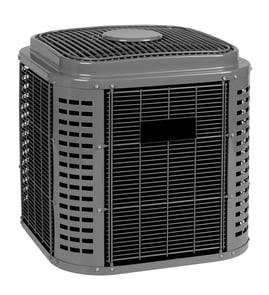
If you are repairing a York central air conditioner instead of replacing it, match parts by the exact model number H2RA036S06. We list model-correct parts and diagrams on the model page, and you can also search by model on Sears PartsDirect. For electrical troubleshooting basics, use how to use a multimeter to test electrical parts video.
Last updated: February 2026
What is error code 6 on air conditioner?
On a York central air conditioner like model H2RA036S06, “error code 6” is not a standard, universal HVAC fault code; the meaning depends on the specific thermostat, control board, or add-on monitor that is generating the code. In most systems, code 6 points to an electrical or control-circuit problem that needs basic power and wiring checks.
What “code 6” usually points to
Because different controls use different code sets, we treat code 6 as a direction for troubleshooting, not a single guaranteed failure.
Common categories include:
- Low-voltage control issue (24 VAC circuit problem)
- Thermostat or control board input problem
- Open safety switch condition (if your system has safeties wired into the control circuit)
- Power interruption to indoor or outdoor equipment
- Wiring fault (loose connection, rubbed wire, short to ground)
Checks we recommend first (safe, high-value)
Shut off power at the breakers before removing any access panels.
- Confirm both breakers are on (indoor air handler/furnace and outdoor condenser)
- Verify the thermostat is set to Cool and calling for cooling
- Inspect the outdoor disconnect (if present) for a blown pullout or signs of overheating
- Look for obvious wire damage at the condenser and where the thermostat cable enters the cabinet
- If your indoor unit has a control board with a small fuse, replace only with the same amp rating
Quick guide: symptom to next step
| What you see | Likely area | Next step |
|---|---|---|
| Thermostat display shows code 6 | Thermostat or low-voltage circuit | Check R and C power, inspect thermostat wiring |
| Outdoor unit does nothing | Line power or 24V call not reaching contactor | Check breakers, disconnect, then control wiring |
| Runs briefly then stops | Electrical drop, loose connection, safety opening | Inspect connections; test voltage if qualified |
Why it matters
A control-circuit fault can prevent the contactor from pulling in or can cause short cycling. Fixing the underlying power or wiring issue protects the compressor, capacitor, and contactor from repeated stress.
Getting the right help and parts
If you need replacement parts for your York H2RA036S06, start with the model-based parts lookup; you can also search by model number on Sears PartsDirect. For identifying the correct model tag information, use how to find your appliance model number (and what it means for parts).
Last updated: February 2026
What is the most common part to fail on an AC unit?
The most common part to fail on a central AC unit like the York H2RA036S06 is the run capacitor (or dual run capacitor). It helps start and keep the compressor and condenser fan motor running; when it weakens, the outdoor unit may hum, struggle to start, or stop cooling.
Most common failures we see (and what they look like)
- Run capacitor: humming, hard starts, fan not spinning, intermittent cooling
- Contactor/relay: outdoor unit will not turn on, chattering, burned contacts
- Condenser fan motor: fan not running, overheating shutdowns, warm air indoors
- Clogged indoor air filter or dirty coil: weak airflow, icing, poor cooling, high energy use
- Low-voltage control issues (thermostat wiring, safety switches): random cycling, no call for cooling
Quick checks you can do safely
Turn off power at the disconnect and breaker before inspecting anything.
- Confirm the thermostat is set to Cool and the temperature is set lower than room temp
- Replace the air filter and make sure supply and return vents are open
- Look for ice on the indoor coil or refrigerant lines (shut it off and let it thaw)
- Check the outdoor unit for blocked airflow (leaves, grass clippings, lint)
- If the outdoor unit hums but will not start, a capacitor is a top suspect
Common “symptom to likely part” guide
| Symptom | Most likely culprit | Why it matters |
|---|---|---|
| Outdoor unit hums, fan will not spin | Run capacitor | Prevents motor from starting and can lead to overheating |
| Outdoor unit will not run at all | Contactor or control power issue | Stops cooling completely |
| Fan runs, but cooling is weak | Dirty coil, airflow restriction, or refrigerant problem | Reduces capacity and efficiency |
| Breaker trips | Shorted capacitor, motor, or wiring | Electrical damage risk and repeated shutdowns |
Why it matters
A weak capacitor or failing contactor can cause repeated hard starts that stress the compressor. Catching these early helps protect the most expensive components and keeps your York H2RA036S06 cooling efficiently.
Getting the right replacement part
We recommend matching parts by model number H2RA036S06 and the exact specs printed on the old part (especially capacitor microfarads and voltage). You can search by model to find compatible parts on Sears PartsDirect.
Last updated: February 2026
What size AC is needed for a 1200 sq ft house?
For a 1,200 sq ft home, central AC is typically sized around 2.0 to 2.5 tons (about 24,000 to 30,000 BTU/hr) as a starting point, then confirmed with a load calculation. York model H2RA036S06 is a 3.0-ton (36,000 BTU/hr) unit, which is larger than many 1,200 sq ft homes need.
Quick sizing guide (rule of thumb)
Use these planning ranges; climate, insulation, windows, and ductwork change the final number.
- Mild climate, good insulation: ~18 to 20 BTU per sq ft
- Average insulation, mixed climate: ~20 to 25 BTU per sq ft
- Hot climate, high sun exposure: ~25 to 30 BTU per sq ft
- High ceilings or lots of west-facing glass: size toward the higher end
- Duct leaks or low airflow: correct airflow issues before increasing tonnage
What that means for 1,200 sq ft
| Rule of thumb | BTU estimate | Approx. tons |
|---|---|---|
| 20 BTU/sq ft | 24,000 BTU/hr | 2.0 tons |
| 25 BTU/sq ft | 30,000 BTU/hr | 2.5 tons |
| 30 BTU/sq ft | 36,000 BTU/hr | 3.0 tons |
Why it matters (bigger is not better)
Oversizing a central air conditioner often causes comfort and efficiency problems.
- Short cycling (frequent on/off)
- Weaker humidity removal (cool but clammy)
- Hot and cold spots from uneven run times
- More wear on the compressor and contactor
- Higher energy use than a correctly sized system
How we recommend confirming the right size
A Manual J style load calculation is the correct way to size equipment. Gather:
- Local design temperatures (your area’s typical summer highs)
- Insulation and air sealing levels
- Window area, type, and sun exposure
- Ceiling height and layout
- Duct sizing and return-air capacity
Parts and model lookup
When you are matching service parts (capacitor, contactor, condenser fan motor, or electrical components) to York H2RA036S06, use the model-based parts list first; for broader model searches and ordering, use Sears PartsDirect.
Last updated: February 2026