Owner’s manual
 Error Codes



What is the most common problem with a GE refrigerator?
The most common issue we see with GE refrigerators like model PSS26MSTASS is poor cooling (fresh food too warm, freezer not holding temperature). In many cases, the root cause is restricted airflow or heat not being removed well, such as dirty condenser coils, a failing fan motor, or a defrost problem.
Quick checks that fix many “not cooling” complaints
- Make sure air vents inside the refrigerator and freezer are not blocked by food packages.
- Confirm the doors close and seal fully; avoid overfilling shelves and bins.
- Clean dust and pet hair from the condenser area (unplug the refrigerator first).
- Listen for fan operation: you should typically hear a fan running when the unit is cooling.
- If the unit is running constantly but temperatures stay high, suspect airflow, defrost, or a sensor issue.
Parts that commonly relate to cooling problems on PSS26MSTASS
If basic airflow and cleaning do not restore normal temperatures, these model-matched parts are often involved:
| Symptom | Common system | Example model-matched part |
|---|---|---|
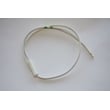
| Warm refrigerator section | Temperature sensing | Refrigerator temperature sensor WR55X10025 |
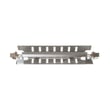
| Frost buildup, warm temps | Defrost system | Refrigerator defrost heater WR51X10055 |
| Warm temps, weak airflow | Evaporator airflow | Refrigerator evaporator motor WR60X10307 |
| Poor cooling, hot cabinet sides | Condenser airflow | Refrigerator condenser fan WR60X10220 |
Why it matters
When cooling is weak, the compressor can run longer than normal, food can spoil faster, and ice production can slow down. Addressing airflow, coil cleanliness, and defrost performance early helps the refrigerator maintain stable temperatures and reduces strain on major components.
Safety note before troubleshooting
Unplug the refrigerator before cleaning or making repairs, and use the handling and cleaning guidance in the owner's manual (for example, avoid harsh cleaners that can damage interior surfaces).
Last updated: February 2026
What is the average lifespan of a GE refrigerator?
Most GE refrigerators, including the GE PSS26MSTASS side-by-side, typically last 12 to 16 years, with 10 to 20 years being a common real-world range when the condenser area is kept clean and the cooling system is not overworked. Use the PSS26MSTASS owner's manual for model-specific care and operating guidance.
Typical lifespan range (what to expect)
Refrigerator life varies most with heat load, airflow, and how hard the sealed system has to run.
- Average: 12 to 16 years
- Common range: 10 to 20 years
- Shorter life is more likely when: condenser airflow is restricted, doors do not seal well, or the unit runs in a hot/dirty location
Lifespan quick view
| Scenario | What you usually see | What helps most |
|---|---|---|
| Normal household use | 12 to 16 years | Clean airflow paths, stable temps |
| Heavy use (frequent door opening, warm garage) | 10 to 14 years | Better ventilation, correct settings |
| Well-maintained, moderate use | 15 to 20 years | Coil cleaning, prompt repairs |
Maintenance that extends life on a side-by-side
These steps reduce compressor run time and prevent icing and airflow problems.
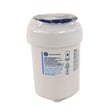
- Replace the water filter on schedule; a restricted filter can reduce water flow and strain dispenser components (see refrigerator water filter MWFP).
- Keep temperatures steady; avoid frequent setting changes.
- Do not block interior vents; good airflow prevents warm spots and frost buildup.
- Keep door gaskets clean so the compressor does not run excessively.
- If you notice temperature swings, check common control inputs like the refrigerator temperature sensor WR55X10025.
Why it matters
A refrigerator usually fails early because it runs hot or runs constantly. Basic upkeep (airflow, seals, and timely replacement of wear parts like filters and sensors) reduces stress on the sealed system and helps your GE PSS26MSTASS reach the upper end of the typical lifespan range.
Last updated: February 2026
How to order GE appliance parts?
You can order replacement parts for your GE PSS26MSTASS side-by-side refrigerator by matching your model number to the parts list for this model, then selecting the exact part ID you need (for example, a water filter or temperature sensor). Use the owner's manual to confirm part locations and access steps.
What we recommend before you order
- Confirm the full model number is PSS26MSTASS (from the rating label inside the refrigerator).
- Identify the symptom and the system involved (cooling, ice maker, water dispenser, lighting).
- Use the manual to locate the part and understand safe access steps (unplugging, removing shelves, etc.).
- Match by part ID (not just a description) to avoid look-alike parts.
- If you are replacing a water filter, plan to flush water after installation.
Common parts customers order for PSS26MSTASS
These are frequently replaced items that match this model’s parts list:
| What you need | What it affects | Example part on this model |
|---|---|---|
| Water filter | Water taste, flow, dispenser performance | GE refrigerator water filter MWFP |
| Temperature sensor | Temperature accuracy, cycling | GE profile refrigerator temperature sensor WR55X10025 |
| Light bulb | Dispenser or interior lighting | GE appliance light bulb, 40-watt 40A15 |
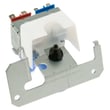
| Water valve | No water to dispenser or ice maker | Refrigerator water valve WR57X33326 |
Quick ordering checklist (to prevent returns)
- Compare the old part’s label to the new part’s part ID.
- Check connector style and mounting points (especially for sensors, valves, and fan motors).
- For water parts, inspect tubing ends for cracks and replace damaged tubing before reconnecting.
- If you are unsure between similar assemblies, use the exploded-view diagrams for this model to confirm the exact match.
Why it matters
Ordering by the exact PSS26MSTASS model and correct part ID helps ensure proper fit, correct electrical connectors, and correct water-line connections. That saves time and prevents repeat issues like warm temperatures, weak dispenser flow, or ice maker problems.
Last updated: February 2026
Is GE PSS26MSTASS considered high end?
Yes. The GE PSS26MSTASS is a GE Profile side-by-side refrigerator, which is generally positioned as a premium step up from standard GE models, with upgraded features, styling, and components compared to entry-level lines. For exact feature sets and options for this model, use the owner's manual.
What “high end” typically means for this model
GE Profile models like the PSS26MSTASS are commonly considered “upper mid-range” or “premium mainstream” rather than true luxury. In practical terms, that usually means:
- More feature-rich controls and convenience features than basic models
- Higher typical replacement-part costs (for example, electronic controls, valves, sensors)
- More emphasis on fit, finish, and user experience
- Better overall performance consistency when properly maintained
Quick comparison: where GE Profile usually fits
| Line (typical positioning) | What to expect | Who it fits |
|---|---|---|
| Standard GE | Core cooling and basic features | Value-focused households |
| GE Profile (PSS26MSTASS) | Premium features and design upgrades | Shoppers wanting “nice without luxury pricing” |
| Luxury lines | Pro-style design, top-tier materials, specialty features | High-budget kitchen builds |
Parts and maintenance that support “premium” performance
Keeping a Profile refrigerator running like it should often comes down to a few key systems:
- Water filtration and flow (filter, filter head, water valve)
- Defrost system (defrost heater, defrost thermostat)
- Air movement (evaporator fan motor, condenser fan)
- Temperature sensing and control
If you are troubleshooting temperature swings or inconsistent cooling, a common diagnostic starting point is the refrigerator temperature sensor WR55X10025.
Why it matters
“High end” is less about a label and more about expectations: premium models tend to deliver better convenience and performance, but they also reward correct setup (control settings) and routine maintenance (especially water and airflow related items).
Last updated: February 2026
Is there a reset button on a GE refrigerator?
GE refrigerators like model PSS26MSTASS typically do not have a single dedicated “reset button.” For most control glitches, we reset the refrigerator by power cycling it (unplugging briefly, then restoring power); the PSS26MSTASS owner's manual also notes that unplugging and plugging back in can exit showroom mode.
Quick reset options that work most often
- Power cycle reset: Unplug the refrigerator for 5 to 10 minutes, then plug it back in.
- Breaker reset: If it is hardwired or the plug is inaccessible, turn the circuit breaker off, wait 5 minutes, then turn it on.
- Showroom (demo) mode reset: If the unit is in showroom mode, unplugging and plugging it back in is a common way to return to normal cooling.
- Temperature control check: Make sure the refrigerator and freezer controls are not set to 0, because 0 stops cooling (it does not shut off electrical power).
What to expect after a reset
After restoring power, normal operation can take time.
| Situation | What’s normal | What we do next |
|---|---|---|
| Just plugged back in | Compressor and fans may cycle | Allow time for operation to stabilize |
| Temperature was changed | Temps do not change immediately | Wait 24 hours between adjustments |
| Cooling seems off right after reset | Temps may be uneven at first | Keep doors closed as much as possible |
Why it matters
A reset clears minor electronic hiccups, but it will not fix a failed part. If the refrigerator still will not cool after a proper reset and correct control settings, common causes include airflow problems, defrost system issues, or a sensor problem such as a failed refrigerator temperature sensor WR55X10025.
If you are troubleshooting “not cooling” after resetting
- Confirm both temperature controls are set above 0.
- Wait about 30 minutes if the refrigerator is in a defrost cycle.
- Verify the plug is fully seated and the breaker is not tripped.
- Allow 24 hours for temperatures to stabilize after changes.
- If you suspect a sensor issue, test and replace the sensor if needed.
Last updated: February 2026