 Installation guide
 Owner’s manual




What is the average lifespan of a GE dishwasher?
A GE dishwasher typically lasts 12 years. For your GE PDT715SMN3ES, regular care (cleaning filters and spray arms, using proper detergent, and fixing small leaks early) is what most often determines whether you land closer to 10 years or closer to 15.
Typical lifespan range (what to expect)
Most modern residential dishwashers fall into a predictable window based on use and maintenance:
- Typical range: 10 to 15 years
- Average: about 12 years
- Heavy daily use: tends to shorten lifespan
- Light use + good maintenance: tends to extend lifespan
| Usage pattern | What we typically see | What helps most |
|---|---|---|
| 1 to 2 loads per day | Shorter end of the range | Keep wash system clean, address draining issues fast |
| 4 to 6 loads per week | Around the average | Monthly cleaning, correct loading, rinse aid |
| Occasional use | Longer end of the range | Run it regularly enough to keep seals from drying out |
What shortens a dishwasher’s life fastest
These are the most common “wear accelerators” we see on GE dishwashers like the PDT715 series:
- Running with a clogged or damaged spray arm (poor circulation strains the wash system)
- Ignoring slow drains or standing water (can overwork the drain system)
- Hard water buildup and detergent residue (reduces cleaning and stresses components)
- Door not latching consistently (cycle interruptions and control issues)
- Small leaks that go uncorrected (can damage wiring and controls)
Maintenance that adds years (simple, high impact)
We recommend building these into your routine:
- Clean and inspect the interior and wash system regularly (see the PDT715SMN3ES owner’s manual)
- Check spray arms for clogged jets and free rotation
- Use dishwasher detergent and rinse aid intended for automatic dishwashers
- Keep the door seal area clean and wipe the tub lip
- If you notice poor cleaning, address it early (before it strains the pump)
When a repair is worth it vs. replacement
A practical rule based on age and symptoms:
- Under ~7 years: repairs are often worthwhile
- 8 to 12 years: depends on the part and overall condition
- Over 12 years: prioritize only essential repairs unless the unit is in excellent shape
If you’re troubleshooting performance problems, our GE dishwasher error codes guide can help you narrow down what the dishwasher is reporting.
Why it matters
Knowing the typical lifespan helps you decide whether to invest in parts like a pump, heater, or control, or focus on maintenance to prevent the most common failures.
Last updated: February 2026
What is the most common problem with a GE dishwasher?
The most common GE dishwasher problems are not draining and not starting. On the GE PDT715SMN3ES, we see these most often tied to a clogged drain path (filter, hose, disposer connection), a door that is not fully latched, or a control-related fault that stops the cycle early. See the PDT715SMN3ES owner's manual for model-specific checks and reset steps.
Quick checks we recommend first
- Confirm the door closes firmly and the latch engages (a mis-latch can prevent the cycle from running).
- Cancel and drain the cycle, then restart (many GE models use a press-and-hold Start action to cancel).
- Check for standing water in the tub; remove debris around the sump area.
- Inspect the drain hose routing for kinks or a blocked high loop.
- Make sure tall items are not blocking the detergent dispenser door (this can cause poor cleaning and leftover detergent).
- Use only automatic dishwasher detergent; hand soap causes heavy suds and can interrupt washing.
Most common symptoms and the parts that usually fix them
| Symptom | Most likely area | Common fix | Related part for PDT715SMN3ES |
|---|---|---|---|
| Water left in bottom | Drain path or pump | Clear blockage; verify hose routing; replace pump if weak/noisy | Dishwasher drain pump WD19X25461 |
| Won’t start or stops quickly | Door latch or controls | Verify latch alignment; check for error codes | GE dishwasher door latch lock WD21X10490 |
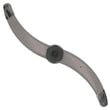
| Poor cleaning | Spray system or wash pump | Clean spray arm holes; confirm arms spin freely | Dishwasher spray arm, lower WD22X33499 |
| Overfilling or fill errors | Water level sensing | Check for error codes; replace sensor if indicated | GE dishwasher pressure sensor WD21X25468 |
Error codes help pinpoint the “most common” failure faster
If your PDT715SMN3ES is beeping, flashing, or showing a code, match it to the troubleshooting steps in our GE electronic dishwasher error codes guide. Error codes often narrow the issue to drainage, water fill, heating, or a sensor.
Why it matters
Drain and start problems are common because they are usually caused by everyday conditions: food debris, a kinked drain hose, a door that is not fully latched, or detergent and suds issues. Catching these early prevents repeat cycle failures and helps protect the wash pump, drain pump, and control system.
For replacement parts for your PDT715SMN3ES, order from the parts list for this model or search by model number on Sears PartsDirect.
Last updated: February 2026
Does a GE dishwasher have a filter that needs to be cleaned?
Yes. Your GE PDT715SMN3ES dishwasher uses a filter system that should be inspected and cleaned periodically to prevent gritty residue on dishes, poor wash performance, and drain issues. GE recommends cleaning the filters about every other month, or sooner with heavy use.
Where the filter is and how to clean it
On this GE design, the filter assembly sits in the bottom of the tub under the lower rack.
- Pull out the bottom rack.
- Twist the ultra-fine filter assembly counterclockwise.
- Lift the filter assembly out.
- Rinse with warm, soapy water.
- Use a sponge to remove stuck-on particles (avoid harsh abrasives).
- Reinstall by seating it fully and twisting clockwise to lock.
For versions with a 2-piece assembly, there may also be a filter basket that unlocks separately; follow the steps shown in the PDT715SMN3ES owner's manual.
How often to clean the filter
Filter cleaning frequency depends on how you use the dishwasher.
| Usage pattern | Recommended filter check/cleaning |
|---|---|
| Normal household use | Every other month |
| Heavy soil loads, lots of starches (rice, pasta) | Monthly |
| You notice gritty dishes or reduced cleaning | Clean now, then recheck in 2 to 4 weeks |
Signs the filter needs attention
- Dishes feel gritty after the cycle
- Food debris collecting in the bottom of the tub
- Cloudy glasses or poor spray coverage
- Drain performance seems weaker than normal
Why it matters
A clean filter helps the wash pump and spray arms maintain strong water flow, which improves cleaning and helps prevent debris from recirculating onto dishes. It can also reduce odors and support better overall cycle performance.
Related maintenance tip: check the air gap (if you have one)
Some installations include an air gap at the sink; if your dishwasher is not draining well, cleaning the air gap can help. The steps are covered in the PDT715SMN3ES owner's manual.
Last updated: February 2026





