Owner’s manual
 Error Codes



Are Kenmore dryers made by Whirlpool?
Yes, many Kenmore dryers are manufactured by Whirlpool, but Kenmore is a brand name and the actual manufacturer varies by model and production run. For Kenmore model 11089722990, the 110 model prefix is commonly associated with Whirlpool-built Kenmore laundry products; confirm details using the 11089722990 owner's manual.
We recommend using a few quick identifiers on the appliance itself (not just the Kenmore badge):
- Check the model number prefix (for example, 110, 417, 796) on the model and serial tag
- Match the model number to the documentation in the 11089722990 owner's manual
- Compare the dryer’s internal layout to common Whirlpool-style designs (belt routing, idler location, heater housing)
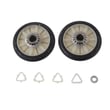
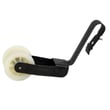
- Use the parts list for your model to confirm compatible components (for example, a Whirlpool-style dryer idler pulley WP691366)
These prefixes are a practical shortcut customers use when identifying the OEM behind a Kenmore dryer.
| Kenmore model prefix | Common OEM association | What you’ll typically see |
|---|---|---|
| 110 | Whirlpool | Whirlpool-style drum support, idler pulley and belt system |
| 417 | Frigidaire/Electrolux family | Different control layouts and internal component styling |
| 796 | LG | LG-style electronics and component families |
The manufacturer behind the Kenmore badge affects part fit, wiring connectors, and mounting points. Ordering by the full model number (11089722990) helps ensure you get the correct dryer belt, door switch, heating element, timer, and other replacement parts.
Last updated: February 2026
How do I find the cubic feet of my dryer?
For your Kenmore 11089722990 electric dryer, we find cubic feet (capacity) by calculating the drum’s interior volume: measure the drum diameter and depth (in inches), then use a cylinder-volume formula and convert to cubic feet. Use the 11089722990 owner's manual to confirm how to access the drum safely.
- Unplug the dryer (electric shock prevention).
- Open the door and measure the drum diameter (inside wall to inside wall through the center).
- Measure the drum depth (front inside lip to the back inside wall).
- Calculate volume in cubic inches:
- Volume = π × (diameter ÷ 2)² × depth
- Convert to cubic feet:
- Cubic feet = cubic inches ÷ 1,728
- Measure in inches, to the nearest 1/4 inch.
- Measure straight across the center for diameter.
- Take each measurement twice and average them.
- Do not include the door opening or any front gasket area; measure the drum interior only.
- If you need to remove panels for access, follow the safety and disassembly guidance in the 11089722990 owner's manual.
| Measurement | Example value | What it means |
|---|---|---|
| Drum diameter | 24 in | Inside width across the drum |
| Drum depth | 20 in | Inside front-to-back |
| Calculated capacity | ~5.2 cu ft | Typical result for this example |
Knowing cubic feet helps us match your dryer to the right load size, compare Kenmore dryer capacities, and choose cycles that dry evenly without overdrying. Overloading reduces airflow and can increase dry time.
- Clean the lint screen before every load.
- Keep the vent run as straight as possible; avoid tight bends.
- Use a 4-inch heavy metal vent (not plastic or foil).
- Avoid crushing the vent by pushing the dryer too close to the wall.
Last updated: February 2026
How do I tell what model my Kenmore dryer is?
Your Kenmore dryer’s model number is printed on the model and serial number plate; for Kenmore model 11089722990, you’ll use that full model number to match the correct parts, wiring, and specifications. The plate is typically found around the door opening or on the cabinet.
Check these common locations first:
- Inside the dryer door opening on the cabinet frame
- On the back panel of the dryer cabinet
- Along the door opening edge near the door switch area
- On the inside lip of the front panel (visible when the door is open)
- On some designs, near the lint screen housing (you may need a flashlight)
For the exact plate location and how Kenmore labels the model and serial information, use the 11089722990 owner's manual.
Kenmore model numbers are long for a reason; the full string identifies the exact build and parts list. When ordering parts or looking up diagrams, always use the complete model number exactly as printed.
| What you see | What it’s used for | Why it matters |
|---|---|---|
| Model number (example: 11089722990) | Parts lookup, wiring, specs | Ensures correct fit and compatibility |
| Serial number | Production date tracking | Helps match revisions and service info |
- Copy the model number directly from the plate (do not rely on the control panel styling)
- Take a clear photo of the plate before you start a repair
- Match the appliance type: this is a Kenmore electric dryer, so heating and power parts differ from gas models
- If you’re troubleshooting a door that will not close or start, confirm the model first, then check common door-related parts like the door switch WP3406105 and dryer door catch WP3389441
Kenmore dryers often share similar looks across multiple series; the model number is what ties your dryer to the correct drum belt, heating element, timer, and safety components.
Last updated: February 2026
How much does it cost to replace a heating element in a Kenmore dryer?
For Kenmore electric dryer model 11089722990, replacing the heating element typically costs $170 to $350 total. The part itself is commonly $80 to $200 depending on whether you buy the element alone or a complete heater assembly; professional labor often adds $100 to $200.
- DIY (part only): usually $80 to $200
- Service call + labor: usually $100 to $200
- Total with a technician: usually $170 to $350
- Extra parts sometimes needed: wire kit, clamps, fasteners
| Repair approach | What you pay for | Typical total |
|---|---|---|
| DIY replacement | Heating element (and any small hardware) | $80 to $220 |
| Pro replacement | Part + labor (and sometimes diagnostic fee) | $170 to $350 |
If the heater failed due to overheating, loose connections, or arcing, you may also need related parts.
- Dryer heating element WP3403591
- Dryer heating element wire kit 279457
- Venting supplies (rigid duct, elbows, clamps)
A dryer can stop heating even when the element is fine. Before ordering, we recommend these quick checks:
- Confirm the dryer is on the correct 240V supply (a tripped breaker can leave it running but not heating)
- Clean the lint screen and check airflow at the outside vent hood
- Make sure the vent is not crushed or kinked behind the dryer
- Run a timed heat cycle and verify you feel heat after a few minutes
- Use the wiring diagram and troubleshooting steps in the 11089722990 owner's manual
A restricted vent can overheat the heater circuit and shorten heating element life. The manual’s installation checklist calls out making sure the vent is not crushed or kinked and verifying heat during a test cycle; both steps help prevent repeat failures.
Last updated: February 2026
How to hard reset a Kenmore dryer?
To hard reset your Kenmore electric dryer model 11089722990, unplug the power cord for 1 minute, then plug it back in and start a cycle. This power reset clears many control glitches and restores normal operation when the dryer is unresponsive.
- Turn the cycle selector (timer) to OFF.
- Unplug the dryer from the outlet.
- Wait 1 minute.
- Plug the dryer back in.
- Close the door firmly.
- Select a timed or auto cycle and press PUSH TO START.
For the exact control positions and normal start procedure, follow the 11089722990 owner's manual.
A hard reset helps when the control is “stuck”, but it will not fix a failed switch, blown fuse, or power problem. Check these common causes next:
- Confirm the outlet has power; reset the house breaker or replace blown fuses.
- Make sure the door is fully closed; the dryer stops when the door opens.
- Press PUSH TO START firmly (a light press can look like a “dead” dryer).
- Clean the lint screen and confirm airflow is not restricted.
- If the door feels closed but the dryer acts like it is open, test/replace the door switch WP3406105.
| What you see | Most likely cause | What to do next |
|---|---|---|
| No lights, no response | No power supply | Check breaker/fuses, outlet, cord |
| Lights on, will not run | Door not sensed closed | Check latch alignment, test door switch |
| Starts then stops quickly | Door opening, control not set, airflow issue | Recheck door, timer setting, venting |
Resetting is the fastest safe first step because it restores the dryer’s normal start logic without disassembly. If the dryer still will not run, the manual’s troubleshooting checks help you pinpoint whether the issue is power, door sensing, or a component such as the door switch.
Last updated: February 2026
What are common problems with Kenmore dryers?
Common problems we see on Kenmore electric dryers like model 11089722990 include no heat, long dry times, the drum not turning, and unusual noises. Most of these issues trace back to airflow restrictions (lint or a crushed vent) or normal wear on drive and door components; use the 11089722990 owner's manual troubleshooting section to narrow it down.
- No heat: run a timed heat cycle and check for heat after about 5 minutes (a basic functional check described in the manual).
- Long drying times: clean the lint screen and inspect the entire exhaust duct for clogs.
- Drum not turning: inspect the belt and idler system; a worn belt can slip or break.
- Loud squealing or thumping: rollers, shafts, or the idler pulley can wear; thumping can also happen briefly after the dryer has been sitting.
- Won’t start: confirm the door is closing and the door switch is working.
| Symptom | Most common causes | Parts often involved on 11089722990 |
|---|---|---|
| Dryer runs but won’t heat | Heating circuit issue, wiring/connection problem, airflow restriction | Dryer heating element WP3403591, dryer heating element wire kit 279457 |
| Takes too long to dry | Vent crushed/kinked, lint buildup, poor vent routing | Venting (elbows, periscope style), lint screen/ducting |
| Drum won’t tumble | Broken/slipping belt, idler pulley wear, motor issue | Dryer drum belt 3394652, dryer idler pulley WP691366 |
| Won’t start when door closes | Door not engaging latch, failed door switch | Door switch WP3406105, dryer door catch WP3389441 |
A restricted vent can cause long dry times and overheating symptoms. We follow the same basics the manual calls out during installation review: make sure the dryer is in its final position and the vent is not crushed or kinked.
- Keep the vent run as short and straight as possible
- Avoid excessive elbows and tight bends
- Check behind the dryer after pushing it back into place
- Clean lint from the vent line regularly
Catching airflow restrictions and worn drive parts early helps your Kenmore dryer dry faster, run cooler, and avoid repeat breakdowns. It also helps you choose the right replacement part the first time.
Last updated: February 2026
What size is a Kenmore Model 11089722990?
The Kenmore electric dryer model 11089722990 is a portable 120-volt electric dryer, so its overall size is typically smaller than a full-size 240-volt dryer. For the exact cabinet dimensions and clearance requirements for your unit, use the specifications and installation section in the 11089722990 owner's manual.
Portable electric dryers like the Kenmore 11089722990 are designed to fit tighter laundry spaces and plug into a standard 120-volt outlet.
- Portable 120-volt dryers (typical): about 24 to 26 in. wide, 20 to 24 in. deep, 27 to 33 in. tall
- Full-size 240-volt dryers (typical): about 27 to 29 in. wide, 27 to 30 in. deep, 38 to 44 in. tall
- Clearance needs vary based on vent routing (top, offset elbows, periscope vent)
- Measure your space including door swing and vent connection depth
Use these steps to get the right numbers before ordering a pedestal, stacking space, or planning a closet install.
- Check the model and serial number plate (commonly inside the door area or on the cabinet).
- In the 11089722990 owner's manual, look for installation instructions and any dimensional drawings or clearance notes.
- Measure your dryer:
- Width: left to right across the cabinet
- Depth: front to back (include the vent elbow if it exits the rear)
- Height: floor to top of cabinet
Correct dimensions help prevent crushed or kinked venting, ensure proper airflow, and avoid fit issues that can cause longer dry times or overheating.
| Dryer type | Power | Typical width | Typical height |
|---|---|---|---|
| Portable electric (like 11089722990) | 120V | 24 to 26 in. | 27 to 33 in. |
| Full-size electric | 240V | 27 to 29 in. | 38 to 44 in. |
Last updated: February 2026