Installation guide
 Owner’s manual
 Error Codes


Does the GE Stackable washer and dryer have a filter?
Yes. Your GE GUD27ESSM1WW laundry center has a dryer lint filter (lint screen) that you clean before each use; the washer side typically does not have a user-cleanable “filter” like some front-load washers. For exact locations and cleaning steps, use the owner's manual.
On GUD27ESSM1WW, the routine filter you maintain is the dryer lint filter. It’s accessed from the dryer area and is designed to catch lint before it enters the blower and exhaust duct.
- Remove the lint filter before starting the dryer
- Run your fingers across the mesh to clear lint
- Reinstall the lint filter and its grid/cover fully before drying
- If you use fabric softener sheets, wash the screen occasionally in warm, soapy water and dry it completely
Most unitized GE laundry centers like GUD27ESSM1WW do not use a customer-accessible debris filter. If you’re troubleshooting draining or spin issues, focus on these common “filter-like” restrictions:
- Check the drain hose for kinks or clogs
- Make sure the standpipe or laundry tub is draining freely
- Look for coins, lint, or small items that may have reached the pump
- If the washer will not drain, the drain pump is a common suspect
If you need the replacement pump for this model, use the washer drain pump WH23X10040.
| Area | What you maintain | How often | Why it matters |
|---|---|---|---|
| Dryer | Lint filter (lint screen) | Every load | Prevents long dry times and overheating |
| Washer | No routine user-cleanable filter | N/A | Drain issues are usually hose or pump related |
A clogged lint filter or restricted exhaust airflow makes clothes dry slower and can overheat dryer components (such as thermostats and the heating system). Keeping the lint filter clean is the single most important “filter” maintenance step on this laundry center.
Last updated: February 2026
What is the most common problem with GE washers?
The most common GE washer problem is a no-drain or no-spin condition, which leaves clothes wet at the end of the cycle. On the GE GUD27ESSM1WW laundry center, the most frequent causes are a lid not fully closed or not locking, a drain restriction, or a drain pump issue; start with the basic checks in the owner's manual.
- Confirm the lid is fully closed; the washer will not agitate or spin with the lid open.
- If the controls seem “stuck,” unplug the washer for 2 minutes, plug it back in, then press Start.
- Turn both hot and cold water faucets fully on (some cycles will not run correctly with supply off).
- Reduce detergent if you see excess suds; too many suds can cause poor draining and performance.
- Check that the drain hose is routed correctly and not pushed too far down the standpipe.
| Symptom | What it commonly means | What to check next |
|---|---|---|
| Won’t spin, clothes too wet | Lid not closed/locked, out-of-balance load, or drain issue | Redistribute load; run Drain & Spin; verify lid lock engagement |
| Won’t drain | Drain restriction or failing pump | Inspect drain hose for kinks; check pump area for debris |
| Won’t start a new cycle | Lid-lock logic or control reset needed | Open and close lid; power reset; then restart cycle |
| Loud clicking or “swoosh” sounds | Normal shifter/motor action during agitate | Compare to normal-operation notes in the manual |
If basic checks do not resolve it, these are common repair paths for the GUD27ESSM1WW:
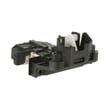
- Lid won’t lock or unlock reliably: replace the washer lid lock WH44X10288.
- Washer won’t drain or drains slowly: inspect and, if needed, replace the washer drain pump WH23X10040.
- Intermittent spin or speed sensing issues: check the laundry center washer speed sensor WH12X27187.
A washer that cannot drain or spin usually stops mid-cycle or finishes with soaking-wet laundry. Fixing the root cause protects the drive system, prevents repeated cycle restarts, and helps the washer reach proper final spin speed.
Last updated: February 2026
What is the reason code 271?
Code 271 is not a GE GUD27ESSM1WW laundry center error code; it is commonly used as a health insurance claim denial reason code. For your GE laundry center, use the model’s troubleshooting and error-code information in the owner's manual and our GE error codes guide to identify the correct washer or dryer fault.
In billing and insurance, “reason code 271” is tied to payment or contractual adjustment logic, not appliance diagnostics. That’s why it won’t match what your washer or dryer is doing.
Use the same steps we recommend for any GE stacked laundry center/combo:
- Look for a displayed code, flashing lights, or a repeating beep pattern.
- Note which section is acting up: washer (won’t start, won’t spin, won’t drain) or dryer (won’t start, won’t heat, won’t tumble).
- Try a simple control reset: unplug for about 2 minutes, plug back in, then press Start.
- If the Lid Locked light is flashing, open and close the lid; the washer may require the lid to be opened after multiple cycles.
- Match your symptoms to the troubleshooting charts in the owner's manual.
| What you see | Most likely area to check first | Common next step |
|---|---|---|
| Washer won’t start or respond | Lid status, power, controls | Reset power; close lid; restart cycle |
| Washer won’t spin/agitate | Lid lock system, drive system | Check lid lock operation; review error-code guidance |
| Dryer tumbles but no heat | House breakers/fuses, airflow | Verify both breakers/fuses; check venting |
| Dryer won’t start | Power, door switch/timer | Confirm power; review start circuit checks |
Using the correct GE laundry center error code (or symptom) prevents ordering the wrong part and helps you focus on the right system, such as the lid lock, drive belt, heating circuit, or venting.
Last updated: February 2026
Where to put laundry detergent in GE washer dryer combo?
For the GE GUD27ESSM1WW laundry center washer, add detergent directly into the wash basket (not into the agitator). If you use detergent packets, place them in the bottom of the basket before adding clothes; always use HE detergent and measure carefully to prevent oversudsing and residue.
- Liquid or powder detergent: add to the wash basket before or as you load clothes.
- Detergent packets/pods: place at the bottom of the wash basket first, then add laundry on top.
- Pre-treat sprays: apply to items in the basket to avoid overspray on the lid or graphics.
- Do not pour anything into the agitator if the dispenser is removed.
- Put detergent (or pod) in the basket.
- Loosely load clothes (do not pack them down).
- Choose cycle and temperature.
- Press Start.
Using too little or too much detergent is a common cause of wash problems. We recommend:
- Use less for soft water, small loads, or lightly soiled loads.
- Follow the HE detergent label for concentrated formulas.
- If you see suds, residue, or longer cycle times, reduce the amount next load.
| Detergent type | Where it goes | Common mistake to avoid |
|---|---|---|
| HE liquid/powder | Wash basket | Overfilling, causing oversuds |
| Pods/packets | Bottom of basket first | Tossing on top of clothes |
| Powdered bleach | In basket with detergent (if used) | Putting powder in the bleach funnel |
Correct detergent placement helps the washer dissolve and distribute detergent evenly. That prevents detergent streaks, leftover suds, and poor rinsing, especially in low-water, high-efficiency wash action.
For model-specific dispenser and cycle details, follow the owner's manual.
Last updated: February 2026