Installation guide
 Owner’s manual


How big is a 4.2 cubic foot washer?
A 4.2 cubic foot washer refers to the tub capacity (how much laundry it holds), not the outside size. For a Kenmore top-load washer like model 11022342511, the cabinet is typically about 27 inches wide and about 42 to 44 inches tall, with depth commonly around 25 to 28 inches.
Capacity is the usable volume of the wash basket. It helps you estimate load size more than it helps with fit in a laundry room.
- Fits larger loads than older 3.0 to 3.5 cu. ft. top-loaders
- Handles bulky items (comforters) better when loaded loosely
- Works best when you avoid packing clothes tightly
- Does not change the electrical or water hookup requirements
Most washers in this class share similar footprints, but installation space should include clearance and ventilation.
| What you’re measuring | Typical for this washer type | Why it matters |
|---|---|---|
| Width | ~27 in. | Must fit between cabinets/door jambs |
| Height (to top) | ~42 to 44 in. | Shelf clearance, lid opening |
| Depth | ~25 to 28 in. | Door swing, walkway clearance |
| Side clearance | 0 in. allowed (tested) | Service access and noise control |
For the spacing and closet requirements used for model 11022342511, follow the installation guide.
Use a tape measure and plan for hoses, the drain standpipe, and lid clearance.
- Measure the narrowest point of the path (doorways, turns, closet opening)
- Measure the install spot width, depth, and height to shelves
- Add room behind the washer for inlet hoses and the drain hose
- Plan extra space if you want easier servicing and less vibration noise
- Confirm your drain setup height and outlet location per the guide
A 4.2 cu. ft. washer can be a great capacity upgrade, but fit problems usually come from ignoring clearance for hoses, drain routing, and lid swing. Using the installation spacing guidelines prevents “washer walk,” noise transfer, and hookup strain.
Last updated: February 2026
How to hard reset kenmore washer?
To hard reset your Kenmore washer model 11022342511, unplug it (or turn off the breaker) for 1 minute, then restore power and start a new cycle. This clears many temporary control glitches without changing any settings stored in the control.
- Press Power/Cancel to stop the cycle.
- Unplug the washer from the grounded outlet (or switch the breaker OFF).
- Wait 60 seconds.
- Plug back in (or switch the breaker ON).
- Wait 30 seconds, then select a cycle and press Start.
For model-specific control and cycle behavior, follow the reset and restart guidance in the 11022342511 owner's manual.
A reset helps only if the issue is a temporary control lockup. If the washer still will not run, check these common causes:
- Lid not locking: the washer may not start or spin if the lid lock does not engage.
- No water filling: closed faucets, kinked hoses, or a failed inlet valve can stop the cycle early.
- Drain hose or drain setup issue: an installation problem can cause immediate draining or no-drain symptoms.
- Unlevel washer: excessive vibration can interrupt spin and trigger out-of-balance behavior.
- Power supply issue: confirm a grounded 3-prong outlet and no extension cord.
| Symptom after reset | Most likely area to check | Common next step |
|---|---|---|
| Won’t start, lid clicks or won’t click | Lid lock system | Inspect/replace washer lid lock W11307244 |
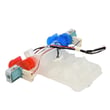
| Won’t fill or fills very slowly | Water supply/inlet valve | Check screens; consider washer water inlet valve W11210459 |
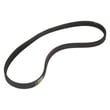
| Won’t spin, burning rubber smell | Drive system | Inspect belt; consider washer drive belt WPW10006384 |
Resetting power forces the electronic control to reboot. If the problem is caused by a momentary software glitch, you save time and avoid unnecessary part replacement. If the symptom returns quickly, it points to a lid lock, water inlet, drain, leveling, or drive issue that needs correction.
For installation-related causes (grounding, drain hose connection, leveling feet adjustment), use the 11022342511 installation guide.
Last updated: February 2026
Does my Kenmore top load washer have a filter?
Yes, Kenmore top load washer model 11022342511 uses built-in filtering, but it typically does not have a single, easy-access “lint filter” like a dryer. Most filtering happens through the wash basket and the drain system; cleaning focuses on the drain path and inlet screens. See the 11022342511 installation guide for drain setup details that affect clogging.
On many Kenmore top load washers like 11022342511, lint and debris are managed in these areas:
- Drain system (hose, standpipe, laundry tub connection)
- Pump area (small items can migrate into the drain path)
- Water inlet valve screens (sediment from the home plumbing)
- Wash basket (items like coins, pins, and fabric debris)
- Unplug the washer.
- Verify the drain hose setup: the drain hose should not be shoved too far down the standpipe; this helps prevent siphoning and drain issues.
- Inspect the drain hose for kinks, crushing, or internal buildup.
- Check inlet screens: turn off hot and cold water, remove hoses at the washer, and rinse any sediment from the small screens.
- Run a cleaning cycle (or hottest, longest cycle) with an empty tub to reduce residue.
| Symptom | Most likely “filter” area | What to do first |
|---|---|---|
| Slow drain, water left in tub | Drain hose or drain path | Inspect hose routing and clogs |
| Won’t fill or fills slowly | Inlet valve screens | Clean screens, confirm water pressure |
| Lint on clothes | Wash conditions, residue | Use correct detergent amount, run tub clean |
If you confirm a drain or fill restriction and cleaning does not resolve it, these model-matched parts are commonly involved:
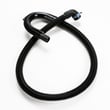
- Washer drain hose W11244231 (cracks, kinks, internal buildup)
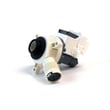
- Washer water inlet valve W11210459 (restricted flow, screen issues)
A top load washer that cannot drain or fill correctly can trigger longer cycle times, poor rinsing, and repeated clogs. Correct drain hose placement and clean inlet screens prevent many “no drain” and “no fill” complaints.
Last updated: February 2026
How to identify a Kenmore washer model?
Your Kenmore washer model number is printed on the appliance’s model and serial tag. For Kenmore model 11022342511, you’ll typically find that tag under the lid (top-load washers), inside the door opening (front-load washers), or on the back panel near the power cord.
Check these common locations first:
- Under the lid: along the rim of the tub opening or underside of the lid
- Inside the door opening (front-load): around the door frame
- Back of the cabinet: near the power cord entry or rear panel
- Behind the control panel area: sometimes on the cabinet edge
- On the installation notes page: if you wrote it down during setup (see the 11022342511 installation guide)
Kenmore washer model numbers are often 11 characters and may start with 110.
| What you see | What it means | What to do next |
|---|---|---|
11022342511 |
Full model number | Use it to match exact parts diagrams and parts |
A shorter 110... string |
Partial model family | Keep looking for the full number |
| Model + serial together | Identification tag | Record both; model finds parts, serial helps with production details |
Small reading errors cause wrong-part orders. We recommend:
- Write the model number exactly as shown (no spaces)
- Take a clear photo of the tag before it wears or fades
- Record the serial number too for your records
- Keep the info with your paperwork (see the 11022342511 owner’s manual)
Kenmore washers can look similar across multiple series, but parts like a washer lid lock, washer water inlet valve, or washer drive belt can vary by model. Using the exact model number helps ensure the replacement part fits and functions correctly.
Last updated: February 2026
Is it worth repairing a Kenmore washing machine?
Yes; repairing a Kenmore washer is worth it when the fix restores reliable washing and spinning for less than the cost of replacement, especially on a solid, serviceable model like Kenmore 11022342511. Most worthwhile repairs are common wear parts, not major tub or cabinet damage.
Use this quick checklist before spending money on parts or labor:
- The washer fills, drains, and powers on consistently.
- The problem is isolated (noise, no spin, won’t drain, lid won’t lock).
- The repair is a wear item (belt, lid lock, valve) rather than a cracked tub.
- The cabinet is not rusted through and the basket is not damaged.
- You can complete a safe test cycle after the repair.
For Kenmore top-load washers like model 11022342511, we use this comparison to guide the decision:
| Situation | Usually worth repairing? | Why |
|---|---|---|
| Won’t spin or makes squealing/burning-rubber smell | Yes | Often a belt or drive component |
| Won’t fill or fills slowly | Yes | Common inlet valve or hose-screen issue |
| Lid won’t lock, won’t start | Yes | Lid lock/strike issues are straightforward |
| Repeated leaks from tub area or severe vibration with tub damage | No | Major mechanical work and higher parts cost |
If symptoms match, these are high-impact fixes for this model:
- Washer drive belt WPW10006384 for slipping, squealing, or weak spin.
- Washer lid lock W11307244 for “won’t start” or lid-lock related stopping.
- Washer water inlet valve W11210459 for no fill, slow fill, or hot/cold fill problems.
A washer that is not installed correctly can look “broken” when it is not. Kenmore 11022342511 needs proper power, water supply, and a stable floor to run normally. We follow the clearances, electrical requirements, and setup checks in the installation guide to avoid repeat failures and noise.
- Plug into a grounded 3-prong outlet (no adapter, no extension cord).
- Confirm hot and cold faucets are fully open.
- Verify water pressure is in the normal range (20 to 100 psi).
- Level the washer on a solid floor (carpet installs are not recommended).
- Remove all shipping materials before judging performance.
Last updated: February 2026
What does F33 mean on a washer?
On the Kenmore 11022342511 washer, an F33 code points to a communication problem in the drain system circuit, most commonly a lost or poor wiring connection between the drain pump and the main control (CCU). It can also indicate a failing pump motor.
- Unplug the washer for 1 minute, then restore power and retry a Drain/Spin cycle.
- Confirm the washer is plugged into a properly grounded outlet (grounding guidance is in the installation guide).
- Make sure the drain hose is not kinked, crushed, or shoved too far down the standpipe.
- Check for a clog at the drain hose outlet and at the tub-to-pump path (coins, lint, small socks).
- Listen during drain: a steady hum with little or no water movement often points to a blockage or weak pump.
| What’s happening | Most likely cause | What you’ll notice |
|---|---|---|
| Intermittent F33, starts after moving washer | Loose wire harness connection | Works sometimes, fails after vibration |
| F33 plus slow or no draining | Clog or restricted drain path | Water left in tub, long drain time |
| F33 and pump is loud or only hums | Pump motor failing | Grinding, buzzing, or no water flow |
If the washer will not drain and you have already ruled out a kinked hose and clogs, the next common suspect is the inlet and drain system components and their wiring. For this model, a frequent repair path is inspecting the pump wiring at the control and pump, then replacing the pump if it is electrically open/shorted or mechanically seized.
- If you are also seeing fill problems (no water, wrong temperature, or very slow fill), inspect the washer water inlet valve W11210459 separately; fill issues can create confusing symptoms even when the displayed code is drain-related.
The washer relies on the drain pump feedback to safely transition into spin. When the control cannot reliably “see” the pump circuit, it stops the cycle to prevent overflow, poor rinsing, or a high-speed spin with water still in the tub.
Last updated: February 2026
What is the average lifespan of a Kenmore washer?
A Kenmore washer typically lasts 10 to 15 years with normal household use and basic maintenance. For your Kenmore model 11022342511, correct setup (level floor, proper hookups, and removing shipping materials) helps reduce wear that can shorten washer life; see the 11022342511 installation guide.
Most washers reach the 10 to 15 year range; the difference between 10 and 15 usually comes down to load size, installation, and how hard the drive system works over time.
Biggest factors that affect lifespan:
- Overloading or consistently washing heavy items (comforters, rugs)
- Unlevel installation that causes vibration and “washer walk”
- Low or inconsistent water pressure (slow fills, longer cycles)
- Poor drainage (standing water, repeated drain strain)
- Skipping routine cleaning (detergent buildup, odors)
The installation instructions for this washer call out conditions that directly impact noise, vibration, and long-term wear.
- Install on a level floor (max slope about 1 inch under the washer)
- Avoid installing on carpet
- Keep the washer where it will not be exposed to freezing temperatures
- Use a grounded outlet and proper grounding
- Remove all shipping materials before first use
| Item | Typical target | Why it helps lifespan |
|---|---|---|
| Water pressure | 20 to 100 psi | Prevents long fill times and valve stress |
| Clearance | 0 inches sides allowed (1 inch recommended) | Reduces noise transfer and makes service easier |
| Floor support | Up to about 315 lb total | Prevents flexing that increases vibration |
When multiple symptoms show up together, repairs often become more frequent.
- Loud banging or repeated out-of-balance spinning
- Slow fill, no fill, or intermittent filling (often tied to the washer water inlet valve W11210459)
- Lid will not lock or unlock reliably (often tied to the washer lid lock W11307244)
- Burning rubber smell or slipping during spin (often tied to the washer drive belt WPW10006384)
- Water left in the tub after cycles, or repeated drain problems
Knowing the typical 10 to 15 year lifespan helps you decide when to maintain, repair, or plan a replacement. A solid installation and early part replacement (belt, lid lock, inlet valve) often prevents secondary damage to the motor, control board, and tub system.
Last updated: February 2026