
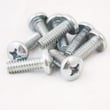
Are all table saw arbor nuts the same size?
No. Table saw arbor nuts are not all the same size because arbor shaft diameter and thread direction vary by saw design. On a Craftsman 113299010 table saw, you need an arbor nut that matches the saw’s arbor threads and flange setup, not a “universal” nut.
What’s usually standardized (and what isn’t)
Many blades share common arbor hole sizes, but that does not guarantee the arbor nut is the same across saws.
- Blade arbor hole is often 5/8 inch on many 10-inch blades
- Arbor shaft threads (diameter and pitch) can differ by brand and model
- Thread direction can differ (some saws use left-hand threads to resist loosening)
- Nut outside size (wrench size) can differ even when threads match
- Flanges/washers and stack-up thickness can change what nut you need
Quick size guide (typical, not model-specific)
| Saw/blade class | Common blade arbor hole | Arbor nut “universal”? |
|---|---|---|
| 10-inch table saw | 5/8 inch | No; threads and direction vary |
| 12-inch table saw | 1 inch (common) | No; threads and direction vary |
How we recommend matching the correct arbor nut
Use these checks before ordering or swapping parts between saws:
- Confirm the exact model number: 113299010 (tag/plate on the saw)
- Remove the blade and note whether the nut loosens clockwise or counterclockwise
- Measure arbor shaft outside diameter (calipers work best)
- Compare the nut’s thread pitch (a thread gauge helps)
- Inspect the arbor flange and any spacers for damage or missing pieces
Why it matters
A mismatched arbor nut can bottom out, fail to clamp the blade securely, or loosen during cutting. Correct clamping force and proper thread engagement help keep the blade stable, reduce vibration, and improve cut accuracy.
For help locating the right replacement parts by model, start with the parts list for Craftsman 113299010 or search by model on Sears PartsDirect.
Last updated: February 2026
How to get rid of an old table saw?
If you are getting rid of a Craftsman 113299010 table saw, the best options are to sell or donate it if it still runs, or recycle it as scrap metal through a local transfer station or metal recycler. Before it leaves your shop, make it safe by removing the blade and securing the cord.
Safe prep steps before disposal
- Unplug the saw and remove the switch key (if equipped).
- Remove the blade, throat plate, and any loose accessories (miter gauge, rip fence, guard).
- Lower the blade fully and lock adjustments so nothing moves in transit.
- Coil and tape the power cord to the cabinet or stand.
- Bag small hardware so it does not get lost if you are donating or selling.
Best disposal options (from most to least value)
- Sell or give away: Working saws often move quickly locally, even if they need cleanup.
- Donate: Many community shops, schools, and reuse centers accept functional power tools.
- Recycle as scrap metal: Most of the saw is recyclable metal; call ahead for drop-off rules.
- Junk removal: Use when you cannot transport it; ask whether they recycle metal tools.
What to do with the blade
Handle the blade separately because it is sharp and usually accepted as metal scrap.
| Item | What to do | Why |
|---|---|---|
| Saw blade | Wrap teeth (cardboard) and tape; recycle as scrap metal | Prevents cuts; keeps metal out of trash |
| Extension cord (if used) | Reuse or recycle where accepted | Reduces waste |
| Loose fasteners | Keep for future projects | Saves time and money |
Why it matters
Table saws are heavy and have sharp components; basic prep prevents injuries during loading and helps ensure the metal gets recycled instead of landfilled.
For help identifying the exact model tag details before listing or ordering parts, use how to find your appliance model number (and what it means for parts).
Last updated: February 2026
Can you use an 8 inch blade on a 10 inch table saw?
Yes, you can use an 8-inch blade on a 10-inch table saw like the Craftsman 113299010 as long as the blade’s arbor hole matches your saw’s arbor and the blade is rated for the saw’s RPM. The main tradeoff is reduced maximum cut depth compared to a 10-inch blade.
What changes when you drop from 10-inch to 8-inch
Using a smaller blade is usually fine for many cuts, but it affects capacity and setup.
- Cut depth decreases: an 8-inch blade typically cuts about 1 inch less deep than a 10-inch blade.
- Guard and splitter/riving knife fit can change: the blade may sit lower, so alignment and coverage can be different.
- Dado use is common: many 8-inch dado sets are designed for 10-inch saws because dado cuts are not through-cuts.
- Feed pressure can increase: you may need a slower feed rate in thicker stock.
- Safety checks matter more: smaller blade, same motor power, same kickback risks.
Quick compatibility checklist (before you install)
| Check | What to confirm | Why it matters |
|---|---|---|
| Arbor hole size | Blade bore matches the saw arbor | Prevents wobble and unsafe mounting |
| Blade speed rating | Blade RPM rating meets or exceeds saw RPM | Prevents blade failure |
| Blade kerf | Kerf works with your fence and any splitter/riving knife setup | Helps reduce binding and burning |
| Guard clearance | Guard can sit correctly with the smaller diameter | Maintains safer operation |
Best practices for safe, accurate cuts
- Unplug the saw before changing blades.
- Tighten the arbor nut firmly (snug plus a bit, not over-torqued).
- Re-check blade-to-miter-slot and fence alignment after the swap.
- Use a sharp blade matched to the cut (rip, crosscut, plywood).
- Use push sticks and keep the workpiece tight to the fence to reduce kickback.
Why it matters
On the Craftsman 113299010, an 8-inch blade can be a practical choice for specific tasks (especially dado work), but the reduced blade diameter changes cut depth and can affect how your guarding and alignment behave. Confirming arbor fit and RPM rating keeps the setup safe.
For more help identifying the exact model number details you need when shopping for blades and accessories, use how to find your appliance model number (and what it means for parts).
Last updated: February 2026
Are craftsman table saws any good?
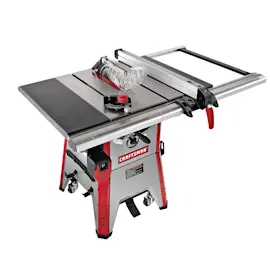
Yes. Craftsman table saws are a solid value for many DIYers, and older models like the Craftsman 113299010 are widely known as sturdy, long-lasting “workhorse” saws when they are tuned correctly. For high-precision or daily professional use, the fence and alignment setup usually matter more than the brand name.
What you can expect from a Craftsman 113299010
Most owners choose this style of Craftsman saw because it balances cost, durability, and repairability.
- Good for ripping and crosscutting common lumber when the blade is sharp and aligned
- Typically durable cast and steel components on many older Craftsman saws
- Accuracy depends heavily on fence condition, blade-to-miter-slot alignment, and arbor/runout
- Upgrades (better fence, zero-clearance insert, crosscut sled) often improve results more than replacing the saw
- Parts availability varies by sub-assembly, so matching the exact model number is important
Quick “good for” vs “not ideal for” guide
| Use case | Craftsman table saws are a good fit when… | Consider alternatives when… |
|---|---|---|
| DIY and hobby projects | You want dependable cuts with basic tuning | You need production-level repeatability |
| Budget shop setup | You prefer repairable tools and used-market value | You want premium fit/finish out of the box |
| Learning woodworking | You are willing to calibrate and build jigs | You need a top-tier fence with minimal setup |
What to check before you judge the saw
These checks usually explain 90% of “good saw” vs “bad saw” experiences.
- Fence locks parallel to the blade and does not drift during a cut
- Blade is parallel to the miter slot (reduces burning and kickback risk)
- Arbor bearings feel smooth (no grinding, wobble, or excessive play)
- Throat plate sits flush and supports the workpiece
- Blade is appropriate for the cut (rip blade for ripping, crosscut/combo for general work)
Why it matters
A table saw’s real-world performance is mostly setup and safety related. A well-aligned Craftsman saw can cut cleanly and predictably; a misaligned fence or worn arbor can make any saw feel inaccurate and frustrating.
If you are shopping for replacement components, we recommend using the exact model number (113299010) when searching on Sears PartsDirect so you land on compatible diagrams and parts lists.
Last updated: February 2026