 Installation guide
 Owner’s manual
 Error Codes




Are Bosch dishwashers a standard size?
Yes. The Bosch SHE43M02UC is a built-in dishwasher designed to fit the common U.S. 24-inch cabinet opening, so it installs like most “standard size” dishwashers. For the exact cutout and leveling requirements for your kitchen, use the installation guide.
What “standard size” means for built-in dishwashers
Most built-in dishwashers in the U.S. are made to fit a 24-inch wide opening under a countertop. The key fit points are width, height adjustability (leveling legs), and depth to the front of the door.
Typical built-in dishwasher fit ranges:
- Width: about 24 inches
- Height: about 33 1/2 to 35 inches (adjustable)
- Depth: about 24 inches (varies with handle and door style)
Quick fit checklist before you buy parts or install
Use this list to confirm your opening matches what the Bosch SHE43M02UC needs:
- Measure the cabinet opening width, height, and depth in three places
- Confirm the dishwasher can sit level (important for draining and door sealing)
- Verify the water supply and drain hose routing to the sink cabinet
- Confirm the electrical connection type and location
- Check that the door can open fully without hitting a toe kick or nearby cabinet
Common size options (built-in vs compact)
| Dishwasher type | Typical width | Where it’s used |
|---|---|---|
| Full-size built-in | 24 inches | Most U.S. kitchens |
| Compact built-in | 18 inches | Smaller kitchens, apartments |
| Portable/freestanding | Varies | No permanent install required |
Why it matters
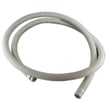
A dishwasher that is not sized and leveled correctly can lead to installation headaches and performance issues like poor draining, door leaks, or vibration. Following the install specs also helps protect components such as the dishwasher drain hose 00668108 and door seal.
Last updated: January 2026
Can I still use my appliance with an E22 error?
Yes, but we recommend fixing the cause first on your Bosch dishwasher model SHE43M02UC because an E22 condition commonly points to restricted water flow through the filter area, which can lead to poor cleaning and repeated stoppages. Use the troubleshooting steps in the SHE43M02UC owner’s manual before running another full cycle.
What to do first (safe, quick checks)
- Cancel the cycle and let the dishwasher drain if it will.
- Turn off power at the breaker before reaching into the sump area.
- Remove and clean the filter system; rinse off grease and debris.
- Check the sump area for broken glass, labels, or food blocking the intake.
- Confirm the drain path is clear (air gap or high loop, disposer knockout removed if newly installed).
- Restore power and run a short rinse cycle to test.
Parts that commonly relate to E22-type symptoms
If cleaning the filter and sump does not help, the issue is often in the drain or circulation system.
| Symptom you notice | Most likely area | Example part for this model |
|---|---|---|
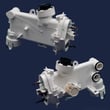
| Standing water after cycle | Drain system restriction or failed pump | Drain pump 00642239 |
| Slow drain, gurgling | Drain hose routing or clog | Dishwasher drain hose 00668108 |
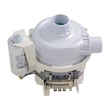
| Poor wash pressure plus recurring error | Circulation/recirculation issue | Dishwasher recirculation pump assembly 00442548 |
Why it matters
Running repeated cycles with restricted flow can leave soil redeposited on dishes, strain the pump, and keep the dishwasher from completing a cycle normally. Cleaning the filter and confirming proper draining restores normal wash performance in most cases.
When to stop and schedule service
- The dishwasher will not drain at all after cleaning the filter
- You hear loud grinding or repeated clicking from the pump area
- The error returns immediately at the start of a cycle
For electrical and grounding requirements, follow the SHE43M02UC installation guide.
Last updated: January 2026
What is the most common problem with Bosch dishwashers?
The most common Bosch dishwasher issue we see is poor draining, usually caused by a clogged filter area, a kinked or blocked drain hose, or a drain pump problem. On the Bosch SHE43M02UC dishwasher, start with the simple checks in the SHE43M02UC owner’s manual before replacing parts.
What to check first (fast, no-parts steps)
- Turn off power at the breaker before inspecting inside the sump area.
- Clean the filter area and remove any debris (labels, glass, food, twist ties).
- Check the sink drain and garbage disposal inlet (a blocked sink drain can back up into the dishwasher).
- Inspect the drain hose routing for kinks and make sure it has a proper high loop.
- Run a rinse cycle and listen: a healthy drain sounds like a steady pump-out, not a weak hum.
Common symptoms and the most likely cause
| Symptom | Most likely cause | What we recommend |
|---|---|---|
| Water left in bottom after cycle | Clogged filter or hose restriction | Clean filter area; inspect hose routing |
| Humming but not draining | Drain pump jammed or failing | Check for debris; consider drain pump 00642239 |
| Slow drain or intermittent drain | Partial blockage or weak pump | Inspect hose; check pump performance |
| Won’t start and then stops | Door not fully latched | Confirm door closes and latches firmly |
When a part is the fix
If cleaning and hose checks do not restore normal draining, the failure is often in the drain path components.
- If the pump runs but cannot move water, the drain pump 00642239 is a common replacement.
- If you find cracks, soft spots, or a persistent kink, replace the dishwasher drain hose 00668108.
Why it matters
Drain problems can leave dirty water in the sump, reduce wash performance, and trigger longer run times. Fixing the drain path early helps protect the recirculation system, improves cleaning, and prevents repeat clogs.
Last updated: January 2026





