Owner’s manual
 Error Codes




Do Bosch washing machines have a 5 year warranty?
Bosch washers, including the Bosch WFVC5400UC, typically come with a limited manufacturer warranty that is commonly 1 to 2 years, not an automatic 5 years. A 5-year term is usually only possible if you purchased an extended warranty or protection plan; confirm your exact coverage in your purchase paperwork and the WFVC5400UC owner's manual.
Use these quick checks to pin down what applies to your washer:
- Find your purchase date on the receipt or invoice.
- Check whether you bought an extended warranty or protection plan at checkout.
- Look for the warranty section in the WFVC5400UC owner's manual.
- Match the model number on the rating label to WFVC5400UC (letters and numbers must match).
- If the washer was installed in a new home, check closing documents for appliance coverage.
A 5-year warranty claim often refers to one of these scenarios:
| Situation | What it usually covers | What to do next |
|---|---|---|
| Standard limited warranty | Defects in materials/workmanship for a short term (often 1 to 2 years) | Verify dates and covered components in the manual |
| Extended warranty/protection plan | Longer coverage term (sometimes up to 5 years) | Confirm plan name, term, and exclusions |
| Component-specific coverage | Longer coverage on a specific part (varies by plan/product) | Check the warranty section for covered parts |
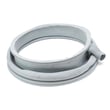
Warranty coverage affects whether you should troubleshoot first, replace a part, or schedule service. For example, if you’re chasing a leak at the door area, you may need a wear item such as the washer door boot 00701333, which is typically not treated the same as an electronic control issue.
Last updated: February 2026
What is the most common problem with a Bosch washing machine?
The most common issue we see on Bosch washers like model WFVC5400UC is a spin problem caused by an unbalanced load (banging, walking, or stopping before full spin). The next most common problems are drain clogs (pump filter), small leaks around the door boot, and error codes that point you to the failing system in the washer.
- Pause the cycle and redistribute items evenly (mix large and small items).
- Remove a few items if the drum is tightly packed.
- Run a Spin/Drain cycle again after rebalancing.
- Confirm the washer is level and stable on the floor.
- Check for a damaged or missing leveling foot.
| Symptom | Most likely cause | What to do first |
|---|---|---|
| Loud banging during spin | Load out of balance | Redistribute load, reduce load size |
| Washer “walks” or vibrates | Not level, unstable footing | Level the cabinet, check feet |
| Won’t drain, water left in drum | Clogged pump filter or drain path | Clean pump filter, check drain hose |
| Water at front of washer | Door boot or clamp issue | Inspect boot and clamps for gaps/tears |
A clogged pump filter is a frequent cause of “won’t drain” or “won’t spin” because the washer will not ramp up to high spin with water still inside. Use the steps and safety notes in the WFVC5400UC owner's manual before opening any access panels.
Front-load leaks often come from the door boot area (soap residue, small tears, or a clamp that is not seated). If you find damage or the boot will not seal, replacing the boot is a common repair using the correct model-specific part such as the washer door boot 00701333.
Bosch error codes help narrow the problem to a system (drain, fill, door lock, motor control). Use the Bosch nexxt front load washer error codes guide to interpret the code, then match the fix to the symptom.
Ignoring imbalance, drain restrictions, or small door leaks can lead to repeated cycle interruptions, excessive vibration, and water damage. Addressing these early keeps your WFVC5400UC running quieter and helps prevent bigger repairs.
Last updated: February 2026
Which is the best Bosch washing machine to buy?
The “best” Bosch washer depends on your space, load size, and must-have features; for most homes, we recommend choosing a current Bosch front-load model with the capacity you need, high spin speed for better water extraction, and the cycles you will actually use. For your Bosch WFVC5400UC, use the owner's manual to compare cycle options and care requirements to newer models.
Focus on the factors that change day-to-day performance more than brand marketing:
- Capacity: Match tub size to your typical loads (bedding and towels need more room).
- Spin speed: Higher max RPM usually means drier clothes and shorter dryer time.
- Cycle set: Look for sanitize/allergy, quick wash, delicate, and bulky cycles if you need them.
- Noise and vibration control: Important for second-floor installs or laundry closets.
- Serviceability: Availability of common wear parts (door boot, inlet valves, seals) matters long-term.
| If you care most about... | Prioritize these Bosch washer traits | Typical tradeoff |
|---|---|---|
| Fast weekly laundry | Quick cycle, strong spin, simple controls | Fewer specialty cycles |
| Sensitive skin | Sanitize/allergy options, extra rinse | Longer cycle times |
| Quiet operation | Better suspension, balance control, solid leveling | Higher upfront cost |
| Large items | Larger capacity, bulky cycle | Larger footprint |
These are the most common “fit and function” issues we see:
- Measure the installation space (width, depth, door swing, and hose clearance).
- Confirm electrical and water hookups match your laundry area.
- Decide whether you need stacking capability.
- Compare cycle times for the cycles you will run most.
- Plan basic maintenance to prevent odor and residue buildup; see how to keep a washer odor free.
A washer that matches your load size and laundry habits cleans better, spins out more water, and runs with less vibration. That usually saves time, reduces dryer wear, and helps avoid common front-load issues like odor and door-boot mildew.
Last updated: February 2026