Owner’s manual
 Error Codes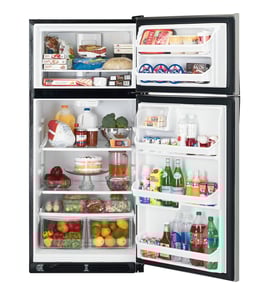


What is the upper part of a fridge called?
On a Whirlpool ET1CHMXKB09 top-mount refrigerator, the upper compartment is the freezer. It is designed to keep foods frozen, and on many top-mount models it also houses the ice maker (if equipped). For model-specific features and controls, use the owner's manual.
- Maintains below-freezing temperatures for long-term food storage
- Often contains the ice maker and ice bin (when installed)
- Shares cold air with the fresh food section through internal air passages
- Uses a temperature control setting that affects freezer performance
| What people say | What it usually means | Where it is |
|---|---|---|
| Upper part of the fridge | Freezer compartment | Top section |
| Fridge section | Fresh food compartment | Bottom section |
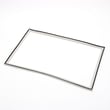
| Freezer door seal | Freezer door gasket | Around freezer door |
| Ice maker shutoff arm | Ice maker on/off lever | Inside freezer |
Knowing the correct compartment name helps when you are adjusting temperature controls, troubleshooting “freezer too warm” issues, or ordering the right door parts (like a gasket panel) for the freezer versus the refrigerator section.
- If the freezer is too warm, raise the freezer or temperature control one setting and wait 24 hours before adjusting again.
- If you have an ice maker, lowering the wire shutoff arm turns it ON; lifting it up turns it OFF.
- Keep vents clear so cold air can circulate from the freezer to the refrigerator section.
Last updated: February 2026
What are the disadvantages of a top mount fridge?
A top-mount refrigerator like the Whirlpool ET1CHMXKB09 is reliable and efficient, but its main disadvantages are convenience and layout: you bend more to reach fresh foods, the freezer can be less organized, and many models do not include built-in water or ice dispensing features.
- More bending for fresh food: the refrigerator section is lower, so you reach down more often.
- Freezer organization can be basic: fewer drawers and dividers compared with many bottom-freezer designs.
- Less “premium” feature space: through-the-door water and ice are less common on top-mount styles.
- Door swing clearance matters: you may need extra side clearance so doors open fully.
- Ice maker hookups can require planning: if your unit uses an ice maker kit, you need room behind the refrigerator for the water line.
| Feature | Top-mount refrigerator (like ET1CHMXKB09) | Bottom-freezer refrigerator |
|---|---|---|
| Fresh food access | Lower, more bending | Eye-level, easier access |
| Freezer access | Eye-level | Lower drawer/pull-out |
| Organization | Often simpler | Often more bins/drawers |
| Dispenser options | Less common | More common |
Most households use the fresh-food compartment the most. If you prefer less bending and more day-to-day convenience, a bottom-freezer layout usually feels easier. If you prioritize simplicity, a top-mount design is often a solid fit.
- Store everyday items on the middle shelves to reduce bending.
- Use bins to group foods in the freezer for faster access.
- Leave proper ventilation clearance around the cabinet during placement.
- If doors feel hard to open, keep gaskets clean and dry.
- For model-specific placement and safety guidance, follow the owner's manual.
Last updated: February 2026
What's the average lifespan of a whirlpool refrigerator?
A Whirlpool refrigerator like model ET1CHMXKB09 typically lasts about 10 to 15 years with normal household use and basic maintenance; many units reach 15 to 20 years when the condenser area stays clean, doors seal tightly, and airflow is not blocked. For care and operating guidance, use the owner's manual.
Most top-mount refrigerators fall into a predictable lifespan range, and day-to-day conditions make the biggest difference.
- 10 to 15 years: common average for many Whirlpool refrigerators
- 15 to 20 years: common when maintenance and ventilation are consistently good
- Shorter life is usually tied to poor airflow, dirty condenser coils, or door seal leaks
- Keep the condenser area clean and allow ventilation space around the cabinet.
- Make sure doors close fully; avoid overloading door bins and shelves.
- Keep gaskets clean so they seal; wipe with mild soap and water and dry.
- Set stable temperatures (avoid frequent warmest-coldest adjustments).
- Fix water leaks quickly to prevent corrosion and ice buildup.
| Symptom | Often fixable? | Common next step |
|---|---|---|
| Door not sealing, moisture, frost | Yes | Inspect/replace gasket; see how to fix a fridge door seal |
| Warm fridge, freezer OK | Yes | Check airflow and evaporator fan; consider evaporator motor WPW10189703 |
| No interior light when door opens | Yes | Test/replace refrigerator light switch W11384469 |
| Repeated cooling failures or loud start issues | Sometimes | Diagnose compressor start components and controls |
Knowing the typical lifespan helps you decide whether to repair or replace. If your ET1CHMXKB09 is under 10 years old, repairs like a door seal, fan motor, or light switch are usually practical; past 15 years, compare repair cost to overall condition and performance.
Last updated: February 2026
What is the most common problem with whirlpool refrigerators?
The most common Whirlpool refrigerator problem is a cooling complaint (too warm, not cooling evenly, or running too much). On the Whirlpool ET1CHMXKB09 top-mount refrigerator, the most frequent root causes are airflow and maintenance issues (dirty condenser coils, door not sealing, or a fan problem) rather than a sealed-system failure.
- Fresh food section warm, freezer OK: restricted airflow, evaporator fan issue, or frost buildup
- Both sections warm: dirty condenser coils, compressor start issue, or control problem
- Runs constantly: warm room, frequent door openings, dirty coils, or door not closing fully
- Noisy operation: many sounds are normal during cooling and defrost cycles (buzzing, popping, water running)
- Ice maker not working (if equipped): water supply or valve issue
Use these steps before replacing parts; they match the troubleshooting approach in the owner's manual.
- Confirm the unit is plugged into a grounded outlet and has power.
- Make sure temperature controls are turned on and set to a mid-range setting.
- Allow 24 hours after installation or major adjustments for temperatures to stabilize.
- Check that doors close fully; move packages and re-seat bins/shelves so nothing holds the door open.
- Listen for the evaporator fan in the freezer; if it is not running when it should, airflow will suffer.
| Problem area | What you notice | Typical fix |
|---|---|---|
| Airflow/coil maintenance | Warm temps, long run times | Clean coils, improve clearance, reduce door openings |
| Door sealing | Moisture, frost, warm spots | Clean gasket, warm and reshape gasket, adjust door alignment |
| Evaporator fan | Warm fresh food, weak airflow | Diagnose fan; replace if failed (example: evaporator motor WPW10189703) |
| Ice maker water supply | No ice, small cubes | Check supply; diagnose valve (example: refrigerator inlet valve WP2315576) |
Cooling problems usually start as airflow or sealing issues; fixing those early helps prevent food spoilage, reduces energy use, and avoids unnecessary part replacement.
For model-specific troubleshooting steps and normal operating sounds, follow the owner's manual.
Last updated: February 2026