

How do I tell what model my Kenmore dryer is?
Your Kenmore dryer’s model number is printed on the appliance’s ID label; for this dryer, the model number format looks like 11086181110. On most Kenmore electric dryers, you can find that label in the door opening area or on the cabinet, and matching the full model number is the fastest way to get the right parts and diagrams.
Where to look for the model number label
Check these common spots on Kenmore model 11086181110 dryers:
- Inside the dryer door opening on the front panel (most common)
- On the door frame itself
- On the back panel of the dryer cabinet
- Near the lint screen housing (some designs place the label nearby)
What the model number looks like (and why it matters)
Kenmore model numbers are usually all digits. The first three digits often indicate the manufacturing source (for example, many Kenmore dryers start with 110), but the full model number is what ensures correct fit.
Quick check table
| What you see | What it means | What to do next |
|---|---|---|
| 11086181110 | Exact model number | Use it to select parts for your dryer |
| 110.86181110 (with a dot) | Same model number with formatting | Ignore punctuation; match the digits |
| Partial digits only | Not enough to confirm fit | Recheck the label and write down all digits |
Tips to avoid ordering the wrong part
Use these steps before you buy a replacement belt, door switch, or thermal fuse:
- Copy the model number exactly as shown on the label
- Take a clear photo of the label for reference
- Match the model number first, then choose the part
- If you are fixing a “won’t start” issue, check the door switch and thermal fuse early
- For common wear items, compare your old part to the listing photos and description
If you already know your dryer is 11086181110, common repair parts include the drum belt 341241 and the fuse WP3390719.
Why it matters
Kenmore dryers share similar styling across many series, but internal components (like the drive belt length, door switch style, and thermal fuse rating) can vary by model. Using the exact model number prevents mismatched parts and repeat repairs.
Last updated: February 2026
What are common problems with Kenmore dryers?
For the Kenmore electric dryer model 11086181110, the most common problems are no heat, long dry times, won’t start, drum not turning, and loud noises. These issues usually trace back to airflow restrictions (lint and venting) or normal wear on parts like the belt, thermal fuse, door switch, and blower wheel.
Most common symptoms and what usually causes them
- Dryer runs but won’t heat: blown thermal fuse, failed thermostat, or other heat-circuit problem
- Takes too long to dry: clogged lint screen, blocked vent, restricted lint chute, or weak airflow
- Won’t start: door switch not closing, failed motor, or electrical connection issue
- Drum won’t turn: worn/broken belt, seized idler pulley, or motor problem
- Squealing, thumping, or rumbling: belt wear, pulley wear, or blower wheel damage
Parts that commonly fix these problems on model 11086181110
If your symptom matches, these model-compatible parts are common repair starting points:
| Symptom | Common part to check | What it does |
|---|---|---|
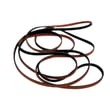
| Drum not turning | Drum belt 341241 | Drives the drum using the motor and idler system |
| No heat or stops mid-cycle | Fuse WP3390719 | Safety device that opens if the dryer overheats |
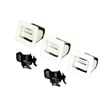
| Won’t start when door is shut | Dryer door switch W10820036 | Confirms the door is closed so the dryer can run |
| Poor airflow or loud air noise | Dryer blower wheel WP694089 | Moves air through the drum and vent |
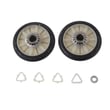
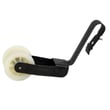
| Squeal or belt slipping | Pulley WP691366 | Maintains belt tension as the drum turns |
Quick checks we recommend before replacing parts
- Clean the lint screen and confirm the screen housing is clear
- Inspect the vent hose for kinks, crushing, or heavy lint buildup
- Run a timed dry cycle and check for strong airflow at the outside vent hood
- Listen for motor hum, grinding, or a drum that is hard to turn by hand (power off)
- If the dryer is dead, verify the breaker is fully reset and the cord connections are tight
Why it matters
Airflow problems can cause overheating, which can blow a thermal fuse and also create long dry times. Catching vent restrictions early helps the dryer heat properly, dry faster, and reduces wear on the motor, belt, and blower system.
Related help: Kenmore 110 series electronic control model dryer error codes
Last updated: February 2026
What size is a Kenmore Model 11086181110 dryer?
Most Kenmore electric dryers like model 11086181110 are full-size units that measure about 27 inches wide, 27 to 29 inches deep, and 38 to 44 inches tall (height varies most with the control panel style and leveling legs). Use these ranges to plan space and venting.
Typical dimensions you can plan around
- Width: ~27 inches (standard full-size dryer)
- Depth: ~27 to 29 inches (deeper if the door handle protrudes)
- Height: ~38 to 44 inches (varies by console and leg adjustment)
- Door swing clearance: plan extra space in front for loading
- Vent clearance: allow room behind for the exhaust duct and power cord
Quick fit check (before you move the dryer)
- Measure the opening width (doorway, hallway pinch points).
- Measure the laundry alcove (wall-to-wall width and back wall to front edge).
- Add clearance for venting and cord behind the cabinet.
- Confirm the dryer can be leveled once in place.
Space planning table
| What you’re measuring | What to allow | Why |
|---|---|---|
| Laundry opening width | 28 to 30 in | Helps avoid cabinet scrapes during install |
| Depth behind dryer | 3 to 6 in extra | Makes room for vent elbow and cord |
| Front clearance | 20+ in | Door swing and loading space |
Why it matters
Correct sizing prevents crushed venting (slow drying, overheating risk), makes installation easier, and helps you confirm the dryer will sit level so the drum and belt track correctly. If you’re already servicing the dryer while it’s pulled out, common wear items include the drum belt 341241 and pulley WP691366.
Last updated: February 2026