Installation guide
 Owner’s manual
 Error Codes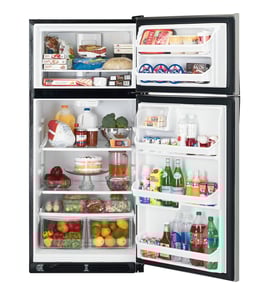



What is a fridge with freezer on top called?
A fridge with the freezer on top is called a top-freezer refrigerator, also commonly called a top-mount refrigerator. Your Crosley CRT185LW5 is this style: the freezer compartment sits above the fresh-food (refrigerator) section.
In a top-mount design, cold air is produced in the freezer area and circulated to both compartments. Temperature controls typically let you fine-tune the refrigerator and freezer temperatures separately (some models use a shared control). For model-specific control guidance, use the CRT185LW5 owner's manual.
- Freezer compartment on top with its own door
- Fresh-food compartment below with adjustable shelves and door bins
- Air vents between compartments (do not block them with food)
- Simple mechanical temperature knobs on many models
- Door storage designed for jars, bottles, and cans
| Refrigerator style | Freezer location | Typical benefit | Typical tradeoff |
|---|---|---|---|
| Top-freezer (top-mount) | Top | Efficient, straightforward layout | Fresh-food items require more bending |
| Bottom-freezer | Bottom | Fresh-food at eye level | Often higher cost, more complex layouts |
| Side-by-side | Left side | Narrow door swing, easy freezer access | Narrower shelves for wide items |
Knowing the style helps you choose the right parts and follow the correct procedures for adjustments and service. For example, door handling and hinge steps can differ by configuration, and temperature adjustments affect airflow between compartments.
- Set controls near the middle setting first, then adjust gradually
- Allow 8 to 12 hours of cool-down time before fully loading food after startup
- Keep air vents clear for proper circulation
- If the door does not seal well, inspect the gasket for gaps or tears
Last updated: February 2026
Which is better, top mount or bottom mount refrigerator?
A top-mount refrigerator (like the Crosley CRT185LW5) is usually the better choice for value, simplicity, and energy efficiency; a bottom-mount is usually better for everyday convenience because fresh-food items sit at eye level and you bend less.
| Feature | Top mount (freezer on top) | Bottom mount (freezer on bottom) |
|---|---|---|
| Fresh-food access | Lower shelves require more bending | Most-used items are at eye level |
| Freezer access | Easy to reach | More bending for freezer drawers |
| Cost and complexity | Typically lower and simpler | Typically higher and more complex |
| Organization | Straightforward shelves and bins | Often more drawers and zones |
| Efficiency | Often very efficient | Varies by design and features |
- You want a simpler refrigerator with fewer features to maintain.
- You use the freezer often and want it easy to reach.
- You want strong day-to-day reliability and straightforward storage.
- You prefer classic shelf-and-bin organization (crispers, door bins, racks).
- You want easier door reversal and basic setup steps (covered in the owner's manual).
- You cook often and want fresh-food items at eye level.
- You prefer wide refrigerator shelves and more “grab-and-go” organization.
- You rarely use the freezer, or you like freezer drawers for sorting.
- You are trying to reduce bending for daily use.
“Better” comes down to how you use the refrigerator. Top-mount designs prioritize simplicity and freezer access; bottom-mount designs prioritize fresh-food convenience. For a top-mount like the CRT185LW5, good setup also helps performance: allow installation clearances (sides/top about 3/8 inch; back about 1 inch) and level the cabinet using the front rollers or leveling screws so the doors seal and cool properly.
Last updated: February 2026
What is the upper part of a fridge called?
On the Crosley CRT185LW5 top-mount refrigerator, the upper compartment is the freezer; it is the section designed to keep food frozen and typically houses freezer storage features such as door racks and shelves. For your exact compartment features, use the CRT185LW5 owner's manual.
The freezer is the coldest compartment in the refrigerator system. It is separate from the fresh food (refrigerator) compartment, which is meant to hold foods at safe, above-freezing temperatures.
- Keeps foods frozen for longer-term storage
- Helps maintain consistent cold air flow for overall cooling
- Often includes door racks or bins for quick access items
- May support an automatic ice maker on some configurations
- Works with the defrost system to prevent heavy frost buildup
If you are shopping for storage or door components, these terms usually refer to freezer or door organization pieces.
| Term you might see | What it usually means | Where it is typically located |
|---|---|---|
| Freezer door rack | Small bin or rack for frozen items | Inside the freezer door |
| Freezer shelf | Flat shelf for stacking items | Inside the freezer compartment |
| Door gasket | Seals the door to prevent warm air leaks | Around the freezer or refrigerator door |
| Evaporator fan | Circulates cold air through compartments | Behind interior panels |
Knowing the correct name helps you order the right parts and follow the right troubleshooting steps. For example, cooling complaints in the refrigerator section can still start with airflow or frost issues that originate in the freezer.
We recommend keeping the fresh food section around 34°F to 40°F (with 37°F as a common target) and avoiding overcrowding so air can circulate properly; these practices support stable temperatures in both compartments. For control-setting guidance specific to CRT185LW5, check the CRT185LW5 owner's manual.
Last updated: February 2026
What are the disadvantages of a top mount fridge?
A top-mount refrigerator like the Crosley CRT185LW5 typically makes you bend more to reach fresh-food items, offers fewer convenience features (like in-door water and ice), and can feel less organized than bottom-freezer designs. For setup and usability details, follow the CRT185LW5 owner's manual.
- Less convenient fresh-food access: the refrigerator section is lower, so you reach down more often.
- Fewer built-in features: many top-mount models do not include in-door water or ice dispensers.
- Organization can feel tighter: door bins and shelves are usually simpler than premium layouts.
- Freezer usability: the freezer is at eye level, but it can be a deeper cavity where items get buried.
- More noticeable temperature swings if overloaded: packing the freezer or blocking vents can reduce airflow.
- Keep everyday items at mid-shelf height in the fresh-food section.
- Use the crisper correctly; adjust humidity (if equipped) to keep produce longer.
- Avoid overpacking; leave space for air circulation in both compartments.
- Level the cabinet so doors seal and close correctly (important for temperature stability).
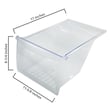
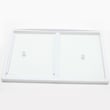
- If storage parts are cracked or missing, replace them so food stays organized (for example, a crisper drawer - refrigerator storage component by frigidaire 240337103).
| Feature | Top mount (CRT185LW5 style) | Bottom freezer |
|---|---|---|
| Fresh-food access | Lower, more bending | Higher, easier reach |
| Freezer access | Higher, easy reach | Lower, more bending |
| Typical features | Simpler, fewer dispensers | More feature-heavy options |
| Organization | Basic bins and shelves | Often more flexible layouts |
Most “disadvantages” come down to daily ergonomics and how you use storage. If your household uses fresh food more than frozen food, a bottom-freezer layout often feels easier; if you use the freezer frequently, a top mount can be more convenient.
Last updated: February 2026
How long do Crosley refrigerators last?
Most Crosley refrigerators last 10 to 15 years with normal household use and basic maintenance. For your Crosley CRT185LW5 top-mount refrigerator, keeping airflow clear, temperatures set correctly, and seals tight does the most to reach that typical lifespan; see the owner's manual for care and cleaning guidance.
A refrigerator’s life is usually determined by heat management, door sealing, and how hard the sealed system has to work.
- Keep the condenser area clean so the compressor runs cooler and cycles normally
- Confirm the temperature control is not set to "0" (OFF) by mistake
- Avoid overpacking; blocked vents reduce airflow and can cause warm spots
- Keep door gaskets clean and sealing evenly to prevent constant run time
- Use vacation steps for long absences (doors propped open after cleaning)
Use this as a simple routine to protect cooling performance and reduce wear.
| Task | How often | Why it matters |
|---|---|---|
| Clean condenser area | Every 6 to 12 months | Reduces heat load on the compressor |
| Check door seal for gaps | Monthly | Prevents warm air leaks and frost buildup |
| Verify temperature settings | Seasonally | Prevents overcooling or warm food |
| Keep interior airflow paths open | Ongoing | Helps stabilize refrigerator and freezer temps |
If you find a torn or warped seal, replacing the gasket is one of the most effective fixes for long run times and temperature swings; the parts list for CRT185LW5 includes options like the refrigerator gasket 241872512.
These symptoms usually mean the refrigerator is working harder than it should.
- Runs almost constantly and struggles to hold safe temperatures
- Repeated heavy frost buildup in the freezer
- Louder-than-normal operating sounds that persist (fan or compressor strain)
- Warm refrigerator section while the freezer seems “okay”
- Water puddles or recurring moisture around doors
A refrigerator that’s maintained to reach the 10 to 15 year range typically uses less energy, keeps food at safer temperatures, and avoids expensive failures like compressor overheating or chronic frost issues.
Last updated: February 2026