Owner’s manual
 Error Codes






Is top mount or bottom mount better?
A bottom-mount refrigerator like the Kenmore Elite 59676262700 is better when you want fresh-food items at eye level and more freezer organization (pull-out drawer and baskets). A top-mount is better when you want the simplest layout and typically the lowest purchase and operating cost.
Quick comparison
| Feature | Top-mount refrigerator | Bottom-mount refrigerator (like 59676262700) |
|---|---|---|
| Fresh-food access | Lower shelves require more bending | Most-used shelves are higher and easier to reach |
| Freezer access | Freezer is at eye level | Freezer is a pull-out drawer; easier to organize |
| Organization | Usually simpler bins and shelves | Often more baskets/dividers in the freezer drawer |
| Footprint/fit | Often fits tighter spaces | May need more front clearance for the drawer to open |
When a bottom-mount is the better choice
- You use the refrigerator section more than the freezer.
- You want a pull-out freezer drawer for better visibility and sorting.
- You prefer easier access to crisper drawers and lower fresh-food shelves.
- You want a layout that supports meal prep and frequent door openings.
When a top-mount is the better choice
- You want a straightforward, budget-friendly design.
- You do not mind bending for fresh-food items.
- You want fewer moving parts in the freezer area (no drawer slides/gears).
- You have limited space in front of the refrigerator for a freezer drawer to extend.
Fit and installation details that matter
Bottom-mount models need proper clearances and a good opening measurement so the unit can ventilate and the freezer drawer can operate smoothly. For this model, we recommend following the spacing guidance and measuring steps in the owner's manual.
Checklist before you decide
- Measure the opening height, width, and depth (include door swing space).
- Plan for airflow clearance (top and rear clearances are called out in the manual).
- Avoid installing near heat sources; performance can suffer.
- Confirm your kitchen traffic pattern allows the freezer drawer to pull out fully.
Why it matters
Choosing the right mount style affects daily comfort (bending and reaching), food organization, and how well the refrigerator fits and ventilates in your kitchen. A bottom-mount like the 59676262700 is usually the best “everyday convenience” choice for most households.
Last updated: February 2026
What are the common problems with Kenmore Elite refrigerators?
Common problems on the Kenmore Elite 59676262700 bottom-mount refrigerator include warm temperatures (often tied to airflow or dirty condenser coils), ice maker troubles (no ice, small cubes, loud operation), and water leaks (commonly from the water supply connection or drain issues). Use the owner's manual to match symptoms to the correct checks.
Most common symptoms and what usually causes them
- Not cooling or cooling poorly: blocked air vents, dirty condenser coils, doors not sealing, controls set incorrectly
- Runs too often: frequent door openings, warm room conditions, dirty condenser coils, door not closing fully
- Ice maker not making ice or making small/hollow cubes: low water pressure, freezer temperature too warm, ice maker component wear
- Water leaking: improper water line materials or valve type, loose/kinked tubing, clogged filter, installation issues
- Drawers not closing smoothly: drawer not seated, refrigerator not level, dirty drawer channels
Quick checks we recommend first (safe, high-impact)
- Confirm temperatures: set freezer to about 0°F (-17°C) and allow 24 hours to stabilize.
- Check door closing and gaskets: look for gaps; make sure bins, drawers, and containers are not blocking the door.
- Clean condenser coils: dirty coils can make the refrigerator run too frequently and cool poorly.
- Verify water pressure for ice and water: the water supply should be 35 to 100 psi; low pressure causes slow flow and small cubes.
- Inspect the water line: look for kinks in copper tubing and confirm the shutoff valve is fully open.
Water and ice issues: what “normal” specs look like
| Item | Normal target | What happens if it’s off |
|---|---|---|
| Water pressure | 35 to 100 psi | Slow dispenser flow, small or hollow ice cubes |
| Freezer temperature | About 0°F (-17°C) | Ice maker may stop or freeze slowly |
| Door seal/closure | Fully closes with no gaps | Warm temps, excess run time, frost, leaks |
Parts that commonly come up in these repairs
If troubleshooting points to a failed component, these model-compatible parts are commonly involved:
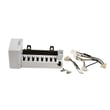
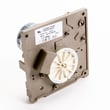
- Ice maker assembly 4317943 (complete ice maker replacement)
- Refrigerator temperature sensor 12002355 (temperature sensing and control feedback)
- Refrigerator ice maker thermostat WP627985 (ice maker cycling based on temperature)
Why it matters
Most “Kenmore Elite refrigerator problems” trace back to airflow, temperature control, or water supply conditions. Fixing basics like coil cleanliness, door sealing, and correct water pressure prevents repeat failures and protects food temperatures.
Last updated: February 2026
What is the average lifespan of a Kenmore Elite refrigerator?
A Kenmore Elite refrigerator typically lasts 10 to 15 years. With steady temperatures, clean condenser airflow, and prompt fixes for cooling or ice maker issues, many units run longer; heavy use and poor ventilation shorten life. For model-specific care steps, use the owner's manual.
Typical lifespan range (what to expect)
Most modern bottom-mount refrigerators fall into a predictable window when they are installed correctly and maintained.
- Average: 10 to 15 years
- Often achievable with good maintenance: 12 to 16 years
- Common reasons lifespan drops: restricted airflow, dirty coils, door seal leaks, recurring defrost problems
What affects lifespan the most
A refrigerator lasts longer when the sealed system and controls do not have to work overtime.
- Ventilation and coil cleanliness (compressor runs cooler and cycles normally)
- Door closing and gasket sealing (prevents warm air and moisture intrusion)
- Stable settings (avoids constant temperature swings)
- Ice maker and water system health (leaks and freeze-ups create secondary damage)
- Fast response to symptoms (warm temps, unusual noises, frost buildup)
Quick maintenance checklist
Use this as a simple routine to protect the compressor, fans, and temperature controls.
- Vacuum dust from the condenser area regularly
- Keep food from blocking air vents inside the fresh food section
- Confirm doors close fully and do not bounce back
- Clean spills promptly to prevent odors and corrosion
- Replace failed bulbs or sockets if lighting issues affect door switches (for example, a damaged refrigerator light socket W11447232)
Common “wear” items vs. major repairs
| Category | Examples | Why it matters |
|---|---|---|
| Wear and adjustment | door closing parts, drawer gears, light socket | Small issues can cause air leaks and extra run time |
| Control and sensing | thermistors, temperature sensors | Bad readings can cause warm temps or overcooling |
| Major cooling system | compressor, sealed system components | Higher cost; often the deciding factor on repair vs. replace |
Why it matters
When a refrigerator runs longer than normal to hold temperature, it increases compressor run time and heat load. That extra strain is the biggest driver of early failure in bottom-mount designs.
Last updated: February 2026
What model is my Kenmore Elite refrigerator?
Your Kenmore Elite refrigerator model number is printed on the model and serial number sticker inside the fresh food (refrigerator) section; on model 59676262700, it’s located on the left wall. Use that exact model number when looking up parts and the owner's manual.
Where to find the model number label
Check these common label locations on Kenmore Elite bottom-mount refrigerators:
- Inside the refrigerator compartment on the left interior wall (most common)
- On a side wall near the crisper drawers
- Along the door frame area when the fresh food door is open
- Occasionally behind the toe grille or near the lower hinge area
What the model number looks like (and why it matters)
Kenmore Elite model numbers are typically a series of digits. For this refrigerator family, the model number often starts with 596. Record both the model and serial number so you can match the correct refrigerator parts list.
Quick reference
| Item | What to write down | Why you need it |
|---|---|---|
| Model number | Example: 59676262700 | Ensures correct fit for parts like an ice maker, thermistor, or control |
| Serial number | The serial shown on the same sticker | Helps identify production details when ordering |
| Purchase date | Your purchase date | Useful for maintenance history and warranty paperwork |
Tips for reading the sticker accurately
- Copy the model number exactly as shown (all digits, no spaces)
- Take a clear photo before the label fades or gets damaged
- If the label is hard to read, wipe the area gently and re-check under bright light
Why it matters
Using the exact model number prevents ordering the wrong Kenmore refrigerator parts, especially for model-specific items such as the ice maker assembly 4317943 or temperature sensing components.
Last updated: February 2026