Owner’s manual




How to clean Kenmore Elite range hood filters?
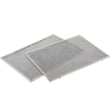
For Kenmore model 23352602000, clean the aluminum mesh grease filters frequently using hot water and a mild detergent; they are dishwasher safe. Let filters dry completely before reinstalling, and always disconnect power before cleaning (see the 23352602000 owner's manual).
- Turn off the hood and disconnect power at the breaker or unplug (if applicable).
- Pull down on the filter tabs and lift the filters out.
- Wash aluminum mesh filters in hot water with mild detergent, or place in the dishwasher.
- Rinse (if hand-washed) and dry fully before reinstalling.
- Wipe the hood interior and exterior with a damp cloth and mild detergent.
- Keep water out of the motor area; do not spray cleaner into the fan or wiring.
| Item | How to clean | What to avoid |
|---|---|---|
| Aluminum mesh grease filters | Hot water + mild detergent; dishwasher safe | Harsh abrasives that can damage the mesh |
| Hood surfaces | Damp cloth + mild detergent | Excess water running into switches or motor |
| Fan area | Wipe carefully | Bending the fan blade; getting water into the motor |
Clean filters and grease-laden surfaces help the fan move air better, reduce odors, and lower grease buildup inside the hood. Regular cleaning also helps prevent noisy operation caused by heavy grease accumulation.
If airflow stays weak after cleaning, the issue is usually beyond the filters (blocked ducting, stuck damper, or a worn motor). These model-specific parts are common fixes:
- Range hood grease filter, 2-pack S99010299 (if your filters are damaged or won’t come clean)
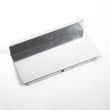
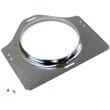
- Range hood vent damper SR740013 (if the damper is sticking or rattling)
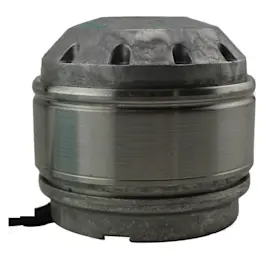
- Range hood fan motor assembly SR99080535 (if the motor hums, overheats, or won’t run)
Last updated: February 2026
What are the parts of a range hood called?
On the Kenmore 23352602000 range hood, the main parts are the hood body (canopy), venting pieces, fan (blower) components, controls (rocker switches), lighting parts, and filters. These names match how parts are listed for operation, cleaning, and replacement in the 23352602000 owner's manual.
- Hood canopy (hood body): captures smoke, steam, and grease under the cabinet
- Vent system (ducting and damper): routes air outside (ducted) or back into the kitchen (non-ducted)
- Blower assembly: moves air; includes the motor and blower wheel/fan blade
- Control switches: turn the fan and lights on/off and change speeds/intensity
- Lighting system: lamp socket, lens, and light diode (depending on version)
- Grease filters (mesh): trap grease before it reaches the blower and ductwork
Here are examples of the names used for replacement parts on Kenmore 23352602000:
| System | Example part name | What you notice when it fails |
|---|---|---|
| Venting | Range hood vent damper | Flapping noise, backdraft, poor venting |
| Air movement | Range hood fan motor assembly | Fan will not run, hums, runs slow |
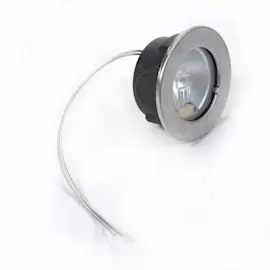
| Lighting | Range hood light socket | Light flickers, will not turn on |
| Filtration | Range hood grease filter, 2-pack | Grease buildup, reduced airflow |
- Use the model number 23352602000 when looking up diagrams and parts lists.
- Match by function first (light, fan, venting, filter), then by shape and mounting.
- For venting complaints, check the damper and filters before replacing the motor.
- For lighting complaints, check the bulb first, then the socket and lens.
- Confirm switch positions and operation; this model uses 3-position rocker switches for fan and light.
Using the correct part name helps you troubleshoot faster and order the right replacement the first time, especially for common wear items like filters, switches, and light components.
Last updated: February 2026
Why is the fan not working on my Kenmore range hood?
If the fan on your Kenmore range hood model 23352602000 is not working, the most common causes are a failed fan speed switch, a wiring or power issue, or a problem in the blower assembly (motor or fan blade). Start by confirming the rocker switch positions and power supply per the 23352602000 owner's manual.
- Verify the fan rocker switch is not in the center OFF position (left = low, right = high).
- Confirm the hood has power (tripped breaker, loose connection in the junction box).
- Make sure the aluminum mesh filters are clean; heavy grease buildup can restrict airflow and make the fan seem weak.
- Check that the fan blade spins freely and is not rubbing (the manual warns not to push on the fan blade during installation).
- If the hood is ducted, confirm the damper is not stuck closed.
When power is present and the switch is set correctly, these parts are the usual suspects:
| Symptom | Most likely cause | What to inspect/replace |
|---|---|---|
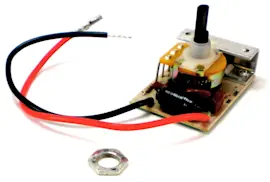
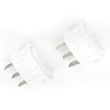
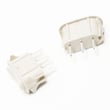
| Fan does nothing on any speed | Bad fan switch or loose wiring | Range hood rocker switch, 2-pack (almond) SR561119, wire connections under the wire cover |
| Hums but won’t spin | Seized motor or stuck blower wheel | Range hood fan motor assembly SR99080535, blower wheel for binding |
| Runs but very noisy or vibrating | Damaged fan blade or loose mounting | Fan blade SR531075, mounting screws and motor mounts |
- Turn off power at the breaker.
- Remove the filters and check for grease buildup; clean the mesh filters with hot water and mild detergent (dishwasher safe).
- Inspect wiring connections and the wire cover area for loose or burned terminals.
- Spin the blower by hand to confirm it turns smoothly.
- If the blower is tight, noisy, or won’t start under power, replace the motor assembly.
A non-working range hood fan reduces smoke and grease capture and can allow grease to build up on filters and internal surfaces. Keeping the fan and filters clean also helps reduce fire risk and improves ventilation performance.
Last updated: February 2026