Installation guide
 Owner’s manual
 Error Codes


What is the average lifespan of a KitchenAid dishwasher?
A KitchenAid dishwasher typically lasts 10 to 14 years. For your KitchenAid KDTM404EBS3, lifespan depends most on water quality, how often you run it, and routine care like cleaning filters and using rinse aid as recommended in the KDTM404EBS3 user manual.
- Hard water: mineral buildup can strain the pump, spray system, and heater.
- Heavy daily use: more cycles means faster wear on moving parts.
- Detergent and rinse aid habits: correct detergent plus rinse aid improves cleaning and drying, reducing residue buildup.
- Loading and rack wear: overloading stresses racks, adjusters, and rails.
- Leaks or slow drains: moisture and standing water shorten component life.
- Clean the filter area and remove debris regularly.
- Run a dishwasher cleaner cycle periodically to reduce grease and mineral buildup.
- Use rinse aid for better drying and to help control hard-water deposits.
- Keep the spray arms clear; remove labels, seeds, and glass bits from the holes.
- Fix small rack issues early (for example, a broken adjuster) to prevent bigger damage.
| Habit | What it prevents | Typical payoff |
|---|---|---|
| Using rinse aid | Spots, filming, hard-water deposits | Better drying, less buildup |
| Cleaning filter area | Drain clogs, poor wash performance | Fewer pump and drain issues |
| Keeping spray arms clear | Poor cleaning, redepositing soil | More consistent wash results |
Dishwashers like the KDTM404EBS3 are designed to use less water and energy, so they often run longer cycles to clean effectively. Good maintenance keeps wash performance high and reduces stress on key parts like the motor, heater, and drain path.
If performance drops but the tub and controls are in good shape, replacing a worn component can be a cost-effective way to extend service life. Common examples include a leaking fill valve, poor drying from heater issues, or rack hardware failures.
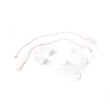
- Water fill problems: consider the dishwasher water inlet valve W11175771
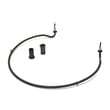
- Drying or heating problems: consider the element assembly W10703867
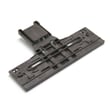
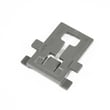
- Upper rack height or stability problems: consider the dishwasher dishrack adjuster WPW10546503
Last updated: January 2026
What is the most common problem with a KitchenAid dishwasher?
For the KitchenAid KDTM404EBS3 dishwasher, the most common issue we see is poor cleaning (food left on dishes) caused by restricted water flow from a dirty filter area or clogged spray arm holes. Close behind are drain problems, won’t start symptoms, and small leaks around the door.
- Dishes come out dirty: spray arm ports clogged, filter area needs cleaning, loading blocks spray
- Not draining: drain path restricted, kinked hose, disposer plug not removed on new installs
- Won’t start or stops mid-cycle: door not latching fully, control lock or cycle selection issue
- Leaking at the front: door seal contamination, lower seal wear, door not closing squarely
- Not drying well: heat/dry settings not used, rinse aid low, heater circuit issue
- Confirm the door closes and latches firmly; a weak latch can prevent the wash motor from running.
- Inspect and clean the spray arms; remove debris from the holes and make sure arms spin freely.
- Check the drain hose routing; it should not be kinked and should follow proper drain requirements.
- Run hot water at the sink before starting a cycle to improve wash performance.
- Review cycle options and indicators in the KDTM404EBS3 owner’s manual to confirm the correct cycle and settings.
| Symptom | Common part involved | What it affects |
|---|---|---|
| Won’t start / stops | Door latch | Confirms door is closed so the unit can run |
| Not filling / weak wash | Water inlet valve | Controls water entering the dishwasher |
| Not drying / poor heat | Element assembly | Heats water and supports drying |
| Not draining | Drain hose | Carries water to the sink/disposer drain |
If the door is not closing consistently, replacing the dishwasher door latch WPW10653840 is a common fix. For fill issues, the dishwasher water inlet valve W11175771 is often the next part to check.
Most “KitchenAid dishwasher problems” trace back to water movement (fill, spray, drain). When water cannot circulate at full pressure or cannot exit freely, you get dirty dishes, long cycles, odors, and repeat clogs.
For display codes or flashing patterns, use the KitchenAid he dishwasher error codes guide to match the symptom to the most likely cause.
Last updated: January 2026
Does the KitchenAid KDTM404EBS3 have leak detection?
Yes. The KitchenAid KDTM404EBS3 dishwasher is designed with leak detection protection that monitors for abnormal water conditions and helps stop filling or draining to reduce the chance of a leak becoming a flood. For model-specific indicator behavior and what you will see on the console, use the KDTM404EBS3 user manual.
Leak detection typically refers to a float or sensor-based system that reacts when the dishwasher senses an overfill condition or water where it should not be.
Common outcomes when leak protection activates:
- The dishwasher may stop the cycle and run the drain pump
- The unit may refuse to start a new cycle until the condition clears
- You may see a blinking light or an error code depending on the control
Before replacing parts, we recommend these practical checks:
- Verify the dishwasher is level; a tilted tub can cause water to move toward sensors
- Check the door seal area for debris that prevents a tight seal
- Confirm the drain hose routing has a proper high loop and is not kinked
- Look for slow filling or overfilling symptoms (both can point to a water inlet issue)
- Inspect under the unit for moisture after a cycle
If you find active leaking at the fill point, the dishwasher water inlet valve W11175771 is a common component involved in fill-related leaks.
KitchenAid dishwashers often report water and leak-related problems through fault codes.
Use this guide to match symptoms to codes:
| Symptom you notice | Common area to inspect | Example part for KDTM404EBS3 |
|---|---|---|
| Water on floor at front | Door sealing surfaces | Dishwasher door seal, lower (W10909089) |
| Overfilling or no fill shutoff | Fill system | Dishwasher water inlet valve (W11175771) |
| Leaks during wash circulation | Pump seals and sump area | Dishwasher pump grommet (WPW10538166) |
Leak detection helps protect your kitchen cabinets and flooring, but it can also stop the dishwasher from running when it senses a risk. Knowing what triggers it helps you correct installation, loading, or a failing valve or seal before damage spreads.
Last updated: January 2026