Owner’s manual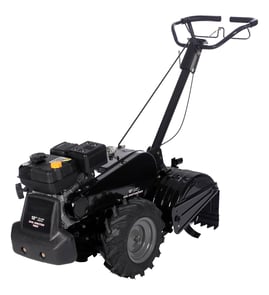




How much does it cost to fix a tiller?
For a Craftsman rear-tine tiller model 917299060, repair cost depends on what failed and whether you DIY or hire a shop. Typical shop labor runs about $60 per hour, and many full “tune-up/recondition” repairs land around $200 to $300 total.
What usually drives the price
The biggest cost factors are diagnosis time, labor hours, and whether the repair needs common wear items (belts, filters) or deeper engine/transmission work.
- Labor time (simple adjustments vs. teardown)
- Parts replaced (belt, air filter, fuel system parts)
- Severity (won’t start vs. gearcase issues)
- Shop minimum charges (some repairs have a minimum fee)
- DIY vs. professional service
Common repair scenarios (typical ranges)
These are practical planning ranges for a rear-tine tiller like the 917299060.
| Repair type | What’s involved | Typical cost range |
|---|---|---|
| Basic tune-up | Spark plug, air filter, oil change, adjustments | $100 to $250 |
| Drive issue | Belt inspection/adjustment or replacement | $120 to $300 |
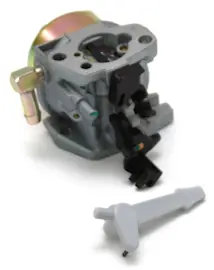
| Fuel system problem | Drain stale fuel, replace fuel hose/cap, clean carb | $150 to $350 |
| Major mechanical | Internal engine or gearcase work | $300+ |
DIY checks that can save a service call
Before paying for repair, we recommend checking the basics called out in the 917299060 owner’s manual.
- Verify the engine switch is ON and the fuel valve is ON
- Confirm fresh fuel (stale fuel is a common cause of hard starting)
- Inspect and replace a dirty air filter (this model uses a serviceable cartridge)
- Check belt condition and tension if the engine runs but the tiller won’t move
- Look for obvious fuel leaks or cracked fuel lines
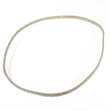
If you suspect a worn or slipping belt, the model-specific replacement part to consider is the husqvarna rear-tine tiller drive belt 591372401.
Why it matters
A small maintenance repair (belt, air filter, fuel line) is usually far cheaper than running the tiller while it’s slipping, overheating, or running lean, which can lead to bigger engine or drive damage.
Last updated: January 2026
How to grease a tiller?
For the Craftsman rear-tine tiller model 917299060, routine greasing is mainly about lubricating the chassis pivot points and fittings (not the transmission). Use EP#1 grease where specified and a light motor oil on pivots, following the lubrication chart in the 917299060 owner’s manual.
Where to grease on model 917299060
We focus on the lubrication points called out for this model:
- RH gear case grease fitting (use EP#1 grease)
- Wheel hubs (use EP#1 grease)
- Depth stake pin (use EP#1 grease)
- Leveling shield hinges (use EP#1 grease)
- Idler bracket and other pivot points (use SAE 30 or 10W-30 motor oil)
What grease and oil to use
The manual for 917299060 specifies two lubricant types.
| Location | Lubricant type | Notes |
|---|---|---|
| Grease fittings, hubs, pins, hinges | EP#1 grease | Use a grease gun where a fitting is present |
| Pivot points (linkages/brackets) | SAE 30 or 10W-30 motor oil | A few drops is usually enough |
Basic steps (safe, quick routine)
- Shut the engine off, let hot parts cool, and disconnect the spark plug wire.
- Brush off dirt around grease points so you do not push grit into bearings.
- Apply EP#1 grease to grease fittings and grease points until you see slight fresh grease movement (do not overpack).
- Add a few drops of motor oil to pivot points and work the control/lever to spread it.
- Wipe off excess to reduce dirt buildup.
Important note about the transmission
On this Craftsman 917299060 tiller, the transmission is described as sealed and does not require lubrication unless serviced. If you suspect a leak or internal issue, we recommend service rather than adding grease.
Why it matters
Correct lubrication reduces wear on wheel hubs, pins, and moving linkages; it also helps prevent stiff controls and premature bearing or bushing damage during heavy tilling.
Last updated: January 2026
What are common tiller problems?
Common problems on the Craftsman 917299060 rear-tine tiller include a no-start condition (fuel, spark, or air issues), loss of power under load, overheating, and drive problems where the wheels or tines will not move because the drive belt is off, worn, or out of adjustment. Use the 917299060 owner's manual troubleshooting chart to match symptoms to checks.
Most common symptoms and what they usually point to
- Engine will not start: out of fuel, fuel valve OFF, engine switch OFF, improper choke, flooded engine, bad spark plug, dirty air filter, water in fuel
- Hard starting or rough running: throttle not set, dirty air filter, stale fuel, loose spark plug wire
- Loss of power while tilling: tilling too deep, dirty air screen, low or dirty oil, clogged muffler
- Engine overheats: low or dirty oil, dirty cylinder fins or air screen, partially plugged muffler
- Engine runs but tiller will not move: tine control not engaged, V-belt off pulleys, V-belt out of adjustment
Quick checks we recommend (in order)
- Confirm the fuel valve and engine switch are ON.
- Set choke for a cold start; set throttle about 1/3 toward FAST for starting.
- Check the air filter and spark plug wire connection.
- Verify engine oil level before starting; low oil can cause power loss and overheating.
- If the engine runs but the unit will not move, inspect belt routing and tension.
Parts that commonly solve drive and starting issues
| Symptom | Likely area | Compatible part for this model |
|---|---|---|
| Engine runs but tiller will not move | Belt drive | Husqvarna rear-tine tiller drive belt 591372401 |
| Hard starting, fuel smell, or fuel delivery concerns | Fuel system | Fuel hose kit 532438014 |
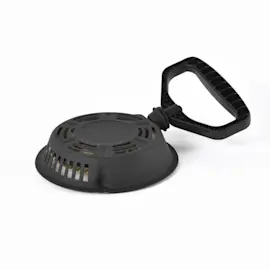
| Engine will not start due to a broken pull-start | Starting system | Tiller recoil starter 532420603 |
Why it matters
Catching simple issues early (stale fuel, dirty air filter, low oil, incorrect depth stake setting, or a loose belt) helps prevent overheating and reduces wear on the belt drive and tine components.
Last updated: January 2026
What kind of oil do you use in a Craftsman tiller?
For the Craftsman rear-tine tiller model 917299060, use engine oil rated API SG-SL; the manual specifies SAE 30 above 32°F and SAE 5W-30 below 32°F, with an oil capacity of 20 oz (0.6 L). See the 917299060 owner’s manual for the full oil and maintenance schedule.
Oil type and temperature chart
Use the viscosity that matches your starting temperature:
| Outdoor temperature | Oil to use | Notes |
|---|---|---|
| Above 32°F (0°C) | SAE 30 | Best for warm-weather operation |
| Below 32°F (0°C) | SAE 5W-30 | Helps cold starting |
How to check and add oil (quick steps)
- Park the tiller on a level surface and let the engine cool.
- Remove the oil filler plug (fill point).
- Add oil slowly; this model is filled to the point of overflowing when level.
- Reinstall and tighten the filler plug securely.
- Recheck oil level before starting and after every 5 hours of continuous use.
Change interval (what we recommend)
The manual guidance for this model is:
- Change engine oil every 25 hours of operation.
- Change at least once per year even if you do not reach 25 hours.
- Check oil level before each use.
Why it matters
Using the correct viscosity helps the engine lubricate properly at startup and under load. The wrong oil (or low oil) can cause hard starting, overheating, and accelerated wear during tilling.
Last updated: January 2026
What tiller is made in the USA?
For the Craftsman rear-tine tiller model 917299060, the owner’s documentation does not identify a specific country of manufacture. We recommend using the product data plate on your tiller for the most accurate origin information, and using the 917299060 owner’s manual for model-specific operation and maintenance details.
How to confirm where your 917299060 was made
Check the identification label (often on the frame near the engine, transmission area, or handle column). Look for fields such as “Made in…”, “Assembled in…”, or a manufacturing code.
- Locate the model and serial label on the tiller frame
- Record the full model number (917299060) and serial number
- Look for an explicit “Made in” statement on the label
- If no country is listed, note any manufacturer code or engine model number
- Keep a photo of the label for parts lookup and service
USA-made tillers (general guidance)
Across the tiller market, “Made in USA” varies by brand and by specific model year. Some brands advertise U.S. manufacturing for certain product lines, but it is not universal across all tillers.
Quick comparison: what to look for
| What you see | What it usually means | What to do next |
|---|---|---|
| “Made in USA” | Manufactured in the U.S. | Save a photo for your records |
| “Assembled in USA” | Final assembly in the U.S.; parts may be global | Ask for details if you need sourcing clarity |
| No origin listed | Origin not stated on the label/manual | Use serial and manufacturer codes to research |
Why it matters
Country of manufacture can affect expectations for parts sourcing, warranty handling, and resale value. For repairs and upkeep, the most important factor is matching parts to Craftsman 917299060 specifications and diagrams.
Last updated: January 2026