Installation guide
 Owner’s manual

What is the average lifespan of a KitchenAid dishwasher?
A KitchenAid dishwasher typically lasts 10 to 14 years. For your KitchenAid KDFE104DSS1, lifespan depends most on water quality, how often it runs, and routine care like cleaning filters and using rinse aid as recommended in the KDFE104DSS1 owner's manual.
Most KitchenAid dishwashers land in the same general range, but these factors move the needle:
- Hard water speeds up mineral buildup and can reduce performance over time
- Heavy daily use wears pumps, seals, and racks faster than light use
- Detergent choice and amount matters; too much or the wrong type can cause suds and poor operation
- Rinse aid use improves drying and helps control hard-water deposits
- Incoming water temperature should be about 120°F (49°C) for best cleaning results
Use these habits to keep the KDFE104DSS1 running efficiently year after year:
- Clean the interior and filter area regularly (monthly is a good target)
- Keep spray arms clear of labels, seeds, and debris
- Use fresh dishwasher detergent (not hand soap or laundry detergent)
- Refill rinse aid and keep the dispenser cap secured
- Run hot water at the sink before starting a cycle if your tap runs cold
| Item | Typical expectation | What you notice when it’s wearing out |
|---|---|---|
| Dishwasher overall | 10 to 14 years | More frequent leaks, poor cleaning, repeated drain issues |
| Drain system | 7 to 12 years | Standing water, slow drain, humming during drain |
| Rack rollers/adjusters | 5 to 10 years | Rack falls off track, rough rolling, broken wheels |
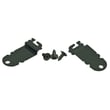
If your lower rack is hard to roll or keeps derailing, the dishwasher dishrack roller assembly, lower WPW10195417 is a common wear item on this style of dishwasher.
Knowing the expected lifespan helps you decide whether to repair or replace. If your KDFE104DSS1 is under about 10 years old, replacing a common failure part (like a drain pump, inlet valve, or rack hardware) often restores reliable performance for years.
Last updated: January 2026
Is it worth fixing a KitchenAid dishwasher?
Yes, it’s usually worth fixing a KitchenAid dishwasher like model KDFE104DSS1 when the repair is a common wear item (rack wheels, latch, valve, drain pump) and the total repair cost stays well below the price of a comparable replacement. Replacement makes more sense when multiple major failures stack up.
- Age: Dishwashers typically last 10 years.
- Repair cost: A good rule is repair when the total is under ~50% of replacement cost.
- Failure type: One failed part is usually a good repair; repeated breakdowns point to replacement.
- Performance issues: Many “bad dishwasher” complaints are actually loading, detergent, or water-temperature problems.
- Warranty coverage: KitchenAid coverage can extend beyond year 1 for certain components.
These are frequent, targeted fixes that can restore normal operation without replacing the whole dishwasher:
- Rack rolling issues: dishwasher dishrack roller assembly, lower WPW10195417
- Won’t latch or stops mid-cycle: dishwasher door latch WPW10653840
- Not draining: dishwasher drain pump WPW10348269
- Not filling: dishwasher water inlet valve W11175771
| Situation | Usually worth repairing | Usually worth replacing |
|---|---|---|
| One clear failed part | Yes | No |
| Multiple major parts failing | Sometimes | Yes |
| Poor cleaning/drying but no failed parts | Yes (maintenance/setup) | No |
| Tub or inner door liner issue | Often (check coverage) | Sometimes |
Before spending money on parts, we recommend ruling out setup issues that mimic failures. For KDFE104DSS1, proper detergent use and incoming water at least 120°F (49°C) can make a big difference in cleaning and cycle behavior. See the KDFE104DSS1 owner’s manual for operating and care guidance.
- If you’re seeing flashing lights or a code: KitchenAid microclean he dishwasher error codes
Last updated: January 2026
What is the most common problem with a KitchenAid dishwasher?
The most common issue we see with the KitchenAid KDFE104DSS1 dishwasher is poor cleaning results (dishes still dirty) caused by restricted water flow or wash action, usually from clogged filters or spray arms, low incoming water temperature, or draining problems that leave dirty water behind. See the KDFE104DSS1 owner's manual for model-specific checks.
- Food still on dishes: spray arms blocked, filter area dirty, or weak circulation
- Cloudy film or grit: hard water, too much or wrong detergent, or poor rinse aid use
- Standing water after the cycle: drain path restriction or a failing drain pump
- Clean light flashing: water supply issue, suds/foam, or float not moving freely
- Poor drying: no rinse aid, plastics loaded poorly, or heat-dry option not used
- Confirm the shutoff valve is fully open and the dishwasher is filling normally.
- Make sure the overfill protection float moves freely; press it down to release it.
- Verify incoming hot water is at least 120°F (49°C) before starting a cycle.
- Use only automatic dishwasher detergent; avoid hand soap or laundry detergent (suds can stop filling or washing).
- Use rinse aid and select a heated drying option for better drying, especially plastics.
If the dishwasher is not draining well or leaves water in the tub, the drain system is the first place we look.
| Symptom | Most likely area | Example part for KDFE104DSS1 |
|---|---|---|
| Water left in bottom | Drain pump or drain hose restriction | Dishwasher drain pump WPW10348269 |
| Slow drain or backflow | Drain hose routing/clog | Dishwasher drain hose (inspect for kinks) |
| Not drying well | Heat system or rinse aid use | Element assembly W10703867 (if heat is not working) |
Poor cleaning is usually a water movement problem; when spray pressure is low or dirty water is not pumped out, soil redeposits on dishes and can trigger longer cycles, flashing lights, and repeat clogs.
For code-related symptoms, we also use the KitchenAid microclean he dishwasher error codes reference to match the light pattern to the most likely cause.
Last updated: January 2026