Installation guide
 Owner’s manual
 Error Codes


Where is the model number on a Kenmore side by side refrigerator?
On Kenmore side-by-side refrigerator model 10656832600, the model number is printed on the appliance identification label inside the fresh food (refrigerator) compartment. Open the refrigerator door and look along the cabinet walls near the top, side, or ceiling area for a sticker that lists the model and serial information; confirm the exact location in the owner's manual.
Common places to check
- Inside the refrigerator compartment on the left or right side wall
- On the ceiling of the refrigerator compartment near the light housing
- Behind the crisper drawers on the side wall (visible when drawers are removed)
- Along the door frame (cabinet face) where the door gasket seals
- On the back exterior panel (less common, but worth a quick look)
What the label looks like
The ID label is usually a white or silver sticker and typically includes:
- Model number (for example, 10656832600)
- Serial number
- Electrical ratings (volts/amps)
- Refrigerant and other manufacturing information
Quick checklist before you write it down
- Copy the model number exactly as printed (all digits, no spaces)
- Take a clear photo of the label for reference
- If the label is hard to read, wipe it gently with a damp cloth and dry it
Why it matters
We use the exact model number to match the correct Kenmore parts and diagrams for your refrigerator, especially for fit-critical items like a water filter, ice maker, door gasket, or temperature control.
| You need | Use this from the label | Why |
|---|---|---|
| Replacement parts | Model number | Ensures correct fit and compatibility |
| Troubleshooting | Model + serial | Helps narrow down version changes |
| Manual lookups | Model number | Pulls the right instructions |
Last updated: February 2026
What is the cubic foot of my Kenmore refrigerator?
The exact cubic-foot capacity for Kenmore model 10656832600 is listed in the product specifications section of the owner's manual. If you need a quick estimate, we can calculate interior volume by measuring usable inside height, width, and depth, then converting cubic inches to cubic feet.
How to find the capacity on your refrigerator
Check these common spots first:
- The rating plate inside the fresh food section (often on a side wall near the crisper area)
- The specifications pages in the owner's manual
- Your model’s product listing details (capacity is often shown with other specs)
How to calculate cubic feet yourself (quick method)
- Measure the usable interior of the refrigerator compartment in inches:
- Height (H)
- Width (W)
- Depth (D)
- Multiply: H × W × D = cubic inches
- Convert to cubic feet: cubic inches ÷ 1,728 = cubic feet
Example conversion table
| What you have | What to do | Result |
|---|---|---|
| Interior measurements in inches | Multiply H × W × D | Cubic inches |
| Cubic inches | Divide by 1,728 | Cubic feet |
Tips to get a more accurate number
- Measure usable space, not the outside cabinet size.
- Subtract areas that are not true storage volume (large air channels, fixed housings, thick interior walls).
- If you want total capacity (fresh food + freezer), measure both compartments and add them.
Why it matters
Cubic-foot capacity helps you choose correctly sized replacement items and accessories (like bins and pans) and compare storage space between side-by-side refrigerator models when planning kitchen fit and food storage.
Last updated: February 2026
What causes a side-by-side refrigerator to stop cooling?
A Kenmore 10656832600 side-by-side refrigerator usually stops cooling because it is not getting power, the controls are turned off or set incorrectly, airflow is blocked, or the unit is still in the first 24 hours of cooling after installation. Start with the quick checks in the owner's manual.
Quick checks (fastest fixes first)
- Confirm the power cord is fully plugged into a grounded 3-prong outlet.
- Test the outlet with a lamp; reset the breaker or replace a blown fuse if needed.
- Make sure the refrigerator controls are turned on.
- Verify temperature settings are appropriate; changing to “coldest” does not cool faster.
- Allow 24 hours after a new installation for the refrigerator to cool completely.
- Minimize door openings; warm air entering can make temperatures rise.
Airflow and loading issues that mimic “no cooling”
Blocked airflow can make one or both compartments warm even when the compressor is running.
- Keep food packages from blocking supply and return vents.
- Avoid overpacking; cold air must circulate.
- Let a large load of warm groceries cool down for several hours.
What to expect after changes
| Situation | What you’ll notice | Typical wait time |
|---|---|---|
| New install or power restored | Temps slowly drop | Up to 24 hours |
| Controls adjusted colder | Gradual improvement | Check again in 24 hours |
| Large food load added | Temporary warming | Several hours |
When it points to a repair
If power and settings are correct and temperatures do not improve after 24 hours, a failed cooling or defrost component is likely. Common suspects on side-by-side refrigerators include the evaporator fan system and defrost controls.
- Loud or unusual fan behavior can indicate an evaporator fan issue; see how to fix your evaporator cooling fan.
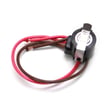
- Heavy frost on the freezer back wall often points to a defrost problem; a common part involved is the refrigerator defrost bi-metal WPW10225581.
Why it matters
Running warm for long periods can spoil food and force the compressor and fans to run excessively. Quick checks (power, controls, doors, airflow) prevent unnecessary part replacement and service calls.
Last updated: February 2026
What are the dimensions of a Kenmore 10656832600 refrigerator?
The Kenmore 10656832600 refrigerator’s exact height, width, and depth are provided in the product specifications section of the owner's manual. Use those published specs for cabinet fit, then add the required installation clearances so doors open fully and airflow stays unobstructed.
What to measure (and why)
Even with published specs, measuring your space prevents surprises with trim, flooring, and handles.
- Width: wall to wall at the tightest point (baseboard to baseboard)
- Height: floor to the lowest overhead obstruction (cabinet, soffit, light)
- Depth: back wall to the front edge of counters; note with and without handles
- Door swing space: room for doors to open without hitting a wall
Installation clearances for model 10656832600
Your manual calls out these minimum clearances for ventilation and door swing:
- 1/2 inch (1.25 cm) space on each side and at the top for ventilation
- If installed next to a fixed wall, leave 2 inches (5.08 cm) minimum on each side (depending on your setup) so the door can swing open
- Leave extra space at the back if you have an ice maker for the water line connections
Quick clearance summary
| Location | Minimum clearance |
|---|---|
| Each side | 1/2 in (1.25 cm) |
| Top | 1/2 in (1.25 cm) |
| Next to fixed wall (door swing) | 2 in (5.08 cm) minimum |
| Back (water line) | Extra space for connections |
Why it matters
Correct dimensions plus clearances prevent restricted airflow (warm temps), doors that cannot open fully, and pinched water lines that can cause leaks or weak ice maker performance.
Last updated: February 2026
What are the most common problems with Kenmore refrigerators?
The most common problems we see on Kenmore refrigerators like model 10656832600 are weak or no cooling, ice maker and water dispenser issues, water leaks, excess frost or interior moisture, and noises that seem unusual. Many are caused by airflow restrictions, door sealing problems, or water supply issues.
Common problems and typical causes
- Not cooling or weak cooling: controls set wrong, doors left open, blocked vents, dirty condenser area, evaporator fan or compressor issues
- Ice maker not making ice: shutoff valve not fully open, kinked water line, ice maker switched off, new install needs time
- Water dispenser problems: low flow from supply restriction or filter, first glass not cold, air in the line after filter change
- Moisture or frost: humid room air, frequent door openings, door not sealing
- Noises: buzzing, pulsating, rattling, sizzling, popping, or water running during defrost can be normal
Quick checks we recommend first
- Verify temperature controls are on and set for normal use (see the owner's manual).
- After installation or a power interruption, allow 24 hours to cool; ice can take 24 hours to start and 72 hours for full production.
- Keep vents clear and make sure doors close fully.
- For ice issues, confirm the shutoff valve is fully open and the water line is not kinked.
- If water flow is slow, replace the filter and purge air by dispensing several glasses.
Symptom guide
| Symptom | Most likely cause | Best next step |
|---|---|---|
| Fridge warm, freezer warm | Controls, doors, airflow, condenser | Check settings, door closure, clean airflow path |
| Freezer cold, fridge warm | Air not moving to fresh food side | Check vents and evaporator fan operation |
| No ice | Water supply or ice maker off | Open valve fully; straighten line; turn ice maker on |
| Moisture inside | Humidity or poor seal | Reduce openings; inspect door seal |
Parts that are often involved
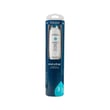
- Water and ice: refrigerator ice maker WPW10190961, genuine Kenmore refrigerator water filter EDR3RXD1
- Cooling airflow: evaporator motor WP2315549
Why it matters
Fixing airflow, water supply, and door-seal problems quickly keeps food safe, reduces frost and leaks, and prevents long run times.
Last updated: February 2026