Owner’s manual
 Error Codes


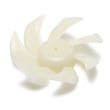
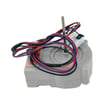
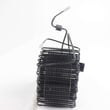
How to find Kenmore 79578773801 fridge model number?
For Kenmore Elite model 79578773801, the model and serial number are printed on an identification label inside the fresh food (refrigerator) compartment, typically on the right-hand side wall. Use that exact number when ordering parts or checking specifications in the 79578773801 owner's manual.
Where to look first (fastest checks)
- Open the refrigerator door and scan the right interior wall of the refrigerator compartment
- Look near the crisper drawer area (labels are often placed around lower side walls)
- Use a flashlight; the label can be small and easy to miss
- Write down both the model and serial number (you often need both for service and parts)
What the label looks like
The ID label is usually a white or silver sticker/plate with:
- Model number (example format: 795.7877 plus additional digits)
- Serial number
- Electrical ratings (volts/amps)
- Sometimes a barcode
Why it matters
Using the exact model number ensures you get the correct Kenmore Elite bottom-mount refrigerator parts (for example, a water inlet valve, door gasket, or evaporator fan motor) and the right instructions for door alignment, controls, and troubleshooting.
Quick reference
| Item | What to record | Why you need it |
|---|---|---|
| Model number | 79578773801 (exact) | Matches the correct parts diagrams and manuals |
| Serial number | From the same label | Helps identify production details for service |
Last updated: February 2026
What are the common problems with Kenmore 79578773801 refrigerators?
Common problems on the Kenmore Elite 79578773801 bottom-mount refrigerator are weak or uneven cooling, frost buildup, water leaks, ice maker or dispenser issues, and unusual fan noise. Most of these trace back to airflow restrictions, dirty condenser coils, door sealing problems, or a defrost or water-supply component that needs service (see the owner's manual).
Most common symptoms and what usually causes them
- Refrigerator or freezer too warm: blocked air vents, frequent door openings, controls not set for conditions, or dirty condenser coils
- Frost or ice crystals on frozen food: door not closing fully or door opened often
- Interior moisture buildup: humid conditions, frequent door openings, or doors not sealing
- Water leaking or puddles: clogged/iced drain path, loose water line connection, or a valve/tubing issue
- Noisy operation: evaporator fan area icing, failing fan motor, or debris near the condenser fan
Quick checks we recommend first (no parts required)
- Confirm airflow: make sure packages are not blocking vents between freezer and fresh-food sections.
- Adjust temperatures correctly: change the refrigerator setting first, then wait 24 hours before judging results; adjust the freezer after that if needed.
- Clean condenser coils: dusty coils commonly cause poor cooling and longer run times.
- Check door closing and gaskets: clean the gasket and the surface it touches; if it sticks, apply a thin coat of paraffin wax after cleaning.
- After a power interruption: allow temperatures to stabilize and re-check settings.
Parts that commonly solve these issues on this model
If your symptom matches, these are frequent repair paths for the 79578773801:
| Symptom | Common part to inspect/replace | Example part on this page |
|---|---|---|
| Warm temps, fan noise, poor airflow | Evaporator fan motor or fan blade | Refrigerator evaporator fan motor 4681JB1027C, refrigerator evaporator fan blade 5901JA1021A |
| Frost buildup, warm temps after icing | Defrost heater or defrost sensor | Lg refrigerator defrost heater 5300JK1005D, refrigerator defrost sensor assembly 6615JB2005H |
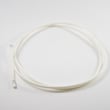
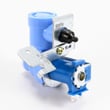
| Water dispenser slow or not working | Water inlet valve or tubing | Refrigerator water inlet valve MJX41178908, refrigerator water tubing MJU62070602 |
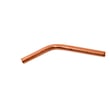
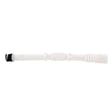
| Water under refrigerator | Drain tube or drip tray | Refrigerator drain tube 5251JA3003D, refrigerator machine compartment drip tray MJS37355401 |
Why it matters
Cooling and moisture complaints usually get worse over time: blocked vents and dirty coils raise temperatures, while door seal and defrost issues create frost that restricts airflow. Catching the cause early helps protect food and reduces strain on the compressor.
Last updated: February 2026
What does DH mean on Kenmore 79578773801 refrigerator?
On a Kenmore Elite 79578773801 bottom-mount refrigerator, dH (often shown as Er dH) points to a defrost heating problem. The refrigerator is not sensing normal defrost heater operation, so frost can build up on the evaporator and reduce cooling. Use the owner's manual for model-specific troubleshooting and safety steps.
What you’ll usually notice
- Refrigerator section warming up while the freezer seems “okay” at first
- Frost or ice buildup behind the rear freezer panel
- Fan noise changes (fan hitting ice) or reduced airflow
- Longer run times and temperature swings
- Water leaking or refreezing from a clogged defrost drain
Quick checks we recommend (safe, practical steps)
- Power reset: Unplug the refrigerator for 5 minutes, then restore power and watch for the code returning.
- Airflow check: Make sure vents are not blocked by food packages.
- Look for heavy frost: If the rear freezer panel is packed with frost, the defrost system is the likely cause.
- Inspect the drain area: Ice around the drain trough can happen when defrost isn’t working consistently.
- If you open panels: Unplug power first; sharp metal edges are common.
Parts commonly involved in a dH/defrost heat issue
If diagnosis confirms a defrost failure, these parts are frequent suspects on bottom-mount designs:
| What it does | Part that often fails | Example part for this model |
|---|---|---|
| Measures coil temperature during defrost | Defrost sensor/thermistor | Refrigerator defrost sensor assembly 6615JB2005H |
| Melts frost off the evaporator | Defrost heater | Lg refrigerator defrost heater 5300JK1005D |
| Moves air across the evaporator | Evaporator fan motor/blade | Refrigerator evaporator fan motor 4681JB1027C / refrigerator evaporator fan blade 5901JA1021A |
Why it matters
When the defrost heater circuit is not working, frost builds up on the evaporator coil and blocks airflow. That forces the compressor and fans to run longer, which can lead to poor cooling performance and food spoilage.
Last updated: February 2026
Why is my Kenmore 79578773801 refrigerator leaking water out of the bottom?
Water leaking from the bottom of your Kenmore 79578773801 bottom-mount refrigerator is usually caused by a clogged defrost drain overflowing into the base, or a leak in the water supply connections/tubing for the dispenser or ice maker. Start by checking for ice or debris in the drain path and for drips at the rear water valve and tubing fittings; see the owner's manual for access and safety steps.
Quick checks (most common causes)
- Clogged defrost drain: Meltwater can back up, run under the freezer, and spill into the bottom pan or onto the floor.
- Leaking water line connection: The manual calls out checking for drips at tubing connections and tightening any that leak.
- Cracked or loose water tubing: A pinhole or rubbed-through line can drip and track to the front.
- Water inlet valve seepage: A valve can weep slowly even when not dispensing.
- Drain tube issue: A split or misrouted drain tube can dump water into the machine compartment.
Step-by-step: isolate where the water is coming from
- Confirm it is water, not defrost melt: If it happens after door openings or during humid weather, suspect the defrost drain.
- Pull the refrigerator out and inspect the back:
- Look for wetness around the valve area and tubing.
- Check the floor behind the unit for a trail that points to the source.
- Check the water line fittings for drips (with the water on):
- Tighten any connection that leaks.
- Make sure the tubing is fully seated in the fitting.
- Inspect the drain system:
- Look for ice buildup in the freezer floor or under the evaporator cover.
- Clear the drain opening with hot water (turkey baster works well) and remove debris.
Parts that commonly fix bottom leaks
| Symptom you see | Likely area | Part to consider |
|---|---|---|
| Water pooling under freezer drawer | Defrost drain path | Refrigerator drain tube 5251JA3003D |
| Drips at rear valve or slow seep | Water valve | Refrigerator water inlet valve MJX41178908 |
| Wet tubing or pinhole spray | Water line | Refrigerator water tubing MJU62070602 |
Why it matters
A small leak can turn into floor damage, ice buildup in the freezer, and poor cooling if airflow gets blocked. Fixing the source early also helps prevent repeated puddles and moldy odors.
Last updated: February 2026
What is the average lifespan of a Kenmore 79578773801 refrigerator?
A Kenmore Elite 79578773801 bottom-mount refrigerator typically lasts 10 to 15 years. Regular maintenance (especially cleaning condenser coils and keeping door gaskets sealing) helps you reach the upper end of that range and reduces the chance of expensive cooling-system repairs.
Typical lifespan and what affects it
Most refrigerators in this class land in the 10 to 15 year window. The biggest factors that move lifespan up or down are:
- Condenser coil cleanliness (dust buildup makes the compressor run hotter and longer)
- Door gasket condition (air leaks cause longer run times and frost issues)
- Room temperature and ventilation (hot kitchens and tight clearances increase run time)
- How often doors are opened and how full the compartments are
- Water and ice system upkeep (filters, valves, tubing, and leak prevention)
Maintenance that adds years (high impact)
We recommend these habits for the 795.7877 series bottom freezer design:
- Clean the condenser coils on a regular schedule (more often with pets)
- Inspect and wipe the door liner and gaskets so they seal without gaps
- Keep vents inside the refrigerator and freezer unblocked for proper air circulation
- Replace water filtration on schedule and flush air from the water line after service
- Address unusual noises early (fan motors and blades are common wear items)
Quick guide: symptoms vs. what they usually mean
| Symptom | Common cause | What to check first |
|---|---|---|
| Runs most of the time | Dirty coils, warm room, frequent door openings | Coil cleaning and door sealing |
| Frost buildup or warm temps | Air leak, airflow restriction, defrost issue | Gaskets, vents, defrost components |
| Water under fridge | Drain restriction or tubing leak | Drain path and water tubing |
| No ice or slow water | Filter restriction or inlet valve issue | Filter, then inlet valve |
Why it matters
Longer run times are normal in modern refrigerators, but chronic overworking shortens component life. Keeping airflow and heat transfer in good shape helps the compressor and fans operate in a normal duty cycle, which is key to reaching a full service life.
For model-specific care and cleaning intervals, follow the owner's manual.
Last updated: February 2026