


How much does it cost to replace drum bearings on a dryer?
For a GE electric dryer like model DPSF495EW0WW, replacing drum support bearings (often serviced as drum slides, rollers, or a rear bearing kit depending on design) typically costs $150 to $450 total with labor; DIY is usually $20 to $120 in parts, depending on what you replace.
What you usually pay for (parts vs. labor)
Dryer “bearing” repairs are commonly a drum support service. The final price depends on whether you replace only the worn support pieces or also refresh the belt-drive parts while the dryer is open.
- Service call / diagnosis: often $75 to $150
- Labor time: commonly 1 to 2 hours
- Parts: commonly $20 to $200 (more if multiple supports are worn)
- Optional add-ons: belt and idler parts if they show wear
| Repair approach | Typical parts cost | Typical total cost (with labor) | Best when |
|---|---|---|---|
| Replace only the worn drum supports | $20 to $80 | $150 to $300 | Noise just started; minimal wear |
| Replace supports plus belt-drive wear items | $60 to $180 | $250 to $450 | Squeal, thump, or slipping belt |
| DIY refresh while cabinet is open | $20 to $120 | $20 to $120 | You can safely disassemble and reassemble |
Parts that commonly get replaced together
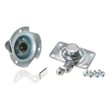
On DPSF495EW0WW, drum support wear is often addressed by replacing drum slide components; if the belt system is worn, we replace those parts at the same time to avoid reopening the dryer.
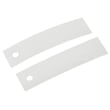
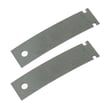
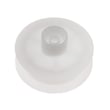
- Slide drum WE03X37317 (common drum support wear item)
- Slide drum WE03X37318 (alternate drum support wear item)
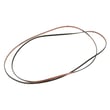
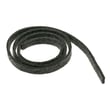
- Drive belt WE03X29897 (replace if glazed, cracked, or stretched)
- Idler pulley WE03X31620 (replace if noisy or wobbly)
- Felt WE09X27634 (replace if torn or causing rubbing)
Why the cost varies so much
A “bearing” complaint can mean different failures: a worn drum slide, a failing idler pulley, a damaged felt seal, or a blower wheel or motor noise that sounds like a bearing. The more parts involved and the longer the teardown, the higher the labor cost.
How to keep the repair from coming back
- Clean the lint screen every load
- Keep the vent path clear to prevent overheating
- Avoid overloading (extra weight accelerates drum support wear)
- Listen for early squeal or scraping and address it quickly
For maintenance habits that reduce wear and overheating, use how to clean and maintain your clothes dryer.
Last updated: February 2026
Is a 7.4 cu ft dryer big?
Yes. A 7.4 cu. ft. dryer is considered a large-capacity size; it is big enough for bulky items (comforters, blankets) and larger family loads in a typical GE electric dryer like model DPSF495EW0WW.
What “7.4 cu. ft.” means in real use
Capacity is the drum volume, not the weight limit. In day-to-day drying, a 7.4 cu. ft. drum usually handles:
- King or queen comforters (depending on fill and how wet it is)
- Full loads of towels without packing the drum tight
- Mixed family laundry loads with better tumbling space
- Bulky hoodies and jeans with fewer “damp pockets”
How to tell if it is the right size for you
A large drum helps most when airflow and tumbling space are the limiting factors.
| Household / load type | 7.4 cu. ft. fit | What to watch |
|---|---|---|
| 1 to 2 people, light loads | More than enough | Avoid over-drying small loads |
| 3 to 5 people, daily laundry | Great match | Clean lint screen every load |
| Bulky bedding and towels | Strong choice | Do not pack drum; allow tumbling |
Why it matters (drying time and wear)
When a dryer is sized well, clothes tumble freely, air moves through the load, and cycles finish faster. Overstuffing any dryer, even a 7.4 cu. ft. model, increases dry time and can strain wear parts like the drive belt WE03X29897 and idler pulley WE03X31620.
Tips to get the best performance from a large-capacity dryer
- Fill the drum loosely; stop around 3/4 full for mixed loads
- Dry bulky items on appropriate cycles and shake them out before starting
- Clean the lint screen every load and keep the exhaust vent clear
- If you hear squealing or thumping, inspect drum support parts (slides, felt, idler)
- If drying takes too long, focus on airflow first, not heat
For efficiency and maintenance habits that keep drying times down, follow how to use your clothes dryer efficiently.
Last updated: February 2026
What is the most common problem with a GE electric dryer?
For the GE electric dryer model DPSF495EW0WW, the most common problems are no heat/long dry times (airflow restriction or a failed heating component) and the drum not tumbling (a worn belt or pulley system). Most “dryer problems” trace back to airflow and drive-system wear.
Most common symptoms and what they usually mean
- Runs but no heat: heating element assembly, thermostat, or wiring issue
- Takes too long to dry: clogged lint screen, blocked vent, weak airflow, or blower issue
- Drum will not turn: broken belt, failed idler pulley, or motor problem
- Squealing or scraping noise: worn drum slides or felt seal
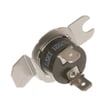
- Stops mid-cycle: overheating from poor venting, or a failing safety thermostat
Quick checks we recommend first (fast, no parts)
- Clean the lint screen and confirm strong airflow at the outside vent hood.
- Check the vent path for kinks, crushed flex duct, or heavy lint buildup.
- Try a timed dry cycle; if heat returns briefly then quits, suspect overheating from restricted airflow.
- If the drum will not tumble, inspect the belt and idler system.
Common parts tied to these problems (for DPSF495EW0WW)
| Symptom | Likely part to inspect | What it does |
|---|---|---|
| Drum not turning | Drive belt WE03X29897 | Transfers motor power to the drum |
| Drum not turning or squeals | Idler pulley WE03X31620 | Keeps proper belt tension |
| Squeal, thump, scraping | Slide drum WE03X37317 or slide drum WE03X37318 | Supports drum movement at the front |
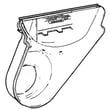
| No heat | Heater housing WE11M23 | Contains the heating element assembly |
| Long dry times | Dryer blower wheel WE16M15 | Moves air through the drum and vent |
Why it matters
Poor airflow can cause long dry times, overheating, and repeated failures of heat-related safety parts. Drive-system wear (belt, idler pulley, drum slides) can stop tumbling and quickly turn into a no-dry situation.
If you’re seeing an error code
Use GE gfd model series error codes or GE cleanspeak dryer error codes to match the code to the most likely failure area and the right next checks.
Last updated: February 2026
Where to find part number on GE dryer?
On a GE electric dryer like model DPSF495EW0WW, the model and serial tag (often called the rating plate) is typically located on the inside of the dryer door opening, either on the door itself or on the front door frame. Once you find that tag, you can match the correct replacement parts for your exact dryer.
What to look for on the label
- Model number (for this dryer: DPSF495EW0WW)
- Serial number (helps identify production run)
- Electrical rating (volts/amps)
- Sometimes a manufacturing date code
Common GE dryer label locations
Most GE dryers place the tag in one of these spots:
- Inside the door opening on the front panel
- On the door frame near the latch area
- On the inside face of the door
- Less commonly, on the rear panel
Why it matters
GE uses the model number to determine the exact fit for parts like the drive belt, idler pulley, and heater housing. Using the correct model number helps you avoid ordering a part that looks similar but mounts differently.
Example: model-matched parts you can identify once you have the tag
| Part you might need | What it affects | Example for DPSF495EW0WW |
|---|---|---|
| Drum belt | Drum tumbling | Drive belt WE03X29897 |
| Door switch | Dryer starts only with door closed | Door switch WE4M415 |
| Heating element assembly | No heat or weak heat | Heater housing WE11M23 |
Last updated: February 2026
Why does my GE dryer keep saying clean lint filter?
On the GE DPSF495EW0WW electric dryer, the “clean lint filter” message is typically a routine reminder that appears at startup, not a sensor that confirms the screen is actually clean. If the dryer will not run or dries poorly, the cause is usually airflow restriction or a separate start or heat issue.
What to do first (quick checks)
- Remove the lint screen and clean it; wash it with warm water and a soft brush if you use dryer sheets.
- Check the lint screen housing for lint buildup and vacuum it out.
- Inspect the vent hose behind the dryer for kinks, crushing, or long runs.
- Confirm strong airflow at the outside vent hood while the dryer runs.
- Avoid overloading; heavy loads reduce airflow and can trigger frequent reminders.
If the dryer will not start
The lint reminder does not prevent operation by itself. If the drum will not tumble, focus on common “no start” causes:
- Door not fully closed or a failed door switch
- Timer or start circuit issue
- Motor not running due to a failed belt switch condition (on some designs) or motor problem
A frequent mechanical cause of a no-tumble condition is a broken belt; for this model, the drive belt WE03X29897 is the correct belt part listing.
If the dryer runs but takes too long to dry
Long dry times are almost always airflow-related:
| Symptom | Most common cause | What to check |
|---|---|---|
| Clothes still damp | Restricted venting | Vent hose, wall duct, outside hood |
| Very hot cabinet | Poor exhaust flow | Lint buildup, crushed duct |
| Weak airflow at hood | Blockage or long run | Duct length, elbows, lint clogs |
For step-by-step help, use our dryer takes a long time to dry guide.
Why it matters
Good airflow keeps drying times normal, protects the heater housing and thermostats from overheating, and reduces wear on the motor and drum support parts.
Last updated: February 2026






