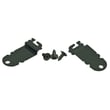
Installation guide
 Owner’s manual
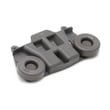


What's the average lifespan of a KitchenAid dishwasher?
A KitchenAid dishwasher typically lasts 10 to 15 years with normal household use and basic maintenance. For your KitchenAid KUDE60HXSS5 undercounter dishwasher, consistent cleaning, proper loading, and using rinse aid are the biggest factors that help it reach the upper end of that range; see the KUDE60HXSS5 installation guide for care and operating tips.
What affects lifespan the most
- Water quality (hard water speeds up mineral buildup)
- Rinse aid use (improves drying and helps control deposits)
- Filter and sump cleanliness (prevents circulation and drain strain)
- Door alignment and closing (a tight latch prevents leaks and interruptions)
- Cycle habits (heavy cycles and high heat increase wear over time)
Maintenance checklist we recommend
- Clean the filter regularly; replace it if it is cracked or won’t lock in place (example: dishwasher filter W10872845).
- Keep spray paths clear; remove labels, seeds, and debris from dishes before loading.
- Use rinse aid consistently for better drying and reduced hard-water deposits.
- Confirm the door closes and latches smoothly; re-center the unit if the door rubs after installation.
- Watch for slow draining or standing water; address clogs early to protect the drain system.
Typical lifespan expectations (quick guide)
| Usage and care level | Typical lifespan | What you’ll notice first |
|---|---|---|
| Light use, good maintenance | 12 to 15 years | Minor rack wear, occasional longer dry times |
| Average use, basic maintenance | 10 to 12 years | More noise, slower drain, inconsistent drying |
| Heavy use, poor maintenance | 7 to 10 years | Leaks, poor cleaning, repeated drain or fill issues |
Why it matters
Dishwashers like the KUDE60HXSS5 are designed to run longer, energy-efficient cycles (often 2 to 3 hours per load). Keeping the wash system clean and using rinse aid reduces strain on key components such as the circulation system, heater, and drain path, which helps the dishwasher last longer.
Last updated: February 2026
What is the most common problem with a KitchenAid dishwasher?
For the KitchenAid KUDE60HXSS5 undercounter dishwasher, the most common problem we see is drainage trouble: water left in the bottom after a cycle. The usual causes are a clogged filter area, a restricted drain hose, or a weak drain pump.
Quick checks you can do first
- Cancel the cycle and let the dishwasher drain; confirm the water level drops.
- Check and clean the filter area; food debris here is a top cause of slow draining.
- Inspect the sink drain or garbage disposer connection for a blockage.
- Look for kinks, crushing, or a low loop problem in the drain line.
- Verify the door closes tightly and latches; some cycles will not drain correctly if the door is not fully latched.
Parts that commonly fix a drain problem
If cleaning and hose checks do not solve it, these KUDE60HXSS5 parts are common next steps:
| Symptom | Most likely area | Example part for this model |
|---|---|---|
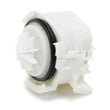
| Hums but drains slowly or not at all | Drain pump | Dishwasher drain pump WPW10531320 |
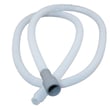
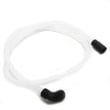
| Drains sometimes, sometimes not | Drain path restriction | Dishwasher drain hose 8269144A |
| Poor wash plus standing water | Sump or seals (leaks, recirculation issues) | Dishwasher sump and seal assembly WPW10455268 |
Why it matters
A dishwasher that does not drain can re-circulate dirty water, leave odors, and trigger longer run times. Fixing the drain path early also helps protect the circulation system and keeps cleaning performance consistent.
Where to confirm the correct setup
Drain routing and connection details (including clamp placement and proper connection steps) are covered in the installation guide.
Last updated: February 2026
Does the KitchenAid dishwasher have a lifetime warranty?
No. For the KitchenAid KUDE60HXSS5 undercounter dishwasher, the warranty is not lifetime; it is a one-year full warranty from the date of purchase when the dishwasher is operated and maintained as instructed in the product documentation (see the KUDE60HXSS5 owner’s manual).
What the one-year warranty typically covers
Within the one-year period, warranty coverage is generally intended to address defects in materials or workmanship under normal household use.
Common examples include:
- Replacement parts and repair labor for covered defects
- Issues that show up during normal operation (not misuse)
- Problems that occur when installation and care instructions are followed
What can affect warranty eligibility
Even with a one-year warranty, certain conditions can impact whether a repair is covered.
Check these items first:
- Proof of purchase date (the one-year period starts on that date)
- Proper installation (leveling, centering, and door clearance matter)
- Correct water supply and drain hookup
- Electrical connection method (direct wire vs. cord kit, if applicable)
- Routine care such as keeping the filter area clear
Quick reference: warranty question checklist
| Question | What to look for |
|---|---|
| Is it lifetime coverage? | No, it is one year from purchase date |
| Does it require proper use and care? | Yes, follow the documented instructions |
| Where do I confirm the exact terms? | The warranty section in the manual |
Why it matters
Warranty length and requirements determine whether a repair is likely to be covered or whether you should plan for a DIY fix or paid service. Confirming the terms up front also helps you avoid delays if you need parts or service.
Last updated: February 2026
What are the commonly replaced parts in a dishwasher?
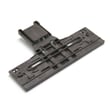
On the KitchenAid KUDE60HXSS5 undercounter dishwasher, the most commonly replaced parts are the ones that affect filling, draining, heating, washing performance, and door operation. In practice, that usually means rack hardware, drain and circulation components, the water inlet valve, the heater, and key seals.
Commonly replaced parts (and what they do)
- Water inlet valve: lets water into the tub; failures often cause no-fill or slow-fill.
- Drain pump and drain hose: push wastewater out; problems often show up as standing water.
- Heater: heats water and helps drying; failures can cause poor drying or cool wash water.
- Filter and sump seals: keep wash water flowing correctly and help prevent leaks.
- Rack wheels/adjusters/tracks: restore smooth rack movement and proper rack height.
- Door balance and hinge parts: help the door open and close smoothly without dropping.
Model-matched examples for KUDE60HXSS5
These are parts we commonly see replaced on this model:
| Symptom you notice | Part to check first | Example model-matched part |
|---|---|---|
| Dishwasher will not fill or fills slowly | Water inlet valve | Dishwasher water inlet valve W11175771 |
| Water left in bottom after cycle | Drain pump, drain hose, drain path | Dishwasher drain pump WPW10531320 |
| Poor drying or water not heating | Heater | Dishwasher heater W10703867 |
| Grity dishes, weak wash | Filter, circulation path | Dishwasher filter W10872845 |
Quick troubleshooting checks before ordering parts
- Confirm the water supply valve under the sink is fully open.
- Check the drain hose routing for kinks or pinches (especially after moving the unit).
- Clean and reseat the filter and remove debris from the sump area.
- Verify the door closes and latches smoothly; a misaligned door can affect performance.
- If you are testing electrical parts, shut off power at the breaker first.
Why it matters
Replacing the right “high-wear” part first saves time and prevents repeat issues. For example, a restricted filter can mimic a pump problem, and a kinked drain hose can look like a failed drain pump.
Where we confirm procedures and fit
For model-specific diagrams, access steps, and installation clearances, use the KUDE60HXSS5 installation guide.
Last updated: February 2026
How to fix rubber seal on KitchenAid dishwasher?
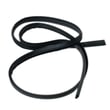
On KitchenAid model KUDE60HXSS5, a loose or leaking rubber seal is usually fixed by fully reseating the gasket evenly into its channel, then keeping the door closed for several hours so the seal “sets” in the correct shape. Use the steps in the KUDE60HXSS5 owner’s manual for door and care guidance.
Quick fix: reseat the door gasket
- Turn off power to the dishwasher at the breaker.
- Open the door and inspect the rubber gasket for twists, gaps, or sections pulled out of the channel.
- Starting at the top center, press the gasket into the channel using your fingers; work evenly down both sides.
- Make sure the gasket sits flat and continuous with no bulges at corners.
- Close and latch the door; keep it closed for at least 3 to 6 hours (overnight is ideal).
What to check while you’re there
- Food debris, detergent buildup, or hard-water scale on the gasket or mating surface
- Tears, flattened spots, or a “wavy” gasket that will not stay seated
- Door alignment issues (door rubbing or not closing square)
- Leaks that appear at the bottom edge (often splash, oversudsing, or drain issues)
- Signs the tub is not centered in the cabinet opening
If the door is rubbing or not sealing evenly
Door alignment affects sealing. During installation, the door should not contact screws, brackets, or the countertop; if it does, leveling legs and centering adjustments are used. We follow the same idea during troubleshooting: the door must close square so the gasket compresses evenly. Use the KUDE60HXSS5 installation guide for the centering and leveling checks.
| Symptom | Most common cause | Best next step |
|---|---|---|
| Leak at one upper corner | Gasket not fully seated | Reseat gasket from top center outward |
| Leak along one side | Door not centered/level | Check leveling legs and centering |
| Leak at bottom | Oversudsing or spray deflection | Use correct detergent, reduce pre-rinse soap |
Why it matters
A properly seated gasket prevents leaks, protects the door liner and cabinet area, and helps the dishwasher maintain correct wash pressure and drying performance.
Last updated: February 2026