Owner’s manual


What is the capacity of the LG DLG2102W?
The LG DLG2102W gas dryer has an IEC drum capacity of 7.3 cu. ft. This is the usable drum volume for drying loads; it helps you estimate how much laundry you can dry per cycle without overloading.
In the Specifications section of the DLG2102W user manual, the capacity is listed as IEC 7.3 cu. ft. (also shown alongside key dimensions and net weight).
Capacity is about drum volume, but drying performance also depends on airflow, venting, and load type.
- Best results come from filling the drum loosely, not packing it tight
- Bulky items (comforters, blankets) need extra space to tumble
- Heavy fabrics (towels, denim) can feel “full” sooner than light fabrics
- A clogged lint screen or restricted exhaust duct can make even small loads dry slowly
| Load type | Typical fill level | Why |
|---|---|---|
| Everyday mixed laundry | About 1/2 to 2/3 full | Good tumbling and airflow |
| Towels/denim | About 1/2 full | Heavier fabrics need more room |
| Bulky bedding | Varies; keep it loose | Prevents balling and uneven drying |
Using the right load size helps the DLG2102W dry faster, reduce wrinkles, and avoid overheating from restricted airflow. If drying times suddenly increase, check the lint filter and venting first.
Last updated: January 2026
Why does an LG sensor dry dryer take so long to dry?
On the LG DLG2102W, Sensor Dry cycles can run long when airflow is restricted (lint screen or venting), the moisture sensor can’t “read” the load correctly (dirty sensor bars or mixed fabrics), or the load starts out too wet. Start with the airflow checks in the DLG2102W user manual.
- Lint screen is clogged or the lint screen housing is packed with lint
- Exhaust duct is crushed, kinked, too long, or partially blocked
- Outside vent hood damper is stuck closed or clogged with lint
- Mixed load (heavy towels with lightweight items) confuses Sensor Dry
- Washer didn’t spin out well; clothes go in overly wet
- Moisture sensor bars are coated with dryer sheet residue
- Clean the lint screen before the load; if it looks “clean” but feels waxy, wash it with warm water and let it dry fully.
- Run the dryer for 2 to 3 minutes on heat and check airflow at the outside vent; it should be strong and warm.
- Wipe the moisture sensor bars inside the drum with rubbing alcohol and a soft cloth; let them dry.
- Re-run the load using a cycle that matches the fabric type; avoid mixing thick and thin items.
If airflow is good and Sensor Dry still runs long or never seems to finish, the dryer may be getting incorrect temperature or moisture readings.
| Symptom | What it points to | Example part for DLG2102W |
|---|---|---|
| Cycle runs long and heat seems inconsistent | Temperature sensing problem | Dryer thermistor AGM30045804 |
| Cycle runs long and clothes are still damp | Moisture sensing problem | Dryer moisture sensor 6500EL3001A |
Long dry times usually mean restricted airflow or incorrect sensor feedback. Fixing the root cause helps prevent overheating, reduces energy use, and improves drying performance.
Last updated: January 2026
How to hard reset an LG dryer?
For an LG DLG2102W dryer, a “hard reset” is simply a power reset: turn the dryer off, disconnect power for about 1 minute, then restore power and start a cycle. This often clears minor control glitches without any disassembly.
- Press the ON/OFF button to turn the dryer off.
- Unplug the dryer (or switch the circuit breaker off).
- Wait about 60 seconds.
- Plug back in (or turn the breaker on).
- Press the ON/OFF button, then press START/PAUSE to run a cycle.
For control-panel names and normal operating steps, follow the DLG2102W user manual.
A reset usually will not fix a true no-heat problem on the LG DLG2102W; no-heat is more often caused by airflow restrictions, gas supply issues, or a failed heating component.
Check these first:
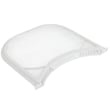
- Lint filter: clean before every load; replace if torn or warped (dryer lint filter 5231EL1003B).
- Exhaust venting: confirm the vent is not crushed, clogged, or excessively long.
- Gas supply (gas models): confirm the house shutoff and dryer shutoff valves are fully open.
- Cycle selection: test with a heated cycle (not Air Dry).
If the dryer runs but heat is inconsistent or you see temperature-related errors, a sensing issue is possible; one part involved is the dryer thermistor AGM30045804.
| What you do | What it helps | What it won’t fix |
|---|---|---|
| Power reset (unplug/breaker) | Frozen controls, odd display behavior | Failed igniter, sensor, thermostat, gas supply issues |
| Vent/airflow check | Long dry times, overheating symptoms | Control board glitches |
| Part diagnosis/replacement | No heat, error codes, repeated shutdowns | Poor venting or overloaded loads |
Resetting is a fast first step, but repeated “needs a reset” symptoms often point to an underlying issue (like restricted airflow or a failing sensor) that can cause long dry times and overheating.
Last updated: January 2026
What is the most common problem with LG dryers?
For LG dryers like model DLG2102W, the most common complaint we hear is “won’t start.” On this model, that often traces back to power issues, the door not registering as closed, or a control setting or error condition preventing the cycle from starting. See the troubleshooting section in the DLG2102W user manual.
Before replacing parts, we recommend these no-tools checks:
- Make sure the dryer has power; reset the breaker and confirm the outlet works.
- Close the door firmly until it latches; the dryer won’t run if the door switch doesn’t close.
- Press ON/OFF, select a cycle, then press START/PAUSE.
- Check the display for an error code and follow the manual’s troubleshooting steps.
- If your DLG2102W is a gas dryer, confirm both the house gas shutoff and the dryer shutoff valve are fully open.
These are the issues we most often see across LG dryers, including DLG2102W:
- Won’t start: door switch not closing, power supply problem, or control issue.
- No heat or weak heat: airflow restriction, thermostat/sensor issue, or gas ignition problem.
- Takes too long to dry: clogged lint screen or venting restriction.
- Stops mid-cycle: overheating protection triggered by poor airflow.
- Noisy operation: worn drum support components.
If your checks point to a specific failure, these parts are commonly involved on DLG2102W:
| Symptom | Part | What it does |
|---|---|---|
| Dryer won’t start and door must be slammed to run | Dryer door switch EBF61496102 | Signals the control that the door is closed |
| Display shows “tE1” or “tE2” type temperature error | Dryer thermistor AGM30045804 | Monitors air temperature for safe, accurate heating |
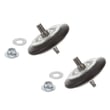
| Loud thumping or squealing while tumbling | Dryer drum support roller 4581EL2002L | Supports the drum as it rotates |
“Won’t start” is common because multiple safety conditions must be met before the motor runs. Doing quick power, door-latch, and error-code checks first helps avoid replacing good parts.
Last updated: January 2026