 Owner’s manual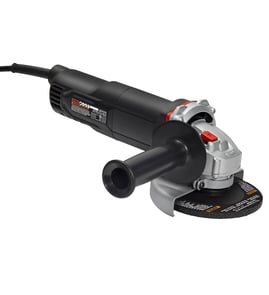

Which is better, a 4 inch or 5-inch angle grinder?
For the Craftsman 900277230, a 4-1/2 inch grinder is the “better” choice when you want lighter weight, easier control, and access to tighter spaces; a 5-inch grinder is typically better when you need more cutting depth and faster material removal on larger jobs. Always match wheel size to the tool. See the 900277230 instruction manual.
Quick comparison: 4-1/2 inch vs 5-inch
| Feature | 4-1/2 inch class (like 900277230) | 5-inch class |
|---|---|---|
| Best for | Light to medium grinding, sanding, cleanup | Heavier grinding, longer cuts, bigger surfaces |
| Control | Easier to maneuver | Slightly less nimble |
| Cutting depth | Shallower | Deeper |
| Typical feel | Lighter, less fatigue | Heavier, more power-focused |
How we recommend choosing
- Choose 4-1/2 inch if you do occasional DIY work, need better control, or work in corners and tight spots.
- Choose 5-inch if you regularly cut thicker material, want more depth, or need faster stock removal.
- Pick based on the wheel/accessory availability you use most (cutoff wheels, flap discs, wire wheels).
- Consider comfort and fatigue; a smaller grinder is often easier for overhead or extended use.
- Prioritize guarding and accessory ratings; use only accessories rated for the grinder’s RPM.
Safety and compatibility (important)
The Craftsman 900277230 is designed for 4-1/2 inch accessories; using a larger wheel can prevent proper guarding and can change how the tool handles. In our experience, the safest approach is simple: use the correct wheel diameter, keep the guard installed, and verify the accessory speed rating meets or exceeds the grinder’s no-load RPM. Refer to the 900277230 instruction manual for accessory and guard guidance.
Why it matters
Wheel size affects control, cutting depth, and how safely the guard fits. Choosing the right size helps you work faster with fewer bind-ups, reduces fatigue, and helps protect you from wheel damage and kickback.
Last updated: January 2026
Can I cut a 2x4 with an angle grinder?
Yes, you can cut a 2x4 with a Craftsman angle grinder like model 900277230, but we only recommend it if you use a wood-rated cutting wheel and strict control. This grinder is primarily intended for grinding and sanding metal and masonry, so wood cutting carries higher kickback and control risk; review the safety rules in the 900277230 instruction manual.
What we recommend for safer wood cutting
- Use a wood-rated cutting wheel designed for an angle grinder (not a metal cutoff wheel).
- Keep the guard installed and positioned between you and the wheel.
- Use the auxiliary handle for two-handed control.
- Clamp the 2x4 securely; never hold it by hand.
- Make shallow passes; do not force the tool.
- Wear eye protection and a dust mask; wood dust can be hazardous.
Setup and technique tips (to reduce kickback)
- Unplug the grinder before changing accessories.
- Inspect the wheel for cracks or damage; replace if questionable.
- Start the tool and let it run briefly before contacting the wood.
- Keep a stable stance and avoid twisting the wheel in the cut.
Angle grinder vs. better tools for a 2x4
| Tool | Best use on a 2x4 | Why it is usually safer |
|---|---|---|
| Angle grinder | Occasional rough cuts | Fast, but higher kickback risk |
| Circular saw | Straight crosscuts/rips | Better control and guarding for wood |
| Reciprocating saw | Rough cuts, demolition | More forgiving in nails and knots |
Why it matters
Wood can grab the wheel and cause sudden kickback. Using the correct accessory, keeping guards in place, and maintaining two-handed control helps protect you and reduces the chance of binding, overheating, or losing control.
Last updated: January 2026
Is an angle grinder worth having?
Yes; a Craftsman 900277230 angle grinder is worth having if you cut metal, grind welds, remove rust, or prep masonry even occasionally. It is a fast, versatile power tool that can replace slower hand tools for many heavy-duty cleanup and shaping jobs.
What this model is best at
From the Craftsman 900277230 instructions, this is a 4-1/2 inch grinder designed for grinding and sanding most metals and masonry, and it supports common accessories like depressed center wheels, sanding discs, and wire brushes. For model-specific operating and safety details, use the 900277230 instruction manual.
Typical high-value uses:
- Cutting and grinding metal (pipe, angle iron, bolts)
- Smoothing welds and sharp edges
- Rust and paint removal with a wire brush
- Surface prep before painting or coating
- Light masonry grinding (with the correct wheel and guard)
What to consider before you buy or use one
Angle grinders are powerful, but they demand good control and the right accessory.
- Safety gear matters: eye protection is a must; add hearing protection and a dust mask for grinding and wire brushing
- Accessory match: use wheels/brushes rated at or above the grinder’s no-load RPM
- Guard use: always keep the guard installed, especially with depressed center wheels
- Control: use the auxiliary handle to keep a stable grip
- Workspace: clamp the workpiece; avoid loose clothing and cords near the wheel
Quick “worth it” checklist
| If you often do this… | An angle grinder is usually… |
|---|---|
| Remove rust/paint fast | Worth it |
| Grind welds or bevel edges | Worth it |
| Occasional small touch-ups only | Maybe |
| Mostly wood-only projects | Less useful |
Why it matters
The main value is time saved and better results: a grinder can remove material quickly and cleanly, but only when you use the correct wheel, guard, and technique for the material.
Last updated: January 2026
What are the best small angle grinder brands?
For a small angle grinder like the Craftsman 900277230 (a 4-1/2 inch class grinder), the best brands are the ones that consistently deliver strong motor durability, readily available accessories (wheels, sanding discs, wire brushes), and solid safety features. Common top choices are DeWalt, Makita, Milwaukee, Bosch, and Metabo.
What to look for (so you pick the right brand and model)
We recommend comparing these factors across brands, then choosing the grinder that matches your typical jobs (metal grinding, masonry, rust removal, sanding).
- Wheel size compatibility: most “small” grinders are 4-1/2 inch like the 900277230
- Guard and spindle lock design: faster, safer wheel changes (the 900277230 includes a spindle lock)
- Power source: corded for steady runtime; cordless for mobility
- Accessory ecosystem: availability of depressed center wheels, sanding discs, and wire brushes
- Serviceability: access to brushes and switches; some tools stop automatically when brushes wear (noted in the 900277230 instructions)
Quick brand comparison (small angle grinders)
| Brand | Best for | Typical strengths | Watch-outs |
|---|---|---|---|
| DeWalt | Jobsite use | Strong value, wide availability | Some models run louder/hotter under heavy load |
| Makita | Daily shop work | Smooth operation, good ergonomics | Cordless cost rises with batteries |
| Milwaukee | Heavy-duty cutting/grinding | High power, strong cordless lineup | Premium pricing |
| Bosch | General DIY and light pro | Compact designs, good control | Fewer high-end options in some lines |
| Metabo | Pro grinding and metalwork | Excellent durability, strong pro features | Often higher upfront cost |
Why it matters
A small angle grinder is only as safe and effective as its guard setup, wheel rating, and handling. Choosing a proven brand helps you get better control, longer tool life, and easier access to the right wheels and brushes.
For Craftsman-specific operating and accessory guidance (including wheel types and safe angles), use the Craftsman 900277230 instruction manual.
Last updated: January 2026