Owner’s manual
 View engine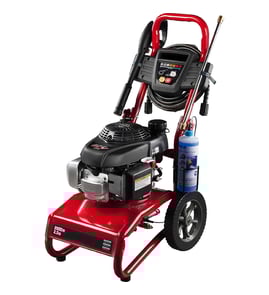



How many PSI is a normal pressure washer?
A “normal” home pressure washer typically runs about 1,300 to 2,800 PSI, which covers most DIY cleaning like cars, siding, decks, and patios. For your Craftsman 580767100 gas pressure washer, confirm the exact rated PSI in the Craftsman 580767100 owner’s manual.
- 1,300 to 1,900 PSI: cars, patio furniture, grills, light mildew
- 2,000 to 2,800 PSI: decks, fences, siding, most home concrete
- 2,900 to 3,500 PSI: heavier concrete cleaning, paint prep (more risk of damage)
- 3,600+ PSI: pro-grade work; requires more technique and safety control
| PSI range | Typical use | Risk level for DIY surfaces |
|---|---|---|
| 1,300 to 1,900 | Light cleaning | Low |
| 2,000 to 2,800 | Most home projects | Medium |
| 2,900 to 3,500 | Heavy-duty cleaning | Higher |
Even with a strong gas engine, real-world cleaning power depends on setup and condition:
- Nozzle tip size and spray pattern (0°, 15°, 25°, 40°)
- Water supply flow and inlet screen cleanliness
- Hose condition and leaks (a worn high-pressure hose reduces performance)
- Wand and trigger valve condition
- Pump wear (seals and valves)
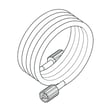
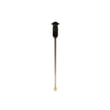
If you’re losing pressure, check for kinks, leaks, and worn spray components; for this model, common wear items include the hose-2400psi 84006753 and the adjusting wand 205015CGS.
Using the right PSI helps you clean faster without damaging wood, paint, or siding. Too much pressure can gouge decking and etch concrete; too little pressure wastes time and detergent.
Last updated: January 2026
How to tell if your pressure washer pump is bad?
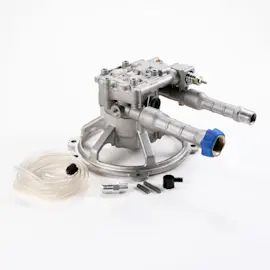
A bad pump on a Craftsman 580767100 pressure washer usually shows up as low or surging pressure, water leaking from the pump head, unusual grinding or rattling noise, or milky/discolored pump oil. If the engine runs normally but pressure will not stabilize, the pump is the likely cause.
- Pressure is low even with a clean, correct spray tip
- Pressure pulses (surges) and the wand kicks repeatedly
- Water leaks from the pump manifold/head area
- Pump is louder than normal (grinding, rattling, squealing)
- Pump oil looks milky (water contamination) or very dark (overheating/wear)
- Unit builds pressure only when you partially block the nozzle (restriction)
Before condemning the pump, we check these items because they mimic pump failure:
- Water supply: steady flow, fully open spigot, no kinked garden hose
- Air in the system: purge air by running water through the wand with the engine off
- Clogged inlet screen or injector filter: clean the chemical pickup filter such as the filter 709496
- Wand or hose restriction/leak: inspect for swelling, soft spots, or internal collapse; replace if needed (example: hose-2400psi 84006753)
- Unloader/valve sticking: pressure surging can be caused by a sticking valve (example: valve B3513)
These findings point to internal pump damage:
| What you see | What it usually means | Typical fix |
|---|---|---|
| Water dripping from pump head seams | Worn seals, cracked manifold | Seal kit or pump replacement |
| Milky oil in crankcase | Water intrusion past seals | Seal service; change oil |
| Deep scoring on plungers | Running dry, debris damage | Pump replacement or rebuild |
| Pressure drop with a known-good nozzle | Worn valves/seals | Valve/seal service |
Running a pressure washer with a failing pump can quickly damage seals and valves further, contaminate pump oil, and cause overheating. Catching the issue early often turns a full pump replacement into a simpler seal or valve repair.
For model-specific maintenance steps and oil service intervals, follow the 580767100 owner's manual.
Last updated: January 2026
What kind of gas goes in a Craftsman 3000 PSI pressure washer?
For the Craftsman 580767100 gas pressure washer, use clean, fresh, unleaded gasoline rated 87 octane (87 AKI) or higher. If your unit is truly a 3000 PSI Craftsman model, the same fuel guidance applies; confirm the exact model number in the 580767100 owner’s manual.
- Use unleaded gasoline, 87 AKI or higher
- Use fresh fuel; stale gas commonly causes hard starting and surging
- Avoid E85 (high-ethanol fuel)
- Avoid old fuel (over 30 days) unless treated with stabilizer
- Do not mix 2-cycle oil into the gas (these engines use crankcase oil separately)
| Fuel type | Use it? | What it does |
|---|---|---|
| Unleaded 87 AKI | Yes | Correct combustion and reliable starting |
| Unleaded 89 to 93 AKI | Yes | Runs fine; higher octane is acceptable |
| E85 | No | Can create fuel-system and starting problems |
| Old/stale gas | No | Leads to varnish, surging, and no-start issues |
- Check the model number on the frame label and compare it to 580767100
- Use the operating and fuel recommendations listed for your exact model
- If you need a replacement spray accessory, match fittings and pressure rating; an adjusting wand 205015CGS is one compatible option for this model’s parts list
Correct gasoline helps prevent carburetor varnish, keeps RPM steady under load, and reduces starting problems after storage.
Last updated: January 2026