
How do I know the model of my garage door opener?
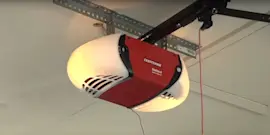
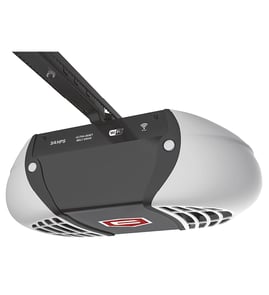
To identify the model of your Craftsman garage door opener, look for the model and serial number label on the power head (the motor unit mounted to the ceiling). For model 139664983, the label is typically on the side, back, or underside of the opener housing.
Where to look (most common spots)
- On the side of the motor unit near the light lens
- On the back panel of the motor unit (facing the garage door)
- On the underside of the motor unit near the hanging bracket
- On the opener’s outer cover (after removing the light lens, if applicable)
- On the original packaging or purchase paperwork (if you still have it)
What the label looks like
Most Craftsman openers use a small sticker or metal tag that includes:
- Model number (example: 139.XXXXXX)
- Serial number
- Electrical rating (often 120V information)
If you can’t find the label
Use these steps to narrow it down:
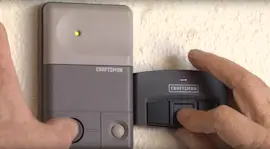
- Check the wall control and handheld remote for any printed model info
- Look for a separate receiver module label if your opener uses an external receiver
- Compare the opener’s features (belt vs. chain drive, light configuration, antenna wire location) to help confirm you are ordering the right parts
Quick reference table
| Item | What to record | Why it matters |
|---|---|---|
| Motor unit label | Model and serial number | Best match for parts and diagrams |
| Remote | Remote model number | Helps confirm receiver and compatibility |
| Wall control | Control model number | Helps match wiring and control style |
Why it matters
Garage door opener parts and accessories (receiver, transmitter, wall control, safety sensors) are model-specific. Using the exact model number helps us match the correct Craftsman diagrams and compatible replacement parts.
For more help confirming the correct model number format before ordering, use how to find your appliance model number (and what it means for parts).
Last updated: February 2026
What are the common problems with Craftsman garage door openers?
The most common problems we see with the Craftsman garage door opener model 139664983 are safety sensor issues (door will not close or reverses), remote/keypad problems, power or wiring faults, and worn drive components (chain/belt, gear, sprocket) that cause grinding or inconsistent movement.
Most common symptoms and what they usually mean
- Door goes down then reverses: photo eyes (safety sensors) misaligned, blocked, or wired loosely
- Remote works sometimes: weak remote battery, interference, or receiver/antenna issue
- Opener hums but door does not move: stripped gear, jammed trolley, or door binding on the track
- Grinding or rattling noise: worn gear/sprocket, loose hardware, dry chain, or worn rollers on the door
- No lights, no response: outlet/GFCI tripped, breaker tripped, or failed internal power/logic board
- Works from wall button but not remote: remote programming issue or remote failure
Quick checks we recommend first (safe, fast)
- Confirm the opener has power: test the outlet with a lamp; reset the GFCI if used.
- Check the safety sensors: clean the lenses, remove obstructions, and aim them so both indicator lights are steady.
- Test the door by hand (with the opener disconnected): the door should lift smoothly and stay about halfway open.
- Inspect visible wiring: look for staples through low-voltage wires and loose connections at the sensor brackets.
- Listen for the failure point: a hum or click without movement often points to a drive or internal component issue.
Troubleshooting guide by symptom
| Symptom | Most likely cause | What to do next |
|---|---|---|
| Won’t close | Safety sensors | Align/clean sensors; check sensor wiring |
| Won’t open | Power, door binding, drive wear | Verify power; test door balance; inspect drive |
| Noisy operation | Dry/loose hardware, worn drive | Tighten hardware; lubricate door rollers/hinges; inspect chain/belt tension |
| Remote not working | Battery, programming, receiver | Replace battery; reprogram; check antenna position |
Why it matters
Garage door openers are designed to stop or reverse when they sense an obstruction. When sensors are misaligned or the door is binding, the opener can act “broken” even though it is protecting people, pets, and vehicles.
For electrical diagnosis steps (like checking continuity or tracing a loose connection), we use the same approach shown in how to use a multimeter to test electrical parts video.
Last updated: February 2026
Is it worth repairing a 20 year old garage door opener?
For a 20-year-old garage door opener, repair is usually not worth it; most openers are built for about 10 to 15 years of service, so a unit that old is typically at the end of its usable life. For Craftsman model 139664983, we recommend repairing only if the problem is minor and low-cost.
Quick decision guide (repair vs. replace)
Use these checkpoints to decide fast:
- Repair if it is a simple issue like a dead remote battery, loose wire at a terminal, or misaligned safety sensors.
- Replace if the motor strains, the opener is inconsistent, or the logic board shows intermittent behavior.
- Replace if you have repeated failures (you fix one thing and another fails soon after).
- Replace if the door reverses unexpectedly or will not reliably close (safety and security concern).
- Repair only if the total repair cost is clearly low compared to replacement and the door runs smoothly by hand.
What “minor” vs. “major” repairs usually look like
| Issue type | Common symptoms | Typical direction |
|---|---|---|
| Minor electrical | Remote/keypad stops working, wall control intermittent | Troubleshoot wiring, controls, power source |
| Safety sensor/wiring | Door will not close, lights blink, random reversing | Check sensor alignment and low-voltage wiring |
| Major drive/motor/control | Hums, stalls, overheats, runs sometimes | Replacement is the better long-term fix |
Troubleshooting steps worth trying first
Before spending money, we use these basic checks:
- Unplug the opener for 60 seconds, then restore power (simple reset).
- Confirm the outlet has power (test with a lamp or meter).
- Inspect low-voltage wires for staples, cuts, or corrosion at terminals.
- Clean and align the photo-eye safety sensors; verify both indicator lights are steady.
- Disengage the trolley and move the door by hand; it should move smoothly and stay about mid-travel.
For electrical testing help, use how to use a multimeter to test electrical parts video.
Why it matters
A 20-year-old opener can become unreliable as internal electronics and motor components wear. Replacing at this age typically improves day-to-day reliability and reduces the chance of repeated breakdowns.
Last updated: February 2026
Where can I buy Craftsman garage door opener parts?
You can buy replacement parts for your Craftsman garage door opener model 139664983 through our parts listings and search tools at Sears PartsDirect. Using the exact model number helps you match the right receiver, transmitter, and other opener components.
Best way to find the right part
- Confirm the opener model number is 139664983 (usually on the motor unit housing).
- Identify the symptom first (no power, won’t close, remote won’t work, reverses, etc.).
- Narrow the part type: logic board, wall control, safety sensors, gear and sprocket, belt/chain, or remote.
- Compare any numbers printed on the old part (board labels, remote FCC ID, sensor markings).
- Order the part that matches your exact opener series and configuration.
Common parts customers replace on Craftsman openers
| Problem you see | Parts to check first | What to look for |
|---|---|---|
| Remote won’t operate door | Transmitter/remote, receiver, wall control | Dead battery, lost programming, damaged remote buttons |
| Door starts down then reverses | Safety sensors, sensor wiring | Misalignment, dirty lenses, pinched/shorted wires |
| Opener runs but door doesn’t move | Drive gear and sprocket, belt/chain | Stripped gear, loose chain/belt, broken coupler |
| No lights or no response | Power cord, internal wiring, logic board | Tripped outlet/GFCI, burned connections, failed board |
Why it matters
Garage door opener parts are not one-size-fits-all. Matching parts to Craftsman 139664983 helps ensure the receiver/transmitter system, safety sensors, and drive components work correctly and safely after the repair.
For electrical troubleshooting before ordering, our DIY guides like how to tell if a fuse is blown and how to use a multimeter to test electrical parts video can help you confirm whether the issue is power-related.
Last updated: February 2026
How to find a compatible garage door opener?
For a compatible garage door opener (or compatible remote/smart control) with Craftsman model 139664983, match the opener’s radio technology and programming method first, then confirm the door size/weight and safety sensor requirements. Most compatibility problems come from mismatched learn-button systems or older DIP-switch controls.
Step 1: Identify what you are trying to make “compatible”
Compatibility means different things depending on the upgrade:
- Replacing the entire opener (motor unit, rail, controls)
- Adding/replacing a remote (handheld transmitter)
- Adding a keypad (wireless entry)
- Adding smart control (phone control module/bridge)
Step 2: Check the opener’s control type (this is the key)
On most Craftsman openers, the motor unit has either a learn button (newer) or DIP switches (older).
- Learn button present: you’ll pair remotes/keypads by pressing Learn, then a button on the remote
- DIP switches present: the remote must match the same switch pattern (or use a compatible universal remote that supports DIP)
- Mixed systems: some “universal” accessories still require the correct frequency and protocol
Quick compatibility checklist
- Look for a learn button on the motor head (often near the antenna wire)
- Note whether your current remote says Security+, rolling code, or shows a DIP switch panel
- Confirm your door has photo-eye safety sensors installed and aligned (required on most modern setups)
Step 3: Match the door and usage needs to the opener type
When replacing the opener, choose one sized for your door and usage.
| Door type/use | Typical opener recommendation | Why |
|---|---|---|
| Single, lightweight steel | 1/2 HP class | Reliable daily use |
| Double door or heavier insulated | 3/4 HP class | Better lifting margin |
| Very heavy/custom wood | 1 HP class | Reduces strain and stalling |
Why it matters
Using the wrong compatibility type can cause pairing failures, short remote range, or intermittent operation. Matching the control protocol first saves time and prevents buying accessories that will never program to the opener.
Helpful next steps
- Verify the model number label on the motor unit matches 139664983
- If you are shopping for parts or accessories by model, search by model number on Sears PartsDirect
- If you’re troubleshooting wiring or power issues that look like “compatibility” problems, use how to use a multimeter to test electrical parts video
Last updated: February 2026