 Owner’s manual
 Error Codes
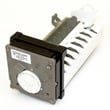




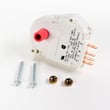
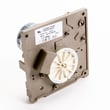
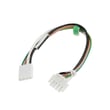
Can you still get parts for Kenmore refrigerators?
Yes. We still help customers get replacement parts for Kenmore refrigerators, including the Kenmore 59667272790 bottom-mount refrigerator. Use your model number to match the exact part (like a door gasket, shelf, ice maker part, or control) to your specific version.
How to find the right part for your Kenmore 59667272790
- Confirm the model number on the appliance ID tag matches 59667272790 exactly.
- Use the model-based parts list to look up common refrigerator parts by section (doors, freezer drawer, evaporator area, etc.).
- Compare the part description to what you are replacing (for example: “door seal/gasket” vs “door trim”).
- If multiple similar parts appear, match by measurements, connector style, and where it mounts.
- Keep your serial number handy; some parts vary by production run.
Common Kenmore refrigerator parts people replace
| Part type | What it affects | Common symptom |
|---|---|---|
| Refrigerator door gasket | Door seal and temperature stability | Frost, warm temps, moisture on gasket |
| Water filter (if equipped) | Water and ice taste/flow | Slow dispense, bad taste/odor |
| Ice maker components (some models) | Ice production | No ice, small cubes, leaking fill tube |
| Evaporator fan motor | Airflow through fresh food section | Warm fridge, noisy fan |
| Defrost parts (heater, thermostat, control) | Frost control on evaporator | Heavy frost, poor cooling |
Why it matters
Kenmore refrigerators often have multiple versions under the same model family. Using the exact model number (and matching the part details) prevents ordering a look-alike part that will not fit or connect correctly.
For model-specific diagrams, part identification, and operating details, use the owner's manual.
Last updated: February 2026
What is the bottom part of a refrigerator called?
On a Kenmore 59667272790 bottom-mount refrigerator, the “bottom part” most people mean is the freezer compartment (the lower door and storage area). If you mean the mechanical area underneath or behind the unit, that area typically houses the compressor and other sealed-system components.
Common “bottom parts” and what they do
- Freezer compartment: Stores frozen food; includes the freezer door, bins, and shelves.
- Bottom hinge/roller area: Supports the doors and helps the refrigerator sit level.
- Machine compartment (rear/bottom): Where the compressor, condenser fan (on many models), and wiring are located.
- Stabilizing leg (some models): Helps prevent rocking once the refrigerator is in place.
Quick identification guide
| What you see at the bottom | What it’s usually called | Why it matters |
|---|---|---|
| Lower door you open for frozen food | Freezer compartment | Affects freezing performance and door sealing |
| Metal pivot point at the lower door | Bottom hinge | Door alignment and smooth closing |
| Adjustable feet/legs near the floor | Stabilizing leg/leveling feet | Prevents vibration and helps doors seal |
| Covered area behind the unit near the floor | Machine compartment | Cooling system performance and airflow |
Why it matters
Using the right name helps you find the correct diagram, troubleshooting steps, and repair instructions. For example, door sealing issues point to the freezer door/hinge area, while “no cooling” symptoms often point to the compressor area.
Model-specific tip for this refrigerator
Your owner's manual for Kenmore 59667272790 includes installation and leveling guidance (including stabilizing legs on some models) and spacing recommendations that help the bottom section operate correctly.
Last updated: February 2026
What are the most common problems with Kenmore refrigerators?
The most common problems we see with Kenmore refrigerators like model 59667272790 are cooling issues, water or moisture problems, and noise or run-time complaints. Many of these trace back to airflow restrictions, dirty condenser coils, door gasket sealing problems, or normal operating conditions like a defrost cycle (about 40 minutes).
Most common symptoms and what usually causes them
- Not cooling or not running: unplugged cord, tripped breaker, control set incorrectly, or the unit is in a defrost cycle (wait about 40 minutes). See the troubleshooting section in the owner's manual.
- Food too warm: blocked vents, doors opened frequently, dirty condenser coils, or weak door gasket seal.
- Runs too often: warm room conditions, frequent door openings, dirty condenser coils, or gasket leaks.
- Moisture or droplets (inside or outside): high humidity, frequent door openings, or door seals not sealing tightly.
- Drawer won’t close smoothly: item blocking the drawer, drawer out of position, dirty channels, or the refrigerator not level.
Quick checks we recommend first (fast, no parts)
- Confirm the refrigerator is on a proper grounded 3-prong outlet and not on an extension cord.
- Verify temperature controls are set correctly and vents are not blocked by food packages.
- Clean the condenser coils (a top cause of warm temps and long run times).
- Inspect door gaskets for gaps, tears, or areas that do not seal tightly.
- If it seems “dead” but lights work, wait 40 minutes to rule out a normal defrost cycle.
Symptom-to-fix guide
| Symptom | Most likely cause | What to do first |
|---|---|---|
| Not running | Power issue or defrost cycle | Check outlet/breaker; wait 40 minutes |
| Warm fridge/freezer | Airflow or dirty coils | Clear vents; clean coils |
| Water droplets | Humidity or gasket leak | Reduce door openings; check gasket seal |
| Runs constantly | Coils dirty or warm conditions | Clean coils; confirm room temp is normal |
Why it matters
Cooling and moisture complaints often get worse over time: dirty coils raise operating temperatures and energy use, and a poor gasket seal lets warm, humid air in, which can lead to condensation and temperature swings.
Last updated: February 2026
Are bottom mount fridges better?
A bottom-mount refrigerator like Kenmore model 59667272790 is better for many households because the fresh-food section sits higher, so you reach everyday items with less bending. It is a strong choice when you use the refrigerator compartment more often than the freezer.
Bottom-mount vs. top-freezer: quick comparison
| Feature | Bottom-mount refrigerator | Top-freezer refrigerator |
|---|---|---|
| Fresh-food access | More convenient (eye to waist level) | Less convenient (lower shelves) |
| Freezer access | More bending (freezer drawer) | Easier access (freezer on top) |
| Best for | Frequent fresh-food use | Frequent freezer use |
When a bottom-mount is the better pick
- You cook often and want produce, dairy, and leftovers at easy reach
- You prefer wide refrigerator shelves over a top freezer compartment
- You want a freezer drawer that can hold bulky items (pizza boxes, bags of frozen food)
- You are trying to reduce daily bending and back strain
Tradeoffs to know before you decide
- Freezer items can be less visible in a deep drawer; using bins helps
- Bottom-mount models often need a little more clearance planning for door swing and ventilation
- If your unit has an ice maker, you may need extra space behind the refrigerator for the water line connection
Why it matters
Most day-to-day kitchen trips are for fresh food, not frozen. With a bottom-mount design, the refrigerator section is positioned for faster viewing and easier loading, which makes the layout feel more efficient in real use.
Setup tip for best performance
For efficient operation, we follow the spacing guidance in the owner's manual, including allowing about 1 inch of space at the top for ventilation and planning side clearance if the refrigerator sits next to a fixed wall.
Last updated: February 2026
How to tell if a Kenmore refrigerator compressor is bad?
On your Kenmore 59667272790 bottom-mount refrigerator, a “bad compressor” usually shows up as poor or no cooling along with repeated clicking, a brief hum then shutdown, or the unit running constantly without reaching temperature. Before condemning the compressor, we verify power, controls, and the defrost cycle using the checks in the owner's manual.
Quick checks before blaming the compressor
These steps rule out common look-alikes that the manual calls out (power issues, control settings, and defrost timing).
- Confirm the refrigerator is plugged into a working outlet and the control is turned on.
- Check the house fuse or circuit breaker.
- If the light works but the fans and compressor are not running, wait 40 minutes; the refrigerator may be in a defrost cycle.
- Make sure the doors seal tightly; inspect and clean the door gaskets.
- Clean the condenser coils; dirty coils can cause long run times and warm temperatures.
- Verify the refrigerator is in a normal room temperature range (about 55°F to 110°F) and not next to a heat source.
Signs the compressor (or start device) is failing
A compressor problem often overlaps with a failed start relay/overload, so we look for patterns.
- Repeated clicking every few minutes (overload tripping) with little or no cooling
- Compressor is very hot to the touch and shuts off quickly
- Loud pulsating hum, grinding, or unusual noise that is not listed as normal
- Refrigerator runs “all the time” but temperatures stay warm
Normal sounds vs. problem sounds
The manual notes several normal operating sounds; use this as a quick comparison.
| What you notice | Often normal | More likely a problem |
|---|---|---|
| Soft hum that cycles on and off | Yes (compressor cycling) | No |
| Gurgling or popping from refrigerant flow | Yes | No |
| Repeated click with no sustained run | No | Yes |
| Runs constantly and won’t cool | No | Yes |
Why it matters
Replacing sealed-system components (compressor, refrigerant tubing) is a major repair. Doing the basic checks first prevents replacing the wrong part and helps you decide whether service is justified.
Last updated: February 2026





