Owner’s manual
 Error Codes



How to remove bottom grill from KitchenAid refrigerator?
On KitchenAid model KFIS27CXMS5, the bottom grill (base grille/toe grille) pulls straight off. We grasp the grille firmly and pull it toward us to release the retaining clips; then we snap it back into place when finished. See the owner's manual for the exact procedure.
Steps to remove the bottom grill (base grille)
- Unplug the refrigerator or disconnect power.
- Stand in front of the unit and locate the base grille at the very bottom.
- Grasp the grille firmly with both hands.
- Pull the grille straight toward you to release it.
- Set the grille aside where it will not get bent.
Reinstalling the grill
- Align the base grille with the lower frame.
- Press evenly until it snaps back into place.
- Restore power.
Why it matters
Removing the base grille gives you access for routine tasks like cleaning dust from the condenser area. Keeping that area clear helps airflow and can improve cooling efficiency.
Quick reference
| Task | What you do | What to watch for |
|---|---|---|
| Remove base grille | Pull straight toward you | Avoid twisting so clips do not crack |
| Reinstall base grille | Align and snap into place | Make sure it sits flush and secure |
Last updated: February 2026
What is the advantage of a bottom mount fridge?
A bottom-mount refrigerator like the KitchenAid KFIS27CXMS5 puts the fresh-food compartment at eye level, so you reach everyday items more easily and bend less often. The freezer stays in the lower drawer, which helps keep frequently used foods front and center.
Key advantages in daily use
- Less bending for fresh food: milk, produce, leftovers, and condiments are easier to access.
- Better visibility: shelves are closer to eye level, so food is easier to see and organize.
- Freezer drawer storage: the lower freezer typically holds bulky items well (bags, boxes, trays).
- Convenient door design: this model uses two refrigerator doors with a hinged center seal that folds out of the way when the left door opens.
- Easier door sealing when aligned: proper door alignment helps the doors close and seal consistently (details are in the owner's manual).
What to expect compared with other refrigerator styles
| Style | Best for | Typical tradeoff |
|---|---|---|
| Bottom-mount (freezer on bottom) | Frequent fresh-food access | More bending for frozen items |
| Top-freezer | Simple layout, often lower cost | More bending for fresh food |
| Side-by-side | Narrow door swing, easy freezer access | Less wide shelf space in both sections |
Why it matters
Most households open the refrigerator section far more than the freezer. With a bottom-mount design, the foods you use most often sit higher, which reduces strain and makes it easier to keep temperatures stable by minimizing “door-open” time.
Last updated: February 2026
What's the life expectancy of a KitchenAid refrigerator?
Most KitchenAid refrigerators, including the KitchenAid KFIS27CXMS5 bottom-mount, typically last 14 years with normal household use and basic maintenance. Keeping temperatures stable, cleaning condenser airflow areas, and replacing wear items like filters and door gaskets on time helps you reach that lifespan.
Typical lifespan and what affects it
A refrigerator’s service life depends most on heat load, airflow, and door sealing. These factors have the biggest impact:
- Condenser airflow: dust buildup makes the compressor run hotter and longer
- Door gasket condition: leaks cause temperature swings and excess run time
- Water system upkeep: timely filter changes help prevent low flow and valve strain
- Usage habits: frequent door openings and overpacking reduce cooling efficiency
- Room conditions: hot garages and tight built-ins shorten life
What the KFIS27CXMS5 warranty tells you about long-term components
Warranty coverage is not the same as life expectancy, but it highlights which systems are designed for long service.
| System or part group | What it does | Warranty coverage (from purchase date) |
|---|---|---|
| Sealed refrigeration system (compressor, evaporator, condenser, dryer, tubing) | Core cooling loop | Years 2 to 5: parts and labor; years 6 to 10: parts |
| Water filter (on models equipped) | Improves water quality and flow | 30 days (filter defects) |
For the exact warranty terms and maintenance instructions for your unit, use the KFIS27CXMS5 owner's manual.
Maintenance that extends refrigerator life
We recommend these practical steps to keep a KitchenAid refrigerator running longer:
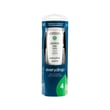
- Replace the water filter on schedule; use the correct refrigerator water filter EDR4RXD1
- Keep doors closing easily; inspect and clean gaskets, and replace if torn or warped
- Maintain good airflow around the cabinet and vents; avoid blocking return vents with food
- Set stable temperatures (most homes do best around 37°F fresh food, 0°F freezer)
- Address symptoms early (warm temps, loud fan noise, water leaks) before they stress the compressor
Why it matters
A refrigerator that runs longer than it should (because of dirty airflow paths or a leaking gasket) uses more electricity and puts extra wear on the sealed system. Simple upkeep reduces run time, improves temperature stability, and helps you hit the typical 14-year lifespan.
Last updated: February 2026
What is the most common problem with KitchenAid refrigerators?
The most common KitchenAid refrigerator problems are cooling issues (fresh food too warm or freezer too warm), ice maker or dispenser trouble, and water leaks. On the KitchenAid KFIS27CXMS5, these symptoms often trace back to airflow restrictions, dirty condenser areas, or water-supply components; our owner's manual covers key checks like cleaning the condenser area and basic troubleshooting.
Most common symptoms and what usually causes them
- Not cooling well or temperature swings: dirty condenser area, blocked vents, evaporator fan problems, or a control issue
- Ice maker or dispenser not working: frozen/clumped ice, dispenser drive/coupler wear, or water supply problems
- Water leaking or puddles: clogged defrost drain, loose water line, or a valve that is not sealing
- Noisy operation: fan blade interference, worn fan motor, or ice buildup contacting the fan
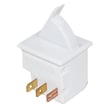
- Lights not working: failed door/light switch or bulb issues (use appliance bulbs no greater than 40 watts)
Quick checks we recommend first (KFIS27CXMS5)
Start with these simple steps before replacing parts:
- Confirm the controls are on and allow 24 hours after any installation or major temperature change for full cooling.
- Clean the condenser area: unplug the refrigerator, remove the base grille, and vacuum the grille and open areas behind it.
- Make sure food packages are not blocking air vents inside the refrigerator and freezer.
- If water or ice is slow, replace the water filter and purge air from the dispenser line.
Parts that commonly solve these problems
If symptoms point to a specific system, these parts are frequent fixes for this model:
| Problem area | Common symptom | Example part for KFIS27CXMS5 |
|---|---|---|
| Water filtration | Slow water, bad taste/odor, low ice output | Refrigerator water filter EDR4RXD1 |
| Water supply | No ice, no water, dripping at dispenser | Refrigerator water inlet valve assembly WPW10270395 |
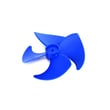
| Airflow/noise | Warm temps, rattling or buzzing from fan area | Refrigerator fan blade WP67006337 |
Why it matters
Cooling, ice, and leak complaints are usually connected: restricted airflow makes temperatures unstable, and water system restrictions (like a clogged filter) reduce ice production and can stress the inlet valve. Addressing the root cause helps protect food temperatures and prevents repeat failures.
Last updated: February 2026