Owner’s manual
 Error Codes


Are GE side by side refrigerators good?
GE side-by-side refrigerators like model DSS25KSRCSS are a solid choice for everyday use because they’re designed for easy organization (adjustable shelves and door bins), consistent door sealing, and convenient ice and water dispensing on many versions. For the exact features and care details for your unit, use the owner's manual.
What “good” usually means for this style
We judge side-by-side refrigerators on food organization, temperature stability, and dispenser performance. On this GE design, the manual highlights practical storage and door behavior that supports day-to-day reliability.
- Adjustable refrigerator door bins and freezer tilt-out bins help fit tall bottles and small items
- Door design includes a “stop” position; partially open doors automatically close, helping maintain a tight seal
- Dispenser models often use a tilt-out ice bin; storing shorter items below it helps the bin work smoothly
- Water filtration is supported; replacing the filter on schedule helps taste and flow
- Common maintenance items (filters, valves, sensors) are replaceable when performance drops
Quick pros and tradeoffs (typical for GE side-by-side)
| Area | What you’ll likely like | What to watch |
|---|---|---|
| Storage | Narrow doors open easily; lots of door-bin space | Freezer compartment can feel narrower for wide boxes |
| Convenience | In-door ice and water on many models | Ice makers can be noisy during harvest cycles |
| Upkeep | Many service parts are accessible | Water flow issues usually trace back to filter or valve |
Parts that most often improve performance
If you’re evaluating “good” based on dispenser taste, ice production, or temperature swings, these are common fix points for DSS25KSRCSS:
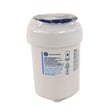
- Refrigerator water filter MWFP for taste, odor, and flow maintenance
- Refrigerator water valve WR57X33326 if the dispenser or ice maker has weak/no water supply
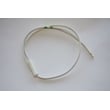
- GE profile refrigerator temperature sensor WR55X10025 if temperatures drift or cycle oddly
Why it matters
A side-by-side that seals well and maintains stable temperatures keeps food safer longer and reduces compressor run time. Keeping the water system maintained (filter and valve) also prevents slow dispensing and poor ice quality.
Last updated: February 2026
What is the average lifespan of a GE refrigerator?
A GE refrigerator like model DSS25KSRCSS typically lasts 12 years. With normal use and basic maintenance (clean airflow, good door sealing, stable temperatures), many units reach 10 to 15 years before major sealed-system or control issues become more common.
Typical lifespan ranges (what to expect)
Most side-by-side refrigerators fall into these practical ranges:
- 8 to 10 years: higher chance of ice maker, dispenser, fan, or valve repairs
- 10 to 15 years: common replacement window for many households
- 15+ years: achievable when temperatures stay stable and airflow stays clean
| Age of refrigerator | What usually happens | What we recommend |
|---|---|---|
| 0 to 5 years | Minor adjustments, occasional filter changes | Follow the owner's manual settings and care steps |
| 6 to 10 years | Wear parts start showing up (ice, water, fans) | Address symptoms early to prevent secondary damage |
| 11 to 15 years | More frequent repairs; cooling performance can drift | Compare repair cost vs. overall condition |
| 16+ years | Major failures become more likely | Plan for replacement if sealed-system issues appear |
Maintenance that extends life the most
These steps have the biggest impact on longevity and cooling performance:
- Keep temperature controls steady; change settings one step at a time and allow time to stabilize
- Avoid frequent, long door openings (reduces compressor run time and frost load)
- Replace the water filter on schedule if you use the dispenser; a clogged filter can reduce flow and strain the water system
- Watch for frost buildup or warm spots; defrost-system issues can shorten compressor life
- Fix water leaks quickly to prevent corrosion and electrical problems
Parts that commonly affect “how long it lasts”
When a refrigerator is not cooling consistently, these model-compatible parts are often involved:
- Refrigerator water filter MWFP (water flow and taste; helps protect the water circuit)
- Refrigerator water valve WR57X33326 (no water to dispenser or ice maker, slow fill)
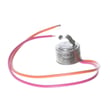
- Refrigerator defrost thermostat WR50X10068 (frost buildup, warm freezer, poor airflow)
- GE profile refrigerator temperature sensor WR55X10025 (temperature swings, odd cycling)
Why it matters
A refrigerator’s lifespan is mostly determined by how hard the sealed system has to work. Stable temperatures, good airflow, and a healthy defrost and water system reduce run time and stress on the compressor and evaporator.
Last updated: February 2026
What is the most common problem with a GE refrigerator?
The most common GE refrigerator complaint is not cooling properly (fresh food warm, freezer not holding temperature). On the GE DSS25KSRCSS, the fastest wins are checking control settings, allowing time after power changes, and confirming airflow before replacing parts; see the owner's manual.
Quick checks we recommend first (no parts needed)
- Confirm the temperature controls are not set to 0 (off).
- If the unit was just plugged in or settings were changed, allow up to 24 hours to fully cool.
- Make sure doors close and seal; warm air leaks can mimic a cooling failure.
- Avoid overpacking; blocked vents reduce airflow between freezer and fresh food.
- If the refrigerator seems “off,” remember it may be in a defrost cycle; wait about 30 minutes.
Common symptoms and the most likely causes
| Symptom | What it usually points to | Parts that often relate (if needed) |
|---|---|---|
| Fresh food warm, freezer cold | Airflow problem from freezer to fridge | Evaporator fan motor, air duct |
| Both sections warm | Cooling system not running, control issue | Temperature sensor, run capacitor |
| Frost buildup, warming over time | Defrost system problem | Defrost thermostat, defrost heater |
| Water/ice issues along with warm temps | Restricted water flow can indicate maintenance needs (separate from cooling) | Water filter, water valve |
Parts we commonly see involved on DSS25KSRCSS cooling complaints
If the quick checks do not fix it, these model-matched parts are common suspects depending on symptoms:
- GE profile refrigerator temperature sensor WR55X10025 (temperature feedback and cycling)
- Refrigerator evaporator motor WR60X10307 (moves cold air through the evaporator)
- Refrigerator defrost thermostat WR50X10068 (defrost temperature sensing)
- Refrigerator defrost heater WR51X10042 (melts frost off the evaporator)
- Capacitor WR55X24064 (helps the compressor start and run)
Why it matters
A refrigerator that is not cooling can spoil food quickly and can also cause longer run times. Catching simple issues like control settings, airflow blockage, or a defrost-cycle misunderstanding prevents unnecessary part replacement and gets temperatures stable faster.
Last updated: February 2026
How wide is a 25.6 cubic foot refrigerator?
Most 25.6 cubic foot refrigerators measure about 35 to 36 inches wide. For your GE DSS25KSRCSS side-by-side, use the published overall width in the DSS25KSRCSS owner's manual and measure your opening so you account for handles, door swing, and ventilation clearance.
What “width” can mean (and which one you need)
Refrigerator width is commonly listed in a few different ways; the right one depends on whether you are checking cabinet fit, doorway clearance, or door swing.
- Cabinet width: the box only, without handles
- Overall width: includes handles and trim (most important for a tight opening)
- Doorway clearance width: what must pass through doors and halls
- Door swing clearance: space needed to open doors fully
- Ventilation clearance: space around the cabinet for airflow
Typical width ranges by style
| Refrigerator style | Typical width | Fit planning note |
|---|---|---|
| Side-by-side (like DSS25KSRCSS) | 35 to 36 in. | Often designed for a 36-in. opening with clearance |
| French door | 35 to 36 in. | Door swing and drawer pull-out need extra room |
| Top freezer | 28 to 33 in. | Usually narrower overall |
How we recommend measuring before you buy or move one
- Measure the opening width in 3 spots (top, middle, bottom)
- Measure depth too; doors and handles add to depth
- Check doorway widths on the path into the kitchen
- Plan for at least a small gap at the sides and top for airflow
- If an entrance is tight, review the door removal guidance in the manual
Why it matters
“25.6 cu. ft.” describes storage volume, not exterior size. The correct width measurement plus clearance prevents installation problems, poor cooling from restricted airflow, and doors that cannot open fully.
Last updated: February 2026