Installation guide
 Owner’s manual
 Error Codes



How do I get my Frigidaire out of lock mode?
On the Frigidaire LFHT1831QF5 top-mount refrigerator, “lock mode” usually means the control panel is locked so temperature changes are blocked. Use the exact unlock button sequence listed for your control style in the LFHT1831QF5 owner’s manual.
Try these in order; stop when the controls respond normally:
- Press and hold the button labeled Control Lock or Lock until the lock indicator turns off.
- If your panel uses a padlock icon instead of words, press and hold the key nearest that icon.
- Wipe the keypad with a dry cloth; moisture can make the panel act “stuck.”
- Power reset: unplug the refrigerator (or switch off the breaker) for 2 minutes, then restore power.
- After power is restored, wait 15 minutes; the refrigerator can run a brief self-check before accepting inputs.
A lock that will not clear is typically caused by a stuck key, moisture intrusion, or a failing control panel.
| Symptom | What it points to | What to do next |
|---|---|---|
| Lock indicator stays on | Wrong key being held or key not registering | Follow the exact key shown in the manual for LFHT1831QF5 controls |
| Buttons beep but settings do not change | Control lock still active | Repeat the correct hold sequence, then do the power reset |
| No lights or no response | Power supply issue or failed interface | Confirm outlet and breaker, then inspect the control panel |
If the correct unlock sequence and reset do not restore button response, the control panel assembly is a common repair item:
When control lock is on, you cannot adjust temperatures. Unlocking lets you set safe food-storage temperatures and helps prevent warm refrigerator or freezer conditions.
Last updated: February 2026
What are the signs of a failing refrigerator?
If your Frigidaire LFHT1831QF5 is failing, you’ll usually notice warming temperatures, food spoiling faster, heavy frost, water leaks, or unusual compressor and fan behavior (too loud, or oddly quiet). Use the troubleshooting section in the LFHT1831QF5 owner's manual to confirm symptoms before replacing parts.
- Food spoils early or the fresh food section cannot hold about 37°F
- Freezer softens or cannot hold about 0°F
- Excess frost on the freezer back wall (often points to a defrost airflow issue)
- Water puddles under the refrigerator or inside the fresh food section
- Unusual noises (grinding, rattling, clicking) or uncharacteristic silence
- Cabinet sides feel hot more often than normal (unit may be running constantly)
These checks catch the most common non-failure causes mentioned in the manual.
- Power and controls: Make sure the plug is fully seated; check the fuse or breaker (typically a 15-amp time-delay fuse). Confirm the control is not set to “0” or “OFF.”
- Defrost cycle: If it just stopped cooling, wait about 20 minutes and recheck.
- Self-test behavior: If the compressor or fan is not running, allow about 15 minutes for a self-diagnostic test to finish.
- Door seal and airflow: Check for gaps at the gasket and avoid blocking vents with food packages.
| Symptom | Most likely category | What to do next |
|---|---|---|
| Warm fridge and freezer | Cooling system or airflow | Verify settings, listen for fans, check for frost buildup |
| Heavy frost on freezer wall | Defrost system | Inspect for blocked airflow; consider defrost components |
| Water on floor | Drain or water supply issue | Check drain path and water line connections |
| Loud fan noise | Fan or ice interference | Inspect fan area for ice; review fan diagnostics |
Catching these signs early helps prevent food loss and reduces strain on major components like the compressor. It also helps you avoid replacing good parts when the real issue is a control setting, a defrost cycle, or a door seal problem.
Last updated: February 2026
What is the life expectancy of a Frigidaire Gallery refrigerator?
Most Frigidaire Gallery refrigerators last 10 to 15 years with normal household use. To get the longest life from your refrigerator, we recommend steady temperatures, clean airflow (condenser area), and tight door seals; your LFHT1831QF5 owner's manual covers routine care and operating tips.
A refrigerator’s life is mainly driven by compressor run time, heat removal, and how well the doors seal.
- Condenser cleanliness: dust buildup makes the compressor work harder
- Door gasket condition: leaks cause long run times and temperature swings
- Ambient temperature: very cold spaces (like some garages) can cause poor temperature control
- Loading and door openings: frequent openings add moisture and heat load
- Defrost performance: heavy frost can reduce airflow and cooling efficiency
Use this as a simple schedule for Frigidaire top-mount units like model LFHT1831QF5:
- Vacuum/brush the condenser area every 6 to 12 months
- Keep food from blocking interior vents for proper airflow
- Clean and dry door gaskets; confirm the doors close easily
- Set controls to a stable mid-range setting; adjust only after 24 hours
- If you have an ice maker, keep the water supply connection secure and leak-free
| Symptom | Often points to | What we recommend |
|---|---|---|
| Warm fridge, freezer OK | Airflow/defrost issue | Check frost buildup; inspect defrost system |
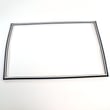
| Frost or sweating around door | Door seal leak | Inspect gasket; consider Frigidaire refrigerator door gasket (white) 242193206 if your unit uses a white gasket |
| Loud clicking, won’t start | Start components | Have a tech test start relay/capacitor |
| Runs constantly | Dirty condenser or gasket leak | Clean condenser; check door seal |
A refrigerator that runs longer than necessary uses more energy and puts extra wear on the sealed system (compressor, condenser, evaporator). Simple upkeep helps you stay closer to the 10 to 15 year life range.
Last updated: February 2026