Owner’s manual
 Error Codes



What does DH mean on Kenmore Elite refrigerator?
On Kenmore Elite refrigerator model 79577243600, DH typically indicates a defrost heater (or defrost heating) issue, meaning the refrigerator is not warming the evaporator enough during the defrost cycle and frost can build up. Use the 79577243600 owner's manual troubleshooting section to confirm the display message and checks.
What you’ll usually notice when DH shows
- Freezer temperature slowly rises or swings
- Frost or ice buildup on the rear freezer panel
- Reduced airflow into the fresh food section (warm refrigerator compartment)
- Fan noise changes as airflow gets restricted
- Water leaking or ice under the freezer drawer if the drain freezes
Quick checks we recommend first
- Power reset: Unplug the refrigerator for 5 minutes, then restore power.
- Confirm airflow: Make sure vents are not blocked; proper circulation is required for stable temperatures.
- Check door sealing: A poor seal adds moisture that turns into frost; inspect gaskets for gaps and debris.
- Look for heavy frost: If the back freezer panel is packed with frost, the defrost system needs attention.
Parts commonly involved in a DH (defrost heat) problem
If basic checks point to a defrost failure, these parts are common suspects on bottom-mount designs:
| What it affects | Common cause | Example part for this model |
|---|---|---|
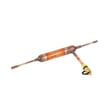
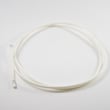
| Defrost heating | Heater not warming evaporator | Refrigerator defrost heater 5300JB1100J |
| Defrost sensing | Sensor not reading temperature correctly | Refrigerator defrost sensor assembly 6615JB2005C |
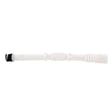
| Drain icing | Meltwater not draining, refreezes | Refrigerator drain tube 5251JA3003D |
Why it matters
A DH condition is more than a display message; it usually means frost is not being cleared. That frost blocks airflow between the freezer and refrigerator sections, so cooling performance drops and food temperatures become unsafe.
Last updated: January 2026
What size is Kenmore refrigerator model 79577243600?
Kenmore Elite refrigerator model 79577243600 is a bottom-freezer design; its exact exterior dimensions (width, depth, height) vary by the specific 795.7724_ color/version and installation setup. For the precise cabinet and clearance measurements for your unit, use the dimensions and spacing guidance in the owner's manual.
How to measure your refrigerator correctly
Use a tape measure and record all three dimensions; then compare to your opening.
- Width: measure the cabinet at the widest point (not the handles unless your opening is tight)
- Height: floor to top of cabinet (include hinges if they extend above the case)
- Depth: front of cabinet to back (note whether you are including handles)
- Measure the opening too (wall to wall, floor to cabinet above)
- Plan for door swing and drawer pull-out clearance
Typical size range for this style (helpful planning numbers)
Most Kenmore and LG-built bottom-freezer refrigerators in this class commonly fall into these ranges. Use these for rough planning only; confirm your exact unit in the manual.
| Measurement | Typical range (approx.) | What changes it most |
|---|---|---|
| Width | 30 to 33 in. | cabinet platform and door design |
| Height | 67 to 70 in. | hinge style, leveling legs |
| Depth | 30 to 35 in. | handles, door thickness, rear clearance |
Clearances to plan for
The manual notes that using an extension cord increases the clearance needed behind the refrigerator, and proper airflow is important.
- Leave space behind the unit for the power cord and water line (if equipped)
- Keep room for air circulation so the condenser can shed heat
- Allow extra space so you can pull the refrigerator out for cleaning and service
- If you have an icemaker/dispenser, plan routing for the water supply line
Why it matters
Correct sizing prevents installation headaches like doors that cannot open fully, freezer drawers that hit cabinets, and poor cooling from restricted airflow. It also helps avoid kinks in the water tubing and reduces strain on door hinges and gaskets.
Last updated: January 2026
What are the common problems with Kenmore Elite refrigerators?
Common problems on the Kenmore Elite 79577243600 bottom-mount refrigerator include weak cooling after a power interruption or recent plug-in (it can take up to 24 hours to cool fully), doors that do not close or seal well, and frost or water issues tied to cleaning and airflow. Use the 79577243600 owner's manual troubleshooting and care sections to pinpoint the cause.
Most common symptoms and what usually causes them
- Not cooling well or temperature swings: dirty condenser coils, doors not fully closed, control settings not matched to room conditions, or the unit was just plugged in (needs up to 24 hours).
- Doors will not close completely: refrigerator not level, food packages blocking the door, bins or shelves out of position, or sticky door gaskets.
- Excess frost or icing: door left ajar, gasket not sealing, or a defrost system problem (heater, sensor, or airflow).
- Water on the floor or inside: a clogged drain path or drain tube, or normal water in the defrost drain pan during defrost.
- Noise complaints: normal operating sounds, or clicking/buzzing tied to compressor start components.
Quick checks we recommend before replacing parts
- Confirm doors seal and close: push doors firmly shut; rearrange items that block closure.
- Clean condenser coils: dirty coils reduce heat transfer and make the compressor work harder.
- Level the refrigerator: an unlevel cabinet can prevent proper door alignment.
- Clean and treat gaskets: clean the gasket and mating surface; a thin coat of paraffin wax can reduce sticking.
- Give it time after power loss: after a power interruption or first plug-in, allow up to 24 hours for full cooling.
Parts that commonly relate to these issues (when symptoms match)
| Symptom | Common area | Example part for this model |
|---|---|---|
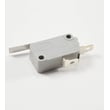
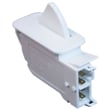
| Interior light issues or door-open behavior | Door switch circuit | Refrigerator door push-button switch 6600JB1010A |
| Water leaking or drain backing up | Defrost drain path | Refrigerator drain tube 5251JA3003D |
| Frost buildup from poor sealing | Door gasket | Refrigerator gasket assembly ADX73350925 |
| Heavy frost, warm temps | Defrost system | Refrigerator defrost heater 5300JB1100J, refrigerator defrost sensor assembly 6615JB2005C |
Why it matters
Most “refrigerator not cooling” and “frost buildup” complaints come down to airflow and sealing. A door that does not close, dirty condenser coils, or a restricted drain can make the compressor run longer, raise energy use, and lead to icing or water leaks.
Last updated: January 2026
Why is my Kenmore Elite refrigerator leaking water out of the bottom?
Water leaking from the bottom of your Kenmore Elite refrigerator model 79577243600 is usually caused by a defrost drain problem (clogged or frozen), water supply tubing that’s leaking, or water overflowing the drain pan during heavy defrosting. Use the troubleshooting and cleaning guidance in the 79577243600 owner's manual to confirm the exact access points and steps.
Most common causes (and what you’ll notice)
- Clogged or frozen defrost drain: Water collects under the crisper or freezer floor, then runs out the front.
- Leaking water line or connection: Drips near the back, under the unit, or along the tubing path.
- Cracked or loose internal tubing: Leaks only when dispensing water or when the icemaker fills.
- Door not sealing well: Excess frost leads to extra meltwater that can overwhelm the drain system.
- Drain pan shifted or cracked: Water misses the pan and ends up on the floor.
Quick checks we recommend (10 to 20 minutes)
- Unplug the refrigerator and pull it out enough to inspect safely.
- Look for the water source:
- Water only after dispensing or icemaker fill points to tubing.
- Water after a defrost cycle often points to the defrost drain (the manual notes water runs to the drain pan during defrost).
- Check the door seal and closing:
- Make sure bins and drawers are not preventing full closure.
- Inspect visible tubing for wet spots or mineral tracks.
Parts that commonly solve bottom leaks on this model
| Symptom | Likely area | Example part for this model |
|---|---|---|
| Leak happens during dispensing or icemaker fill | Water line/tubing | Refrigerator tubing MJU62070602 or refrigerator water tubing 5210JA3005W |
| Water appears after defrosting | Defrost drain path | Refrigerator drain tube 5251JA3003D |
| Excess frost, recurring puddles | Door seal | Refrigerator gasket assembly ADX73350925 |
Why it matters
A small leak can turn into floor damage and can also lead to icing in the freezer, poor cooling, and longer run times. Fixing the drain or tubing early helps protect the compressor and keeps temperatures stable.
Last updated: January 2026