 Owner’s manual



Where is the model number on Kenmore Elite dryer?
On the Kenmore Elite dryer model 11067082600, the model number is printed on the appliance identification label. You will typically find that label on the door opening area (inside the door on the cabinet frame) or on the back of the dryer near the top; confirm the exact location in the 11067082600 owner's manual.
Most common places to check
- Open the dryer door and look along the cabinet frame around the door opening
- Check the inside edge of the door itself (near the hinge or latch side)
- Look on the back panel near the top of the cabinet
- If your dryer is stacked or in a tight closet, use a flashlight and mirror to view the rear label
What the label looks like (and what to write down)
The label usually includes several identifiers. For parts lookup and service, we recommend recording:
- Model number (example format: 110.6708###)
- Serial number
- Type (electric dryer information may be listed)
| Item on label | Why it matters |
|---|---|
| Model number | Ensures the correct Kenmore Elite parts diagrams and fit |
| Serial number | Helps match production changes and revisions |
| Electrical ratings | Helps confirm power requirements during troubleshooting |
Why it matters
Using the exact model number prevents ordering the wrong dryer parts (such as a dryer drum belt, thermal fuse, or heating element) and helps you follow the correct troubleshooting steps for your specific Kenmore Elite configuration.
Last updated: February 2026
Why won't my Kenmore Elite dryer start but has power?
If your Kenmore Elite dryer model 11067082600 has power but will not start, the most common causes are a tripped breaker or blown fuse, the door not fully closed, or the Start button not being pressed long enough. We troubleshoot these in the 11067082600 owner's manual.
Quick checks that fix many “won’t start” calls
- Reset both dryer breakers (many electric dryers use two breakers) or replace both fuses.
- Confirm the door is firmly closed and the latch feels secure.
- Press and hold Start for 2 to 5 seconds (large loads can require a longer press).
- Unplug the dryer for 1 minute, then plug it back in and try again.
- If the display shows PF (power failure), press and hold Start to restart.
Parts that commonly stop a dryer from running
If the quick checks do not help, these parts are frequent culprits on dryers like the Kenmore Elite 11067082600:
| Symptom | What it usually points to | What to do next |
|---|---|---|
| No response when pressing Start | Door switch or start circuit issue | Verify door closes firmly; inspect door strike and switch wiring |
| Runs briefly then stops | Overheat protection opened | Check venting and test the thermal fuse |
| Power is on but dryer is “dead” | Blown thermal fuse | Test and replace the dryer thermal fuse WP3390719 if open |
Why it matters
A dryer that has power but will not start is often protecting itself from an unsafe condition (power supply issue, door not latched, or overheating). Fixing the root cause, especially airflow restrictions, helps prevent repeat failures.
Safety note before servicing
Disconnect power before opening panels or testing wiring, and reinstall all parts and panels before operating.
Last updated: February 2026
What year did the Kenmore Elite come out?
Kenmore Elite is a premium Kenmore line that Sears introduced in the late 1990s (commonly cited as 1999). For your specific Kenmore Elite dryer model 11067082600, the exact year is based on the unit’s serial number date code, which you can locate and decode using the 11067082600 owner's manual.
How to find the year for model 11067082600
The “Kenmore Elite” name has a launch timeframe, but your dryer’s build year comes from the serial tag on the appliance.
- Unplug the dryer before inspecting inside panels.
- Find the model and serial tag (commonly on the door opening, door frame, or inside the cabinet).
- Write down the full serial number exactly as shown.
- Use the date-code format for the manufacturer behind Kenmore (Kenmore units were built by different manufacturers, and the code format varies).
- Keep the serial number with your purchase records for future parts lookups.
What you can expect from the serial tag
Different Kenmore Elite dryers use different serial formats, so the “year” may be encoded as numbers, letters, or a week and year combination.
| What you’re trying to learn | Where it comes from | Why it helps |
|---|---|---|
| Product line introduction year | Kenmore Elite brand history | Useful for general timeline only |
| Your dryer’s manufacture year | Serial number date code | Best for parts matching and service history |
| Your dryer’s exact configuration | Model number 11067082600 | Ensures correct diagrams and parts |
Why it matters
Knowing the manufacture year helps when you are comparing design changes, confirming compatible parts (like a belt, thermal fuse, or moisture sensor), and planning maintenance. For example, common wear items on many Kenmore Elite dryers include the dryer drum belt WP8547157 and drum support components.
Last updated: February 2026
Can you get parts for a Kenmore dryer?
Yes. We carry replacement parts for Kenmore dryers, including the Kenmore Elite 11067082600. You can match parts by model number and then choose common wear items like belts, drum support rollers, thermal fuses, and heating components to get your dryer running correctly again.
How to make sure you get the right part
Use the model number 11067082600 and confirm the part location and description in the 11067082600 owner's manual. This helps you avoid ordering a similar-looking part that mounts differently or uses different terminals.
- Match the full model number on the dryer’s ID tag to 11067082600
- Compare the part name and where it installs (front bulkhead, blower housing, heater box, drum area)
- Check whether your dryer is gas or electric before ordering heat-related parts
- Replace related wear parts together when you already have the cabinet open
- After any repair, clean lint buildup and confirm airflow through the vent
Common Kenmore Elite 11067082600 parts customers replace
These are frequent fixes for noise, no-heat, or no-start symptoms:
| Symptom | Likely part | Example from this model’s parts |
|---|---|---|
| Squealing, thumping, rumbling | Drum support and idler components | Support WPW10314173, dryer idler assembly WPW10547292 |
| Runs but won’t heat (electric) | Heating circuit safety parts or heater | Dryer thermal fuse WP3390719, dryer heating element WP8544772 |
| Overheats or cycles heat oddly | Temperature sensing parts | Dryer thermistor WP8577274, dryer high-limit thermostat WP8557403 |
Why it matters
Using model-matched Kenmore parts protects fit and performance. It also helps prevent repeat failures caused by installing the wrong belt length, the wrong thermostat style, or a fuse that opens again because airflow was never corrected.
Last updated: February 2026
What are common problems with Kenmore dryers?
Common problems we see on Kenmore dryers like model 11067082600 include a dryer that will not run, no heat (even if the drum turns), unusual noises or vibration, and long dry times. Many of these trace back to power supply issues, airflow restrictions, or worn drum-drive parts; use the 11067082600 owner's manual troubleshooting steps to narrow it down.
Quick checks first (fastest fixes)
- Confirm the dryer is plugged in and the electrical supply is on.
- Check the house fuses or breakers; many electric dryers use two fuses/breakers, so the drum can run with no heat.
- Make sure the door is fully closed and the Start button is pressed firmly (large loads can require holding Start for 2 to 5 seconds).
- Clean the lint screen; residue buildup can cause longer dry times and poor performance.
- Verify the dryer is level on all four legs to reduce vibration and thumping.
Symptom-to-cause guide
| Symptom | Most common causes | What we recommend |
|---|---|---|
| Won’t start | Power issue, door not closed, start not held long enough | Check breakers/fuses, door switch action, Start press/hold |
| Runs but no heat | One breaker tripped, heating circuit problem | Reset both breakers; if still no heat, test heat components |
| Takes too long | Restricted venting, lint screen buildup | Clean lint screen and inspect vent path for blockage |
| Squealing/thumping | Worn rollers, idler, belt | Inspect drum support and belt drive parts |
Parts that commonly solve noise or “won’t tumble” complaints
If the drum is not turning, is hard to turn, or the dryer squeals, these are frequent wear items on this style of Kenmore dryer:
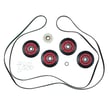
- Dryer repair kit 4392067 (common kit for belt and drum support wear items)
- Dryer drum belt WP8547157 (broken or stretched belt can stop tumbling)
- Dryer idler assembly WPW10547292 (weak pulley can cause squeal or belt slip)
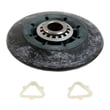
- Support WPW10314173 (worn roller can thump or squeal)
Why it matters
Dryer problems often start small, then lead to overheating, shutdowns, or repeated long cycles. Restoring proper power, airflow, and drum support reduces drying time, protects fabrics, and helps the heater and motor run at normal temperatures.
Last updated: February 2026
Why is my Kenmore Elite dryer not tumbling?
If our Kenmore Elite dryer model 11067082600 powers on but the drum will not turn, the most common causes are a broken drum belt, a failed idler/roller support, or a motor issue. Start with quick door and load checks, then inspect the drive system.
Quick checks first
- Make sure the door closes firmly; a dryer will not tumble if the door switch is not being engaged.
- Try a timed cycle and press Start; some cycle selections can behave differently than expected.
- Reduce the load size; heavy, tangled loads can prevent the drum from starting.
- Listen for symptoms:
- Humming with no drum movement often points to a stuck drum, seized roller, or weak motor.
- Motor runs but drum does not move often points to a broken belt.
Most likely mechanical causes (and the parts that fix them)
For model 11067082600, these parts commonly solve a no-tumble complaint:
- Broken or slipped belt: dryer drum belt WP8547157
- Worn idler pulley or tensioner: dryer idler assembly WPW10547292
- Worn drum rollers (drum support): support WPW10314173
- Multiple worn drive components at once (belt, rollers, idler): dryer repair kit 4392067
What to inspect (basic DIY sequence)
- Unplug the dryer.
- Open the cabinet enough to view the belt path and drum support points.
- Check belt condition and tension; replace if cracked, glazed, or broken.
- Spin the drum by hand; it should turn smoothly without grinding or binding.
- Spin rollers and idler pulley; replace any that wobble, squeal, or feel rough.
Symptom-to-cause guide
| What you notice | Most common cause | Typical fix |
|---|---|---|
| Drum does not move; motor runs | Belt broken/slipped | Replace belt |
| Loud squeal or thump; then no tumble | Roller/idler failing | Replace roller/idler |
| Hums; drum hard to turn by hand | Drum support binding | Replace roller(s) |
| Clicks; no movement | Motor or drive jam | Clear jam; test motor |
Why it matters
A dryer that will not tumble usually has a failing wear part in the drive system. Fixing it early prevents belt debris, overheating from restricted drum movement, and additional wear on the motor.
For diagrams, access steps, and model-specific guidance, use the 11067082600 owner's manual.
Last updated: February 2026
How many cubic feet is a Kenmore Elite dryer?
Kenmore Elite dryer capacity depends on the exact model. For Kenmore Elite model 11067082600, the correct cubic-foot rating is listed in the specifications section of the 11067082600 owner's manual; most full-size, vented Kenmore Elite dryers are in the 7.0 to 7.5 cu. ft. range.
How to find the exact cubic feet for model 11067082600
Use these quick checks to get the confirmed number for your specific unit.
- Open the 11067082600 owner's manual and look for “Specifications” or “Product dimensions”.
- Check the model/serial tag (commonly inside the door opening) to confirm you are matching 11067082600 exactly.
- If the manual lists drum dimensions instead of cubic feet, use the spec page in the manual as the authoritative reference.
- When comparing dryers, compare drum capacity (cu. ft.), not exterior width or depth.
- If you are planning a closet install, use the manual’s clearance guidance; capacity does not change clearance needs.
Typical capacity ranges (for comparison)
These ranges help you sanity-check what you see in the specs.
| Dryer type | Typical drum capacity | Common use |
|---|---|---|
| Compact dryer | 3.4 to 4.5 cu. ft. | Small loads, tight spaces |
| Full-size vented dryer | 7.0 to 7.5 cu. ft. | Family laundry, towels |
| Oversize full-size dryer | 7.6 to 9.0 cu. ft. | Bulky bedding |
Why it matters
Drum capacity affects tumbling space and airflow. The right load size for the drum helps clothes dry evenly, reduces wrinkling, and supports proper sensor-dry performance.
Last updated: February 2026
How much does it cost to replace a heating element in a Kenmore dryer?
For Kenmore Elite dryer model 11067082600, replacing the heating element typically costs $135.08 for the part (our dryer heating element WP8544772) plus any additional items you choose to replace while the dryer is open; professional labor commonly brings the total into the $200 to $450 range.
Typical cost breakdown
Costs vary based on whether you DIY or hire service, and whether you replace related wear items at the same time.
- Heating element part: WP8544772 (priced at $135.08 for this model)
- Optional related parts (common add-ons): thermal fuse, high-limit thermostat, element wire kit
- Labor (if serviced): commonly $100 to $300 depending on local rates and access
- Service call/diagnostic (if charged separately): commonly $75 to $150
| Scenario | What you pay for | Typical total |
|---|---|---|
| DIY element only | Part + your time | $135 to $200 |
| DIY with safety parts | Element + fuse/thermostat/wiring as needed | $165 to $300 |
| Pro repair | Parts + labor (and possibly diagnostic) | $200 to $450 |
What to check before buying a heating element
A “no heat” complaint is not always a failed element. The 11067082600 manual recommends verifying power and basic conditions, then checking for heat after the dryer runs about 5 minutes. Use the troubleshooting steps in the 11067082600 owner's manual.
- Confirm the dryer is getting full power (many electric dryers use two fuses/breakers)
- Make sure the door fully closes and the cycle is actually running
- Check airflow: a clogged lint screen or vent restriction can cause overheating and shutdown
- If there is still no heat, test heat circuit components (element, thermal fuse, thermostat)
Parts that often get replaced with the element
Replacing related parts can prevent repeat failures caused by overheating or poor airflow.
- Dryer heating element WP8544772
- Dryer thermal fuse WP3390719
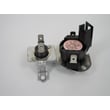
- Dryer high-limit thermostat WP8557403
- Dryer heating element wire kit 279457
Why it matters
A weak or failed heating system increases dry times and can trip safety devices. Restoring proper heat and airflow helps the dryer dry efficiently and protects components like the thermal fuse and thermostat.
Last updated: February 2026
What are the codes for Kenmore Elite dryer?
For the Kenmore Elite dryer model 11067082600, the most common display codes include PF (power failure), AF (low airflow), and F-series service codes (such as F1, F2, F20). PF and AF are often user-fixable; F-codes typically require service. See the 11067082600 owner's manual for your model’s exact display behavior.
Common codes and what they mean
- PF: Power failure interrupted the cycle.
- AF: Low airflow condition (venting restriction).
- F-series (F1, F2, F20, etc.): Service codes tied to control or component faults.
What to do for each code
PF (power failure)
- Press and hold START to restart the cycle.
- Check the home breaker(s) or fuse(s) feeding the dryer.
- If PF repeats, inspect the outlet and power cord connection.
AF (low airflow)
- Clean the lint screen.
- Check the vent pipe from the dryer to the wall for lint buildup or kinks.
- Check the outside exhaust hood for blockage.
- Have the full vent run professionally cleaned if airflow stays low.
F-series service codes
- Record the exact code (example: F:01, F:02, F:20).
- Power the dryer off for a minute, then retry a cycle.
- If the code returns, schedule service; these codes indicate an internal fault.
Quick reference table
| Code type | What it points to | Best next step |
|---|---|---|
| PF | Interrupted power | Hold START; check breakers |
| AF | Restricted venting/airflow | Clean lint screen; clear venting |
| F-series | Control or component fault | Note code; service if it returns |
Parts that often relate to airflow or heat symptoms
If you are also seeing long dry times, overheating, or no-heat symptoms along with AF or repeated shutdowns, these parts are commonly involved in diagnosis and repair:
- Dryer thermal fuse WP3390719 (opens if overheating occurs)
- Dryer thermistor WP8577274 (helps regulate temperature)
- Dryer high-limit thermostat WP8557403 (overheat protection)
Why it matters
PF and AF can usually be corrected quickly and help prevent nuisance shutdowns and poor drying performance. Addressing AF promptly also reduces heat stress on components like the thermal fuse and thermostats.
Last updated: February 2026
What size is a Kenmore Model 11067082600 dryer?
The Kenmore Elite dryer model 11067082600 is a full-size 27-inch class dryer. Per the specifications in the 11067082600 owner's manual, it measures 27 in. wide, 40 13/16 in. high, and 28 15/16 in. deep; plan 50 1/4 in. depth with the door open.
Exact dimensions and clearance to plan for
Use these measurements when checking a laundry closet, alcove, or side-by-side installation:
- Width: 27 in.
- Height: 40 13/16 in.
- Depth (cabinet): 28 15/16 in.
- Depth with door open: 50 1/4 in.
- Minimum rear clearance for venting (with elbow): 5 1/2 in.
Quick fit checklist (measure these spots)
Before moving the dryer into place, we measure:
- The opening width between walls or cabinets
- Floor to shelf/countertop height above the dryer
- Wall to front clearance so the door can open fully
- Rear space so the vent elbow is not crushed
- Side clearance for easier service access and less noise transfer
Size summary table
| Measurement | 11067082600 spec | What to include when measuring |
|---|---|---|
| Width | 27 in. | Cabinet side panels |
| Height | 40 13/16 in. | Leveling legs and top/console |
| Depth | 28 15/16 in. | Cabinet depth (not counting extra vent space) |
| Depth, door open | 50 1/4 in. | Full swing of the door |
| Rear clearance | 5 1/2 in. minimum | Vent elbow and clamp space |
Why it matters
Correct sizing prevents crushed venting and restricted airflow, which helps the dryer heat and dry normally and reduces overheating risk that can trip safety parts like the dryer thermal fuse WP3390719.
Last updated: February 2026








