Installation guide
 Owner’s manual


What is the average lifespan of a KitchenAid dishwasher?
A KitchenAid dishwasher like model KDFE104HWH0 typically lasts 10 to 14 years. Consistent care (monthly cleaning, using rinse aid, and avoiding buildup from hard water) helps you reach the high end of that range and keeps cleaning and drying performance strong.
- Water quality: hard water speeds up mineral buildup on the tub, spray system, and heater
- Maintenance habits: monthly interior cleaning reduces residue that can hurt performance
- Loading and detergent use: correct loading and quality detergent packs reduce redeposit and strain
- Drying setup: rinse aid improves drying and helps control hard-water deposits
- Installation and leaks: a solid install and quick leak fixes prevent cabinet and component damage
Use these habits to extend the service life of your KDFE104HWH0:
- Clean the interior monthly with a dishwasher cleaning product (the manual recommends monthly cleaning)
- Use rinse aid consistently for better drying and to reduce hard-water deposit buildup
- Wipe the exterior with a soft damp cloth and mild detergent (avoid abrasives)
- If draining slows, check and clean the drain air gap (if your setup has one)
- Before extended time away, turn off the dishwasher’s water and power
| Dishwasher situation | Typical outcome | What to do |
|---|---|---|
| Regular cleaning + rinse aid | Reaches the longer end of lifespan | Follow the KDFE104HWH0 owner’s manual care steps |
| Hard water + little maintenance | Shorter lifespan, more buildup issues | Increase cleaning frequency; keep rinse aid filled |
| Heavy daily use | More wear on pumps, seals, and racks | Fix small issues early; avoid overloading |
Dishwashers often start showing “end-of-life” symptoms (poor cleaning, poor drying, draining issues, or leaks) well before they fully fail. Staying on top of care helps protect key components like the heating system, circulation path, and door sealing surfaces.
Last updated: February 2026
What is the most common problem with the KitchenAid dishwasher?
On the KitchenAid KDFE104HWH0 dishwasher, the most common problem we see is poor cleaning performance (dishes still dirty) caused by restricted water flow or wash action, usually from a dirty filter area, clogged spray arms, or circulation and draining issues. The KDFE104HWH0 owner's manual also emphasizes routine care to prevent performance problems.
- Food particles left on glasses and plates after a cycle
- Cloudy film or white residue on dishes
- Lower rack cleans worse than the upper rack (or vice versa)
- Dishwasher seems to run, but wash action sounds weak
- Standing water or slow draining at the end of the cycle
Start with these basics before replacing parts:
- Clean the interior and run a dishwasher cleaner monthly; residue buildup can affect performance over time.
- Check and clean the drain air gap (if your setup has one) when draining is poor.
- Inspect spray arms for blocked holes (seeds, labels, glass) and rinse them out.
- Load correctly so tall items do not block the spray arms from turning.
- Use high-quality detergent packs and rinse aid for better daily results.
If cleaning is still poor after the checks above, these parts are frequent causes on dishwashers like the KDFE104HWH0:
| What you’re seeing | Common cause | Example part for this model |
|---|---|---|
| Weak wash, gritty debris recirculating | Pump or sump issue | Sump and motor assembly W11665769 |
| Water left in tub, dirty water smell | Drain problem | Dishwasher drain pump W10876537 |
| Not filling well, poor wash pressure | Fill problem | Dishwasher water inlet valve W11175771 |
Poor cleaning is usually the first sign that water flow, filtration, or draining is being restricted. Fixing it early helps prevent repeat cycles, residue buildup, and unnecessary wear on the pump and motor.
Last updated: February 2026
Can I replace dishwasher parts myself?
Yes. For KitchenAid dishwasher model KDFE104HWH0, we see many customers successfully replace common mechanical parts (rack hardware, door latch, hoses, seals) with basic tools after shutting off power and water; electrical wiring and water-line work needs extra care and the right materials per the KDFE104HWH0 installation guide.
These repairs are typically straightforward if you take photos as you disassemble and keep track of screws and clips:
- Rack hardware: wheels, adjusters, clips
- Door closing issues: latch and door balance parts
- Drain problems: drain hose, drain pump (moderate)
- Leaks at the bottom edge: lower door seal
- Heating or drying issues: heating element (moderate)
Before any repair on KDFE104HWH0, start here:
- Turn off power at the breaker (do not rely only on the door switch)
- Shut off the dishwasher water supply valve
- Protect the floor; keep towels ready for residual water
- Avoid touching the heating element during or right after a cycle
- If you are making wiring connections, use UL Listed/CSA Approved connectors and match connector size to your household wire gauge
| Symptom | Part to check | Example part for KDFE104HWH0 |
|---|---|---|
| Upper rack won’t stay level or adjust | Rack adjuster | Dishwasher dishrack adjuster WPW10546503 |
| Door won’t latch or starts then stops | Door latch | Dishwasher door latch WPW10653840 |
| Not drying well | Heating element | Element assembly W10703867 |
| Not draining | Drain pump or drain hose | Dishwasher drain pump W10876537 |
DIY replacement can restore cleaning, draining, and door operation quickly, but dishwashers combine water, heat, and electricity. Following the correct shutoff steps and installation practices helps prevent leaks, wiring issues, and repeat failures.
Last updated: February 2026
What are the commonly replaced parts in a dishwasher?
On the KitchenAid KDFE104HWH0 dishwasher, the most commonly replaced parts are the ones that move water, heat water, seal the door, and keep racks rolling smoothly. When cleaning performance drops, the unit will not fill or drain, or the door will not latch, these parts are the first places we check.
- Water fill problems: dishwasher water inlet valve W11175771
- No heat or poor drying: element assembly W10703867
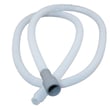
- Won’t drain: dishwasher drain pump W10876537 or a drain hose
- Door won’t close or start: dishwasher door latch WPW10653840
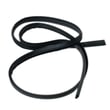
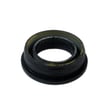
- Leaks at the bottom of the door: dishwasher door seal, lower W10909089
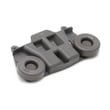
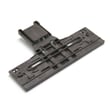
- Rack issues (won’t roll, falls off track, won’t adjust): whirlpool dishwasher dishrack wheel W10195416V and dishwasher dishrack adjuster WPW10546503
| Symptom | Most likely part area | What to check first |
|---|---|---|
| Dishes gritty, poor cleaning | Filters, spray path, circulation | Clean and reinstall filters correctly; clear spray arm holes |
| Not filling or fills slowly | Water supply, inlet valve | Confirm shutoff valve is open; check inlet screen |
| Standing water in tub | Drain path, drain pump | Check for clogs in sump and hose; verify high loop/air gap setup |
| Not drying well | Heating, rinse aid, venting | Use rinse aid; confirm heated dry options; check heater circuit |
| Door pops open or won’t start | Latch and strike alignment | Inspect latch engagement and door alignment |
Your KDFE104HWH0 uses a two-piece filtration system (upper filter assembly and lower filter). Running without properly installed filters can hurt cleaning and can let debris reach the pump area. We follow the cleaning and locking steps in the KDFE104HWH0 owner’s manual.
Use this checklist to decide when a part is the better fix:
- You hear the drain motor hum but water stays in the tub
- The dishwasher never fills even though household water is on
- The door will not latch consistently
- You see recurring leaks at the lower door edge
- Rack wheels are cracked, missing, or repeatedly derail
Last updated: February 2026
What is the most expensive part of a dishwasher?
For the KitchenAid dishwasher model KDFE104HWH0, the most expensive replacement is typically a major electronic or drive component: the main control (electronic control board) or a large integrated wash motor assembly (sump and motor). These parts combine electronics, sensors, and sealed motors, so both part cost and labor run higher.
These components do the “decision-making” and the heavy lifting of moving and heating water.
- Electronic control board (runs cycles, timing, heater logic, diagnostics)
- User interface/console (buttons and indicator logic)
- Sump and motor assembly (circulation motor plus sump in one unit)
- Circulation pump motor (wash water pressure to spray arms)
- Heater circuit components (heater, wiring, related controls)
This model has a replacement sump and motor assembly available; it is commonly one of the highest-ticket items on the parts list because it is a large integrated component.
- Example high-cost assembly: sump and motor assembly W11665769
- Before replacing a big part, use the troubleshooting and maintenance steps in the KDFE104HWH0 owner’s manual (filters, loading, cycle selection, and basic checks).
| Part category | Typical relative cost | Common symptom when failed |
|---|---|---|
| Control board / UI | Highest | Won’t start, dead display, erratic cycles |
| Sump and motor / circulation motor | High | Poor cleaning, loud humming, no wash action |
| Heater circuit | Medium to high | Not drying, cool water, long cycles |
| Valves/hoses/seals | Low to medium | Not filling, leaking, not draining |
Identifying the “big-ticket” parts helps you diagnose first and avoid replacing an expensive assembly when the real issue is a clogged filter, a door that is not latching, or a drain restriction.
Last updated: February 2026