Owner’s manual
 Error Codes




What is the average lifespan of a Kenmore Elite refrigerator?
Most Kenmore Elite refrigerators typically last 10 to 15 years with normal household use. For the Kenmore Elite 79577249600 bottom-mount refrigerator, consistent cleaning and good airflow around the condenser coils are the biggest factors in reaching the upper end of that range; see the owner's manual for model-specific care steps.
Typical lifespan and what to expect
In real-world use, we see these patterns most often:
- 10 to 15 years is the normal service life for a modern refrigerator.
- Units that get regular maintenance often reach 15+ years.
- Major sealed-system repairs (compressor, evaporator, refrigerant tubing) are the most common “end-of-life” turning point.
- Wear items (filters, light bulbs, gaskets) are expected maintenance, not lifespan drivers.
Lifespan quick guide
| Component area | Typical impact on lifespan | What you can do |
|---|---|---|
| Condenser coils | High | Keep coils clean and airflow open |
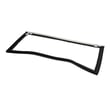
| Door gaskets | Medium | Keep seals clean, fix gaps early |
| Water/ice system | Medium | Replace filters on schedule, prevent leaks |
| Sealed system | Very high | Address cooling issues quickly |
Maintenance that helps you reach 15 years
The manual for this model calls out routine care areas (including condenser coils and door gaskets). Focus on these habits:
- Clean condenser coils regularly (dust buildup raises compressor workload).
- Wipe and inspect door liner and gaskets so doors seal tightly.
- Keep vents inside the fresh food and freezer sections unblocked.
- Maintain stable temperatures (avoid frequent warm-ups from propped doors).
- If you have water/ice, watch for slow dispensing or leaks and correct them early.
Why it matters
A refrigerator can “run” while slowly losing cooling efficiency. Keeping coils and seals in good shape reduces run time, helps food stay at safe temperatures, and lowers the chance of expensive cooling-system failures.
Last updated: January 2026
What size is Kenmore refrigerator model 79577249600?
Kenmore Elite refrigerator model 79577249600 is a bottom-freezer design; for planning space, most Kenmore 795 bottom-freezer units are approximately 33 inches wide, 30 to 34 inches deep, and 67 to 70 inches tall. For the exact cabinet and door-swing clearances, use the 79577249600 owner's manual.
How to measure your refrigerator correctly
We recommend measuring the actual unit in place because handles, hinges, and door swing can change the real space needed.
- Width: measure the cabinet at the widest point (often hinge side)
- Height: floor to top of cabinet (include hinge cover if it sits higher)
- Depth: front of cabinet to back; then measure again including handles
- Door swing clearance: allow extra space so doors open fully
- Ventilation clearance: leave space behind and above for airflow
Typical size ranges (what to expect)
These ranges fit most Kenmore Elite 795 bottom-freezer refrigerators and help with cabinet planning.
| Measurement | Typical range | What can change it |
|---|---|---|
| Width | ~33 in. | hinge caps, trim |
| Height | ~67 to 70 in. | leveling legs, hinge cover |
| Depth | ~30 to 34 in. | doors, handles |
| Depth (with handles) | often +1 to 3 in. | handle style |
Why it matters
Correct sizing prevents installation problems like doors hitting walls, drawers not pulling out fully, and poor airflow that can reduce cooling performance.
If you are moving it into a tight opening
- Remove bins and shelves to reduce weight and prevent damage
- Protect flooring; use an appliance dolly when possible
- Plan for extra depth if you need to connect a water line for the dispenser/ice maker
- Recheck leveling after placement so doors seal evenly
Last updated: January 2026
What does er if mean on kenmore elite refrigerator?
On Kenmore Elite model 79577249600, the ER IF code points to an ice fan (ice room fan) airflow problem. That fan moves cold air through the freezer-side ducting to keep the ice maker area cold; when airflow is blocked or the fan is not running, the control displays ER IF. See the troubleshooting section in the owner's manual.
What to check first (fast, no tools)
- Power reset: unplug the refrigerator (or switch off the breaker) for 5 minutes, then restore power.
- Make sure freezer vents are not blocked by food packages; proper air circulation is required for stable temperatures.
- Check for frost or ice buildup around the rear freezer panel or air ducts; heavy frost can stop airflow.
- Confirm the freezer is set near 0°F and the refrigerator near 37°F (initial recommended settings).
- Listen for a fan sound when the doors are closed; a failed fan often gets noisy, then stops.
Likely causes and what they mean
| What you notice | Most likely issue | What to do next |
|---|---|---|
| Ice maker area warm, freezer still cold | Air duct blocked or iced over | Clear obstructions; defrost if needed |
| Heavy frost on freezer back wall | Defrost system problem | Check defrost components and airflow |
| No fan sound, ER IF returns quickly | Fan motor or wiring issue | Inspect harness connections; test fan circuit |
| Intermittent ER IF, temps fluctuate | Control or sensor input issue | Verify sensors and control board connections |
Parts that can be involved
If you find heavy frost or temperature swings, the defrost system is a common place to focus. A failed defrost sensor can contribute to icing that blocks airflow; for this model, see the refrigerator defrost sensor assembly 6615JB2005C.
Why it matters
The ice fan is part of the refrigerator’s overall air circulation. When airflow is restricted, the ice maker compartment warms up, ice production drops, and frost can build up, which can lead to wider cooling problems over time.
Last updated: January 2026