Installation guide
 Owner’s manual




What does E00 F08 mean on a Maytag washer?
On the Maytag MHW8000AW0 washer, the E00 F08 error points to a fill (water inlet) problem; the washer is not sensing the expected water flow or water level increase during the fill portion of the cycle. Focus on water supply, inlet hoses, and the flow-sensing components.
What to check first (fast, no tools)
- Confirm both hot and cold faucets are fully open.
- Make sure the inlet hoses are not kinked or crushed behind the washer.
- Verify your home water pressure is in the normal operating range (this washer is designed for 20-100 psi).
- Check that the washer is not installed where temperatures can drop below 32°F (0°C); frozen water in lines can cause fill errors.
- Power the washer off for 1 minute, then restart and try a Rinse and Spin or quick cycle.
For model-specific installation and water supply requirements, use the installation guide.
Likely causes and the parts that relate to them
If the basics look good, E00 F08 is usually caused by restricted water flow, a flow measurement issue, or a control not driving the fill correctly.
- Clogged inlet screens at the washer’s fill valves (common after plumbing work)
- Failed or intermittent flow sensing
- Control board issue that prevents proper filling
Helpful parts for this model
| Symptom you see | What it often points to | Part to consider |
|---|---|---|
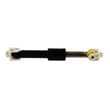
| Washer starts filling then stops and errors | Flow not being detected consistently | Flow meter WPW10110225 |
| No fill at all, or fill is erratic with other odd behavior | Control not managing fill correctly | Electronic control WPW10388229 |
| Leaks or poor flow due to hose condition | Supply restriction or hose failure | Washer water inlet hose, 2-pack 8212487RP |
Why it matters
A fill error stops the cycle to prevent overheating, poor wash performance, and potential pump or heater issues caused by running without the correct water level.
Good installation targets to confirm
These installation specs help prevent repeat fill errors:
- Hot and cold faucets within about 4 ft (1.2 m) of the washer fill valves
- Grounded outlet within about 6 ft (1.8 m) of the power cord
- Level floor (max slope about 1 in. under the washer)
Last updated: February 2026
What is the most common problem with a Maytag washer?
For the Maytag MHW8000AW0 washer, the most common issues we see are drain and spin problems, leaks around hoses or the door boot, and loud vibration or banging during high-speed spin. Many of these start with simple checks like load balance, hose condition, and basic maintenance.
Most common problems (and what usually causes them)
- Won’t drain or won’t spin: restricted drain path, kinked hose, or a control-related fault
- Leaking: loose fill hoses, a worn door boot, or a clamp that is not sealing
- Loud vibration or “walking”: unbalanced load, washer not level, or worn suspension components
- Door won’t lock or won’t start: door lock/latch problem
- Long fill times or fill errors: low water pressure, clogged inlet screens, or flow sensing issues
For model-specific setup requirements and leveling guidance, use the installation guide.
Quick checks we recommend first
- Confirm the washer is level on a solid floor. The installation instructions call for a level floor with a maximum slope of 1 inch under the entire washer.
- Verify water supply basics: hot and cold faucets within about 4 ft of the fill valves and water pressure in the 20 to 100 psi range.
- Inspect hoses for kinks and seepage at the faucet and washer connections.
- Reduce oversudsing: use HE detergent and avoid overfilling the dispenser.
- Check for shipping bolt symptoms (excessive noise and vibration) if the washer was recently installed or moved.
Parts that commonly relate to these symptoms
| Symptom | Commonly involved part | What it does |
|---|---|---|
| Door won’t lock, cycle won’t start | Latch WP8183270 | Locks the door for safe operation |
| Excessive vibration/banging | Washer shock absorber W11415987 | Dampens tub movement during spin |
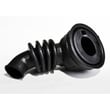
| Leaks at internal drain path | Washer tub-to-pump hose WPW10467168 | Carries water from tub to pump |
| Door area leaks/odor | Washer door boot WPW10237493 | Seals the door opening to the tub |
Why it matters
Drain/spin issues and leaks can lead to incomplete cleaning, longer cycle times, and water damage. Vibration problems can also stress the tub, hoses, and electronic controls over time, so leveling and load size make a big difference.
Last updated: February 2026
What's the average lifespan of a Maytag washer?
Most Maytag washers average 10 to 13 years of service life in normal household use. For your Maytag MHW8000AW0 front-load washer, lifespan depends most on load size, cycle frequency, and routine care; the owner's manual outlines the maintenance habits that help it last.
Typical lifespan and what changes it
A washer’s life is mostly about mechanical wear (bearings, suspension, hoses) and electrical wear (controls, motor drive).
Common factors that extend lifespan:
- Using the correct detergent amount (especially HE detergent for front-loaders)
- Keeping loads balanced and avoiding chronic overloading
- Leaving the door ajar between loads so the boot can dry
- Replacing fill hoses on schedule and fixing small leaks early
- Keeping the washer level to reduce vibration and stress
Common factors that shorten lifespan:
- Frequent heavy loads (towels, bedding) without load balancing
- Ongoing vibration from an unlevel install
- Ignoring leaks, drain issues, or door seal problems
- Running with worn suspension parts
Maintenance checkpoints we recommend
Use these as simple “age milestones” for a front-load washer like the MHW8000AW0.
- Every load: Wipe moisture from the door boot and leave the door cracked open
- Monthly: Run a cleaning cycle (or hot cycle) and clean the dispenser drawer
- Every 6 to 12 months: Inspect for leaks at hoses and the tub-to-pump hose
- Every 5 years: Replace fill hoses (a common prevention step)
Quick reference table
| Item to watch | What you may notice | Related part on this model |
|---|---|---|
| Vibration or banging | Walking, shaking, loud spin | Washer shock absorber W11415987 |
| Door won’t lock/unlock | Won’t start, door error, stuck door | Latch WP8183270 |
| Musty odor or leaks at door | Smell, water at front, visible tears | Washer door boot WPW10237493 |
Why it matters
Planning around a 10 to 13 year lifespan helps you decide when preventive maintenance makes sense (hoses, suspension, seals) versus when a major repair (controls, motor, outer tub) may not be cost-effective.
Last updated: February 2026
Where can I order Maytag washing machine parts?
You can order replacement parts for your Maytag washer model MHW8000AW0 directly from the parts list for this model, then match the part by name and part ID to ensure fit. For diagrams, part identification, and installation details, use the MHW8000AW0 installation guide.
Best way to find the right part for MHW8000AW0
- Start with the symptom (won’t start, won’t drain, leaks, door won’t lock).
- Use the model-specific parts list to match part name + part ID.
- Confirm the part’s location in the diagram (door, tub, pump, controls).
- Compare your original part visually (connectors, mounting points, hose diameter).
- Review any installation notes and safety steps in the MHW8000AW0 installation guide.
Common parts customers order for this washer
These are examples of parts available for MHW8000AW0 that often relate to frequent washer issues:
| Problem you’re seeing | Part to check | Example part on this model |
|---|---|---|
| Door won’t lock, won’t start | Door lock/latch | Latch WP8183270 |
| Excessive vibration or banging | Shock absorber | Washer shock absorber W11415987 |
| Won’t drain or has water left in tub | Tub-to-pump hose and clamps | Washer tub-to-pump hose WPW10467168, clamp WP596669 |
| Fill problems or long fill times | Fill hoses, flow meter | Washer water inlet hose, 2-pack 8212487RP, flow meter WPW10110225 |
Why it matters
Ordering by the exact MHW8000AW0 model number and matching the part ID helps prevent fit issues, repeat repairs, and leaks. It also helps you plan the job with the right tools and installation clearances.
Last updated: February 2026