Error Codes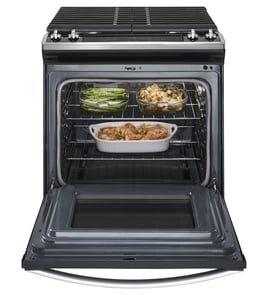




How do I clear the error code on my KitchenAid oven?
On the KitchenAid KGST307HBS4 gas slide-in range, we clear most oven error codes by canceling the cycle and doing a hard power reset at the breaker for a few minutes. If the code returns right away, the control is still detecting a fault that needs troubleshooting, not just clearing.
Quick reset steps (safe first)
- Press CANCEL/OFF once and wait 30 seconds.
- If the code stays, turn OFF the range circuit breaker.
- Leave power off 2 to 5 minutes.
- Turn the breaker back ON and set the clock.
- Start BAKE for 1 minute to confirm the code is cleared.
If the code comes back: what to check next
Many “stubborn” codes are triggered by a real problem such as a loose connection, failed sensor, or ignition issue.
- If the oven will not heat or you smell gas, stop and have the range checked.
- If the display beeps and shows a code during preheat, suspect the oven temperature sensor circuit or control.
- If a surface burner clicks but will not light, suspect the igniter or burner parts.
Common symptoms and likely causes
| What you notice | What it usually points to | What we recommend |
|---|---|---|
| Code returns immediately after reset | Control still sees an active fault | Check wiring connections; then test components |
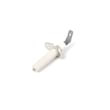
| Oven will not ignite/heat | Weak or failed igniter | Consider replacing the range oven igniter WP9782065 |
| Burner keeps clicking, won’t light | Dirty burner head/cap or weak igniter | Clean and dry parts; consider the surface igniter WP8523793 |
| Door-related code or odd door behavior | Door switch/door alignment issue | Inspect latch area and door closure |
Why it matters
Clearing the code only resets the control. If the code returns, the range is protecting itself by reporting the condition again, and repeated resets can delay the real fix.
Helpful DIY skill for troubleshooting
When an error points to wiring or a component test, we use a meter and safe handling practices; the steps in how to use a multimeter to test electrical parts video help you confirm whether a sensor, igniter, or circuit is actually failing.
Last updated: February 2026
How do I find the model number on my KGST307HBS4?
Your KitchenAid gas slide-in range model number is printed on the appliance’s rating label; on KGST307HBS4 ranges, it’s typically found around the oven door frame area when you open the door. Use the full model number to match diagrams and order the correct parts.
Where to look on the range
Check these common rating-label locations first:
- Open the oven door and look along the left or right front frame (the face of the oven cavity)
- Check the lower front frame near the door hinge area
- Look along the bottom edge of the oven opening (front frame)
- If your range has a storage drawer, check the frame behind the drawer front
What the label looks like
Most KitchenAid ranges use a paper or metallic label that includes the model and serial number.
| Label field | What it’s used for |
|---|---|
| Model number (KGST307HBS4) | Ensures parts and diagrams match your exact range |
| Serial number | Helps identify production series for some revisions |
Tips to avoid ordering the wrong part
Model numbers can be misread because of similar characters. Before ordering, we recommend:
- Copy the model number exactly as printed (including all letters and numbers)
- Take a clear photo of the label for reference
- If you are replacing a common item (like a burner igniter), match by model first, then by part listing
- Use the part description and ID together when selecting a replacement
If you are troubleshooting ignition issues while you confirm the model, a common related part on this model is the surface igniter WP8523793.
Why it matters
KitchenAid ranges often have multiple versions that look alike; the correct model number ensures the right fit for components like burner caps, igniters, door hinges, and wiring.
Last updated: March 2026
What is the average lifespan of KGST307HBS4?
The average lifespan of a KitchenAid gas slide-in range like model KGST307HBS4 is 15 years. Regular cleaning, proper burner ignition performance, and timely replacement of wear items (like igniters and light bulbs) help the range reach that service life.
What affects lifespan most
These factors have the biggest impact on how long a gas range lasts:
- Burner ignition reliability (weak igniters cause delayed lighting and extra wear)
- Oven heat performance (consistent preheat and stable flame)
- Ventilation and cleaning habits (grease buildup stresses components)
- Electrical connection condition (tight, clean connections reduce overheating)
- Frequency of high-heat cooking and self-clean use
Typical lifespan by component
Some parts wear out sooner than the range itself.
| Component | Typical replacement timing | Example part on this model |
|---|---|---|
| Surface igniter | 5 to 10 years | Surface igniter WP8523793 |
| Oven igniter | 5 to 10 years | Range oven igniter WP9782065 |
| Oven light bulb | 1 to 3 years | Oven light bulb 8009 |
Maintenance that extends service life
We recommend these practical steps:
- Keep burner heads and caps seated correctly after cleaning
- Clean spills promptly to prevent clogged ports and uneven flames
- If a burner clicks continuously, clean and dry the igniter area and cap
- Replace weak igniters early to prevent gas odor and delayed ignition
- Periodically check the power connection for heat damage; repair issues promptly
For safe electrical testing and diagnosis, use a guide like how to use a multimeter to test electrical parts video.
Why it matters
Knowing the expected lifespan helps you decide whether to repair (igniter, bulb, hinge) or plan for replacement, especially when multiple symptoms appear at once.
Last updated: March 2026