


How do I tell what model dryer I have?
Your Hotpoint dryer’s model number is printed on the appliance ID label; for the correct parts list and diagrams, match that label exactly (for example, NVLR333EV0WW). On most dryers, the label is easiest to spot when you open the door and look around the door opening.
Where to look for the model number label
Check these common locations in this order:
- On the door frame just inside the opening (most common)
- On the inside of the door itself
- On the back panel near the top
- On a side panel near the front edge
- Behind the lower front access panel (some designs)
What to write down (so you get the right parts)
Record the information exactly as shown on the label:
- Model number (letters and numbers, no spaces added)
- Serial number (helps confirm production run)
- Any revision or suffix characters after the model number
Quick check: model number vs. part number
| Item | What it identifies | Example format |
|---|---|---|
| Model number | The exact dryer version | NVLR333EV0WW |
| Part number | The manufacturer’s part number | WE03X0039 |
| Part ID | Our catalog identifier for the part page | WE25M40 |
Why it matters
Hotpoint dryers can look similar across multiple model families, but parts like the lint screen, heater, timer, and motor can vary by model and revision. Using the exact model number prevents ordering a part that does not fit or wire up correctly.
If the label is missing or unreadable
Use these practical options:
- Look for a faint “imprint” in the label area; a flashlight at an angle often helps
- Check your purchase paperwork or installation notes for the model number
- If you are already shopping parts, compare a known part from your dryer to the parts list (for example, the filter WE18X54 or the lamp WE05X20431)
- For general dryer identification and component names, use our what are the main parts of a clothes dryer guide
Last updated: February 2026
Is the dryer supposed to be hot?
Yes. Your Hotpoint electric dryer model NVLR333EV0WW is supposed to feel warm to hot while it’s running because heat is what evaporates moisture from clothes. In normal operation, the exhaust air is typically around 125 to 135°F, and the cabinet may feel warm, especially near the vent area.
What “normal hot” looks like
A dryer can run hot and still be operating correctly. These are common, normal signs:
- Clothes come out dry and warm at the end of the cycle
- Warm air is blowing strongly from the outside vent hood
- The top or sides feel warm (not scorching) during a heated cycle
- The cycle heat seems to turn on and off (cycling is normal)
When the heat is too hot (or unsafe)
Stop the cycle and unplug the dryer if you notice any of the following:
- A burning smell that persists after cleaning lint
- The dryer shuts off mid-cycle and won’t restart until it cools
- The cabinet is too hot to keep your hand on
- Clothes feel excessively hot or show heat damage
Quick checks we recommend first
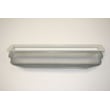
- Clean the lint screen before every load; replace a damaged screen such as the filter WE18X54
- Check airflow at the vent hood outside; weak airflow points to a vent restriction
- Inspect and clean the entire vent run (especially long runs and elbows)
- Avoid overloading; packed loads restrict airflow through the drum
Why airflow matters most
Dryers are designed to move a lot of air. If airflow is restricted, heat can build up inside the heater housing and cabinet, causing overheating symptoms even when the heater and thermostat are good.
Common causes and what they affect
| Issue | What you’ll notice | What to do |
|---|---|---|
| Clogged lint screen or housing | Longer dry times, hotter cabinet | Clean screen and lint duct; replace screen if torn/warped |
| Crushed/kinked vent | Hot dryer, weak outside airflow | Straighten or replace venting |
| Blocked outside vent hood | Flap barely opens | Clear lint, nests, or debris |
| Failing thermostat cycling | Heat seems erratic | Test/replace temperature control parts as needed |
Helpful DIY guidance
If you’re troubleshooting heat, airflow, or long dry times, we recommend our dryer takes a long time to dry guide for step-by-step checks.
If you need to order replacement parts for NVLR333EV0WW, start with the parts list for your model, or search by model number on Sears PartsDirect.
Last updated: February 2026
What is an electric dryer?
An electric dryer (like your Hotpoint NVLR333EV0WW) dries clothes by tumbling them in a drum while a 240-volt heating element warms air and a blower moves that air through the drum and out the vent. Heat is created electrically, not by gas.
How an electric dryer works (basic airflow path)
- The heating element warms incoming air.
- The blower wheel pulls and pushes air through the drum.
- Moisture evaporates from clothes as they tumble.
- Air passes through the lint screen to catch lint.
- Warm, moist air exits through the exhaust vent to the outside.
Key parts that make the system work
These are common electric-dryer components; several are available for NVLR333EV0WW:
- Heating element: creates heat (see heater WE11X103)
- Lint screen: captures lint before air enters the vent (see filter WE18X54)
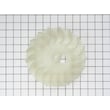
- Blower wheel: moves air through the dryer (see dryer blower wheel WE16M15)
- Thermostat: helps regulate temperature (see t stat asm WE4X800)
- Drive motor: turns the drum and often drives the blower (see motor WE17X10010)
Electric vs. gas dryer: quick comparison
| Feature | Electric dryer | Gas dryer |
|---|---|---|
| Heat source | Electric heating element | Gas burner assembly |
| Typical power | 240V (plus 120V controls) | 120V controls + gas supply |
| Common “no heat” causes | Element, thermostat, airflow restriction | Igniter, coils, airflow restriction |
Why it matters
Knowing you have an electric dryer helps you troubleshoot correctly. For example, “no heat” problems on NVLR333EV0WW often point to the heating circuit (element, thermostat) or restricted airflow (lint screen, venting), not gas ignition parts.
Parts and help
You can order NVLR333EV0WW replacement parts from the parts list for this model, or search by model number on Sears PartsDirect. For efficiency and maintenance tips that apply to most electric dryers, see how to keep a dryer clean and economical.
Last updated: February 2026






