Owner’s manual
 Error Codes



What is the average lifespan of a Kenmore washer?
A Kenmore washer typically lasts 10 to 15 years under normal household use. For Kenmore model 79641182310, routine preventive maintenance (especially cleaning inlet screens, the drain pump filter, and the door seal) helps you reach the longer end of that range; see the 79641182310 owner's manual.
Typical lifespan and what affects it
Most washers land in the same general window, but real-world life depends on load size, detergent use, water quality, and how quickly small leaks or drain issues get corrected.
- Avoid chronic overloading (it accelerates bearing and suspension wear)
- Use HE detergent and measure it; excess suds stresses the drain system
- Clean the door seal and glass regularly to prevent odor and leaks
- Clean the water inlet filters periodically to maintain fill performance
- Clean the drain pump filter to prevent slow drain and pump strain
Common wear items that can shorten washer life
These parts often show symptoms first (noise, leaks, no-drain, no-fill, door won’t lock):
| Symptom | Common area involved | Example part for this model |
|---|---|---|
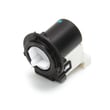
| Won’t drain, humming, water left in tub | Drain pump / filter | Drain pump motor (4681EA2001T) - washer part by lg electronics 4681EA2001T |
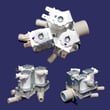
| Slow fill or fill errors | Water inlet valve / inlet screens | Washer water inlet valve 5221ER1003A |
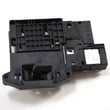
| Door won’t lock or won’t start | Door lock / latch system | Lg washer door lock EBF61315802 |
Maintenance schedule we recommend
Use this as a simple baseline; adjust for heavy use or hard water.
- Monthly: wipe door seal and glass; run a tub-clean cycle if you notice odor
- Every 3 to 6 months: check and clean the drain pump filter
- Every 6 to 12 months: clean the water inlet filters (shut off water first)
- Anytime: address leaks, unusual vibration, or grinding noises immediately
Why it matters
Most “washer failures” start as restricted water flow, restricted draining, or small leaks. Keeping filters and seals clean reduces strain on the motor and pump, helps cycles finish correctly, and prevents corrosion and bearing damage over time.
Last updated: February 2026
How to identify a Kenmore washer model?
Your Kenmore washer model number is printed on the appliance identification plate; for Kenmore model 79641182310, the manual specifies the ID plate is located inside the washer lid. Use that full model number when ordering parts so the door lock, drain pump, and valves match your exact washer.
Where to look on Kenmore washers
Check these common model-number locations (the ID plate is usually a sticker or metal tag):
- Inside the washer lid (common on many Kenmore top-load designs, including 79641182310)
- Around the lid opening rim or underside of the top panel
- On the rear panel near the power cord entry
- Behind the control panel area (less common)
For diagrams and the exact wording used for your washer, use the 79641182310 owner's manual.
What the model number looks like (and why it matters)
Kenmore washer model numbers are typically 10 to 12 characters and often start with a 3-digit prefix (for example, 796 or 110). The full model number is what we use to match correct-fit parts.
Quick examples
| Example prefix | What it usually indicates | Why you care |
|---|---|---|
| 796 | Common on many Kenmore-built-by-LG washers | Parts like the drain pump and door lock vary by series |
| 110 | Common on many Kenmore-built-by-Whirlpool washers | Controls, drive parts, and valves can be different |
Tips to avoid ordering the wrong part
- Copy the model number exactly as printed, including all digits
- Record the serial number too (helpful for production changes)
- Match parts by model, then confirm by part ID when available
- If you are troubleshooting a drain issue, the drain pump motor (4681EA2001T) - washer part by lg electronics 4681EA2001T is a common match for this model
Why it matters
Kenmore washers can look similar across series, but internal components (like the water inlet valve, door lock, and pump filter housing) change by model. Using the correct model number prevents fit issues and repeat repairs.
Last updated: February 2026
What does F33 mean on a washer?
On the Kenmore 79641182310 washer, an F33 code points to a drain system communication problem, most often a lost wiring connection between the drain pump and the main control, or a failing pump motor that cannot run reliably.
What to check first (fast, no parts)
- Unplug the washer for 1 minute, then restore power and try a Drain/Spin.
- Confirm the drain hose is not kinked, pinched, or crushed behind the washer.
- Make sure the drain standpipe is not too high; many front-load setups fail to drain when the discharge is routed excessively high.
- Check for slow or no draining symptoms; those commonly track back to a clogged pump filter or a restricted hose.
- Follow the drain pump filter cleaning steps in the 79641182310 owner's manual.
Clean the drain pump filter (most common fix)
A clogged drain pump filter can prevent proper draining and can trigger drain-related faults.
Basic steps:
- Unplug the washer.
- Open the lower access panel.
- Drain water from the small drain hose into a shallow pan.
- Twist the pump filter counterclockwise, remove it, and clear lint and debris.
- Reinstall the filter fully and make sure the cap seals.
When it’s likely a pump or wiring issue
If the washer still will not drain after the filter and hose checks, the next most common causes are a loose harness connection at the pump, damaged wiring, or a weak pump motor.
| Symptom | Most likely cause | What we recommend |
|---|---|---|
| Hums but won’t drain | Pump jammed or failing | Recheck filter, then inspect pump impeller and wiring |
| Intermittent draining | Loose connection or failing pump | Inspect harness, consider replacing pump |
| No pump sound at all | Control, wiring, or pump | Verify wiring at pump, then test/replace pump |
If replacement is needed for this model, the correct pump motor is the drain pump motor (4681EA2001T) - washer part by lg electronics 4681EA2001T.
Why it matters
Drain faults can leave water in the tub, stop the cycle mid-wash, and strain the pump and control system. Keeping the pump filter clear helps prevent repeat drain errors and protects the pump from coins, buttons, and lint buildup.
Last updated: February 2026
How many cubic feet is a Kenmore 79641182310 washer?
The Kenmore washer model 79641182310 is a front-loading washer; its capacity is 4.5 cubic feet. This is the tub volume used to size loads so clothes tumble freely for better cleaning and smoother high-speed spinning.
Where this spec is listed
You will find the capacity in the specifications section of the 79641182310 use and care guide. It is typically shown near “Key dimensions and specifications.”
- Look for Capacity (sometimes listed as tub capacity)
- Match the model number exactly: 79641182310
- Use the capacity to compare to your previous washer and plan load size
- Follow the manual’s load and cycle guidance for best performance
Quick spec snapshot (common specs customers compare)
| Item | Kenmore 79641182310 |
|---|---|
| Washer type | Front-loading washer |
| Capacity | 4.5 cu. ft. |
| Width | 27 in. |
| Depth (door closed) | 29 3/4 in. |
| Height | 38 11/16 in. |
Why it matters
Capacity is the drum volume; it directly affects cleaning action, rinse performance, and vibration control.
- Overloading reduces tumbling and can trigger out-of-balance spinning
- Underloading bulky items can also cause imbalance at high spin
- Correct load sizing helps protect the door lock, suspension, and drive system
If the issue is “it won’t handle a full load”
If the washer is not draining or spinning out well, it can feel like it has less usable capacity. Checking the drain path and pump is a practical first step.
- Clean the pump filter and confirm the drain hose is not kinked
- Listen for a loud, grinding, or non-running pump during drain
- If the pump is failing, the drain pump motor 4681EA2001T is a common replacement for this model
Last updated: February 2026