Owner’s manual



How old is a Husqvarna 240?
The Husqvarna 240 is a model line that has been sold across multiple years, so the exact age depends on the specific production date of your saw. For the Husqvarna 240 manual we have for this model, the document revision date is December 19, 2007, which indicates the model was in use by that time (and your individual unit may be newer). See the owner's manual for identification details and specifications.
How to estimate the age of your Husqvarna 240
We use the saw’s identification markings to narrow down the build timeframe.
- Check the product label on the saw body (often near the rear handle or starter housing)
- Look for a serial number and any date code
- Compare the model marking to the exact model number 240
- Note whether your saw is labeled 240, 240E, or a similar variant (variants can span different years)
- If the saw has been rebuilt, consider that major parts may be newer than the powerhead
What the manual date tells you (and what it does not)
The manual excerpt for this model shows a revision stamp of 5451546-92 Rev.3 2007-12-19. That helps anchor the model’s timeline, but it does not guarantee your specific saw was manufactured in 2007.
| Item | What it indicates | What it does not indicate |
|---|---|---|
| Manual revision date (2007-12-19) | The model documentation existed by late 2007 | Your saw’s exact build year |
| Serial number/date code | Your unit’s likely production window | How much wear the saw has |
| Replaced parts | What may have been updated | Original purchase date |
Why it matters
Knowing the approximate age helps us match the right chainsaw parts (fuel line, recoil starter components, carburetor parts) and avoid fit issues when ordering replacements for the Husqvarna 240.
If you’re troubleshooting starting or fuel issues while you’re checking identification, our tips for a hard to start chainsaw guide is a good next step.
Last updated: February 2026
Is the Husqvarna 240 a good chainsaw?
Yes. The Husqvarna 240 is a solid homeowner chainsaw for light to medium cutting such as pruning, limbing, and firewood; it is designed to meet kickback performance requirements when used with the recommended bar and chain combinations listed in the owner's manual.
What it’s best for (and what it’s not)
- Pruning and storm cleanup (small to medium limbs)
- Cutting firewood at a homeowner pace
- Occasional property maintenance
- Not ideal for daily, all-day felling or heavy hardwood production work
What makes it a “good” choice
A good chainsaw is one that starts reliably, cuts efficiently, and stays safe and controllable. For the Husqvarna 240, the manual emphasizes using tested cutting equipment combinations that meet recognized kickback standards, which is a key part of safe, predictable handling.
Quick “good fit” checklist
| If you need… | Husqvarna 240 fit | Why |
|---|---|---|
| A homeowner saw for periodic use | Good | Balanced capability for typical yard tasks |
| Lower kickback risk setup | Good (with correct bar/chain) | Tested combinations meet kickback requirements |
| Pro-grade, daily production cutting | Not the best fit | Homeowner class design and duty cycle |
How to get the best performance from your 240
- Use the bar and chain combinations recommended for the 240 (this directly affects kickback and vibration)
- Keep the chain sharp and properly tensioned
- Use fresh, properly mixed fuel and keep the fuel system in good condition
- If starting becomes inconsistent, inspect common wear items in the starter and fuel system
Parts that commonly matter when performance drops
| Symptom | Common area to check | Example part on this model page |
|---|---|---|
| Hard starting or no start | Fuel delivery | Line kit 530069216 |
| Starter rope issues | Recoil starter components | Chainsaw recoil starter repair kit 530071966 |
Why it matters
Choosing a chainsaw that matches your workload helps you cut faster with less strain, and using the recommended cutting equipment helps reduce kickback risk and improves control.
Last updated: February 2026
What is the Husqvarna 240's engine size?
The Husqvarna 240 gas chainsaw has an engine displacement of 2.3 cubic inches (about 38 cc). For the exact technical data as listed for model 240, including cutting equipment combinations and tuning specs, use the 240 owner's manual.
Engine size for model 240
- Displacement: 2.3 cu in
- Metric equivalent: about 38 cc
- Engine type: 2-cycle gas
- Related systems that affect performance: carburetor, ignition, fuel lines, recoil starter
Where this shows up in the manual
In the technical data section of the 240 owner's manual, you will typically find:
- Cylinder displacement (cu in and/or cc)
- Spark plug type and gap
- Idle speed and other tuning values
- Recommended bar and chain combinations (tested for kickback and vibration requirements)
Why it matters
Engine size helps you match the saw to the job and speeds up parts selection and troubleshooting, especially for hard starting, rough running, or fuel delivery issues.
Parts that commonly relate to starting and fuel issues
If symptoms point to fuel delivery or starting problems, these parts are common checks:
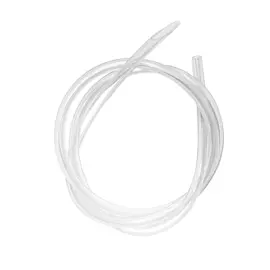
- Cracked or leaking fuel line (use line kit 530069216)
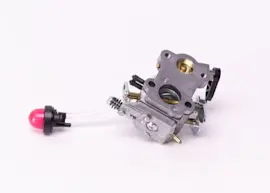
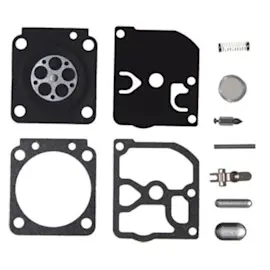
- Carburetor condition and internal diaphragms (consider chainsaw carburetor rebuild kit 545008031)
- Recoil starter wear (use chainsaw recoil starter repair kit 530071966)
Quick symptom guide
| Symptom | Most common area to check first |
|---|---|
| Won’t start | Fuel delivery, carburetor, ignition |
| Starts then dies | Fuel line, carburetor, tank vent |
| Pull cord won’t retract | Recoil starter spring/pulley |
Last updated: February 2026