Installation guide
 Owner’s manual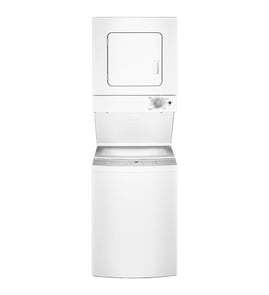


How do I get my GE washer to drain and spin?
On the GE GUD27GSPM1DG laundry center, set the washer to Drain & Spin, close the lid, and press Start. If the lid is opened, the cycle pauses; close the lid and press Start again to resume.
Run Drain & Spin on GUD27GSPM1DG
- Turn the cycle selector knob to Drain & Spin.
- Make sure the lid is fully closed (the washer pauses with the lid open).
- Press Start.
- If the load ends wetter than normal, redistribute items evenly and run Drain & Spin again.
If it will not drain or will not spin
Start with these common, high-impact checks for this GE top-load washer section.
- Lid not locking or cycle paused: Close the lid; press Start to restart.
- Out-of-balance load: Reposition bulky items (towels, jeans) around the basket.
- Drain hose kinked or pinched: Straighten the hose; make sure the unit is not sitting on it.
- Standpipe height: Keep the top of the drain outlet under 8 ft (2.5 m) above the floor.
- Pump noise but poor draining: A steady hum with little water movement points to a restriction or a weak pump.
Quick symptom guide
| What you notice | What it points to | What to do first |
|---|---|---|
| Status lights blink after opening lid | Normal pause behavior | Close lid, press Start |
| Clothes still wet after spin | Load could not balance to full speed | Redistribute, run Drain & Spin |
| Water stays in tub | Drain path problem (hose or pump) | Check hose routing, then pump |
Parts that commonly affect drain and spin
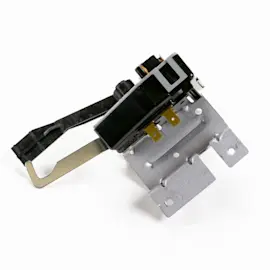
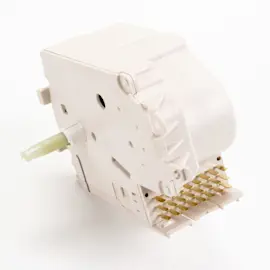
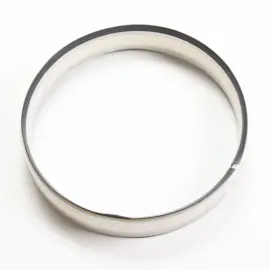
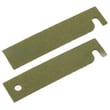
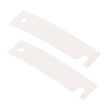
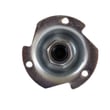
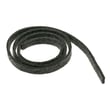
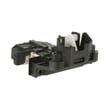
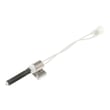
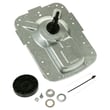
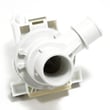
If your checks point to a failed component, these are model-matched parts used in drain and spin operation:
Why it matters
A full drain and strong final spin prevents standing water, reduces musty odors, and helps the washer complete cycles without stopping.
For cycle selection, status lights (including Spin and Lid Locked), and restart steps after opening the lid, use the GUD27GSPM1DG owner's manual.
Last updated: February 2026
How does the GE washer dryer combo work?
The GE GUD27GSPM1DG laundry center is a stacked washer and dryer that work as two separate machines in one cabinet: the washer fills, agitates, drains, and spins; the dryer tumbles and dries using either sensor-based automatic cycles or timed drying. You can run washer and dryer at the same time.
How the washer side works
The washer “wakes up” when you turn the cycle knob, then you choose settings, close the lid, and press Start.
- Add laundry loosely; avoid overloading
- Add detergent before starting
- Optional: add liquid bleach and fabric softener in the correct dispensers
- Close the lid fully; the cycle will not run correctly with the lid open
- If you open the lid during the start-up sequence, you must press Start again
For cycle steps, loading guidance, and safety notes, use the GUD27GSPM1DG owner's manual.
Washer behaviors you may notice (normal)
| What you see | Why it happens |
|---|---|
| Brief cold-water bursts at the beginning | Normal start-up sequence before the cycle continues |
| Washer drains after lid is left open 15+ minutes with water inside | Automatic drain sequence helps prevent standing water |
| Washer drains after being paused 24+ hours with lid closed and water inside | Automatic drain sequence for safety and odor control |
How the dryer side works
This model’s dryer uses:
- Automatic (sensor) cycles: thermostats sense dryness; the timer advances toward Off after clothes are dry
- Time Dry: runs for the time you select
Always clean the lint filter each time you use the dryer; airflow directly affects dry time and heating performance.
Why it matters
Knowing that the washer and dryer are independent helps with troubleshooting. For example, a washer that drains by itself can be a normal automatic drain feature, while a dryer that runs long often points to airflow or lint buildup.
Last updated: February 2026
How many years should a GE washing machine last?
Most GE washing machines last 10 to 14 years with normal household use and basic maintenance. For the GE GUD27GSPM1DG laundry center washer, consistent care like correct detergent use and routine hose replacement helps you reach that typical lifespan; see the GUD27GSPM1DG owner's manual for model-specific care steps.
Typical lifespan and what affects it
A washer’s service life is driven more by usage and maintenance than by brand name alone.
- Loads per week: more cycles equals more wear on the drive system, pump, and bearings
- Detergent habits: too much detergent can cause residue, odors, and leaks over time
- Water quality: soft water often needs less detergent; hard water can leave mineral buildup
- Ventilation and drying out: leaving the lid open after washing helps reduce moisture and mildew
- Hose condition: GE recommends replacing fill hoses every 5 years
Maintenance checklist that extends washer life
These steps match common GE laundry center care guidance and help prevent early failures.
- Replace hot and cold water supply hoses every 5 years
- Measure detergent carefully (use less for soft water or small loads)
- Wipe spills promptly; clean the basket with a soft cloth and mild detergent
- Leave the lid open after cycles so the interior can dry
- Turn off water faucets when not in use to reduce leak risk
Quick guide: repair vs. replace
Use this as a practical decision tool when the washer starts acting up.
| Situation | What it usually means | Best next step |
|---|---|---|
| Minor leak at hoses | Aging hose or loose connection | Replace hoses, tighten fittings |
| Won’t drain | Drain pump or blockage | Check pump and drain path; consider washer drain pump WH23X10040 |
| Won’t spin or agitates poorly | Belt, shifter, speed sensing, or gear case wear | Diagnose symptoms; check error codes |
| Multiple major issues near end of life | High total repair cost | Compare repair cost to replacement |
Why it matters
A realistic lifespan helps you plan maintenance and avoid surprise breakdowns. On a stacked laundry center like the GE GUD27GSPM1DG, staying ahead of hose replacement and detergent overuse prevents common leak and performance problems that shorten washer life.
Last updated: February 2026
What is the most common problem with a GE dryer?
The most common GE dryer problem is no heat or poor drying, which is usually caused by a venting restriction (lint buildup, kinked duct) or a power supply issue (a tripped breaker or blown fuse). For GE laundry center model GUD27GSPM1DG, start with the venting and electrical checks in the GUD27GSPM1DG installation guide.
Quick checks we recommend first
- Clean the lint screen before every load.
- Check the outside vent hood; confirm the damper opens freely.
- Inspect the transition duct behind the unit for crushing or kinks.
- Verify power at the outlet and reset both breakers (many dryers use two).
- If gas model: confirm both gas shutoff valves are fully open.
Venting: the most common root cause of long dry times
Restricted ducting is the top reason clothes take too long to dry. GE’s guidance for this model favors rigid metal ducting because it resists kinks and crushing.
| Venting item | Best practice | What it prevents |
|---|---|---|
| Transition duct type | Rigid metal (preferred) | Kinks, crushed airflow |
| Flexible metal duct | Use only if needed and UL-listed | Overheating, slow drying |
| Duct routing | Keep it short, smooth, unobstructed | Lint buildup, backpressure |
When it is “won’t start” instead of “won’t heat”
If the dryer will not run at all, these are the most common causes:
- Dryer not fully plugged in
- House fuse blown or breaker tripped
- Door not fully closed (door switch not engaging)
- Start circuit issue (switch or timer)
If the door is not being detected as closed, the dryer door switch WE4M415 is a common part to test and replace.
Why it matters
No-heat and restricted-airflow problems waste energy, increase cycle times, and can overheat components. Fixing airflow first often restores normal drying without replacing major parts.
Last updated: February 2026
Where to put laundry detergent in GE washer dryer combo?
On the GE GUD27GSPM1DG laundry center, we add laundry detergent directly into the washer basket (not a drawer). If you use detergent packets, place them in the bottom of the basket before adding clothes; then load items loosely and start the cycle.
Where detergent, bleach, and softener go
Use the washer’s labeled dispenser areas shown in the GUD27GSPM1DG owner's manual:
- Detergent: add to the wash basket (for packets: bottom of basket first)
- Liquid bleach (optional): pour into the liquid bleach dispenser area
- Fabric softener (optional): pour into the fabric softener dispenser area
Quick steps (best practice)
- Turn the washer cycle knob to “wake up” the washer.
- Add detergent to the basket (packets first, then clothes).
- Add bleach or fabric softener only if needed and only in the correct dispenser.
- Load clothes loosely (overloading hurts wash performance).
- Close the lid and press Start.
How much detergent should I use?
Using too much detergent causes oversudsing, longer cycle times, and residue on clothes. We use HE (High Efficiency) detergent and follow the detergent label for load size and soil level.
| Situation | What to do |
|---|---|
| Soft water | Use less detergent |
| Small or lightly soiled load | Use less detergent |
| Concentrated or HE detergent | Measure carefully per label |
| Detergent packets | Bottom of basket before clothes |
Why it matters
Correct detergent placement helps the washer rinse cleanly and prevents excess suds that reduce agitation and spin performance. It also helps protect the lid finish by keeping pretreat sprays and chemicals contained in the basket.
Last updated: February 2026