Owner’s manual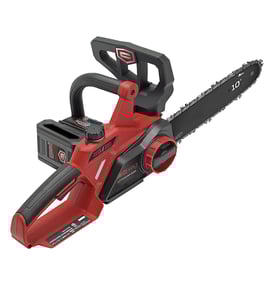



How do I find out what Craftsman chainsaw I have?
Your Craftsman chainsaw’s identity is the model number on its rating label. On Craftsman model 15198835, the model number is printed on a label attached to the motor housing; match that number to the parts list and your owner's manual to confirm you have the correct chainsaw.
Where to look on the saw
Check these common label locations first (clean off sawdust and oil so you can read it):
- Motor housing (primary location for model 15198835)
- Side of the main body near the rear handle
- Near the battery mount area (cordless models)
- Near the oil tank cap area
- Under the scabbard area (with the bar covered)
What numbers to write down
For ordering parts and using diagrams, we recommend recording:
- Model number (most important)
- Serial number (if present)
- Voltage and type (for example, 60V cordless vs. corded electric)
Quick match guide
Use this to avoid mixing up similar Craftsman chainsaws.
| What you see on the label | What it means | What to do next |
|---|---|---|
| 15198835 | Exact model number | Use the 15198835 parts list and manual |
| 151.98835 | Same model written with a dot | Treat it as model 15198835 |
| Different 151.xxxxx number | Different model | Use that exact number to find the right parts |
Why it matters
Parts like the bar, chain, oiling components, and safety switches are model-specific. Using the exact model number helps you get the right fit and keeps the chain oil system and guards working as designed.
Related parts you might need once the model is confirmed
If you are replacing missing or damaged accessories, these are common items for this model:
- Scabbard 261018116 (bar cover for storage and transport)
- Oil cap 261018117 (oil reservoir cap)
Last updated: February 2026
Why does my electric chainsaw chain keep coming loose?
On the Craftsman 15198835 electric chainsaw, a chain that keeps coming loose is usually caused by incorrect tensioning, not fully tightening the chain cover lock knob after adjustment, or normal chain stretch (especially with a new chain). Set tension to the manual’s lift spec, then recheck it often.
Quick fixes to try first
- Unplug the chainsaw before adjusting anything.
- Set the saw on a flat surface and do a tension test.
- Tighten using the chain tensioning ring (clockwise to tighten, counterclockwise to loosen).
- After tensioning, fully tighten the chain cover red lock knob (this step prevents the setting from backing off).
- Recheck tension after a few cuts; new chains stretch and need frequent retensioning.
Correct tension spec (what “right” looks like)
Use the lift test described in the owner's manual. The chain is correctly tensioned when you lift it at the bar and the tie straps rise about 3/32 to 5/32 in. (2 to 4 mm) above the bar edge.
| Chain condition | What you should see | What to do |
|---|---|---|
| Cold chain | No slack under the guide bar; turns by hand without binding | Tension to spec, then lock the cover knob |
| Warm chain | Tie straps hang about 1/16 in. (1.3 mm) below bar bottom edge | Recheck and adjust if it starts clattering |
Why it keeps loosening (common causes)
- Normal chain stretch: New chains stretch quickly during break-in.
- Lock knob not fully tightened: Tension can drift if the cover is not locked down.
- Guide bar wear: Uneven bar rail wear can let the chain “clatter” and feel loose.
- Lubrication issues: Poor lubrication accelerates bar wear and can change how the chain rides.
Why it matters
A loose chain can derail, cut crooked, and wear the guide bar faster. Keeping proper tension also helps the saw cut smoothly and reduces overheating.
Last updated: February 2026
Why is my Craftsman electric chainsaw not cutting?
If your Craftsman electric chainsaw model 15198835 runs but won’t cut, the most common causes are a dull chain or the chain installed backward. Restoring sharpness and confirming correct chain direction usually brings cutting performance back quickly (see the chain maintenance and troubleshooting sections in the owner's manual).
Quick checks that fix most “won’t cut” problems
- Inspect the chips: small, powdery chips usually mean the chain needs sharpening.
- Check cutting direction: if the chain is on backward, it will spin but not bite.
- Confirm chain tension: a new chain can stretch; recheck tension often.
- Look for bar and chain damage: impacts with nails, stones, mud, or sand can ruin cutters.
- Verify lubrication: fill the oil tank with bar and chain oil before use; running dry can damage the bar and chain.
What to do next (in order)
- Unplug the saw (or remove the battery pack if your configuration uses one) before inspecting.
- Check chain orientation: cutters should face forward on the top run of the bar.
- Check tension: an over-tight chain can bind; a too-loose chain can cut poorly and be unsafe.
- Sharpen or replace the chain if it is dull or cutting to one side.
- Refill chain oil and confirm oiling before making another cut.
Symptoms and likely causes
| What you notice | Most likely cause | Best fix |
|---|---|---|
| Chain rotates but won’t cut | Dull chain | Sharpen or replace chain |
| Chain rotates but won’t cut | Chain installed backward | Reinstall chain correctly |
| Bar gets hot or smokes | Chain too tight or no oil | Adjust tension; refill oil |
| Motor runs but chain doesn’t rotate | Chain too tight or bar/chain issue | Retension; inspect bar/chain |
Why it matters
A sharp, correctly installed, properly tensioned, well-lubricated chain cuts faster and straighter, reduces motor strain, and helps prevent premature guide bar and chain wear.
Last updated: February 2026