Owner’s manual
 Error Codes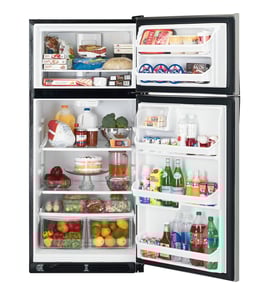


What is the upper part of a fridge called?
On the Kenmore 10679202990 top-mount refrigerator, the upper compartment is the freezer compartment (often just called the freezer). It’s the section designed to keep food frozen and it also supplies cold air that helps cool the fresh food section.
What you’ll find in the upper (freezer) compartment
Common freezer-area components and features include:
- Freezer shelf (often adjustable or half-width)
- Pull-out freezer floor or lower freezer bin area (varies by configuration)
- Air vents that move cold air down into the refrigerator section
- Ice maker (if equipped)
For the exact feature layout and names used for your model, use the 10679202990 owner's manual.
Why the freezer name matters for troubleshooting
Knowing the correct compartment name helps when you’re diagnosing cooling problems, frost buildup, or airflow issues. In top-mount designs like the Kenmore 10679202990, cold air typically enters and circulates through the freezer first, then feeds the refrigerator section through vents.
Airflow tips (important on top-mount refrigerators)
- Keep packages from blocking freezer vents.
- Avoid overpacking the freezer; airflow needs open space.
- If odors form in one section, they can transfer to the other; wrap foods tightly.
Quick reference: common terms you’ll see
| What people call it | What it usually means | Where it is |
|---|---|---|
| Upper part of the fridge | Freezer compartment | Top section |
| Fridge section | Fresh food compartment | Bottom section |
| Freezer vent | Air outlet/return for circulation | Freezer walls/floor area |
Related part (if your freezer makes ice)
If your freezer has an automatic ice maker, the assembly that produces ice is the ice maker assembly - refrigerator ice maker by whirlpool 4317943.
Last updated: January 2026
What is the average lifespan of a Kenmore Elite refrigerator?
Most Kenmore Elite refrigerators last 10 to 15 years. With consistent maintenance (cleaning, good door sealing, and proper temperatures), many units reach the upper end of that range; major sealed-system failures like a compressor issue often drive replacement decisions.
Typical lifespan and what affects it
A refrigerator’s life is usually determined by how hard the sealed refrigeration system works and how well the cabinet stays sealed.
- Condenser coil cleanliness (dirty coils raise compressor workload)
- Door gasket condition (air leaks cause longer run times and frost)
- Room temperature and ventilation around the cabinet
- Ice maker and water system leaks (can cause icing and airflow problems)
- Power interruptions and surges (hard on start components)
What “average” looks like in practice
| Age of refrigerator | What’s common | What we recommend |
|---|---|---|
| 0 to 5 years | Minor adjustments, occasional ice maker issues | Keep temps stable; follow cleaning guidance in the 10679202990 owner's manual |
| 6 to 10 years | Wear items show up (gaskets, switches, valves) | Fix air leaks early; address water leaks quickly |
| 10 to 15 years | Higher chance of major cooling failures | Compare repair cost vs. replacement value |
| 15+ years | Some units keep going with good care | Expect more frequent repairs |
Maintenance that extends life (high impact)
We recommend these habits for Kenmore top-mount models like 10679202990:
- Clean condenser coils at least every 6 to 12 months
- Keep freezer and fresh food vents unblocked for proper airflow
- Confirm temps: 0°F freezer, 37°F to 40°F refrigerator
- Inspect and clean door gaskets; replace if torn or not sealing
- If equipped with an ice maker, keep the fill area clear of ice buildup
Why it matters
A refrigerator that runs longer to maintain temperature uses more energy and puts extra stress on the compressor and start components. Simple airflow and sealing fixes often prevent the “won’t cool” failure that ends a refrigerator’s service life.
Last updated: January 2026
How much top clearance does a fridge need?
For the Kenmore 10679202990 top-mount refrigerator, we recommend 1/2 inch of clearance at the top to maintain proper ventilation and steady cooling performance. This spacing helps the condenser heat dissipate so the refrigerator can run efficiently.
Recommended clearances for this model
These clearances come from the ventilation guidance in the 10679202990 owner's manual.
- Top: 1/2 in. (1.25 cm)
- Each side: 1/2 in. (1.25 cm)
- Next to a fixed wall: 2 in. (5.08 cm) minimum on the hinge side (to allow the door to swing open)
- Back: Allow extra space if you have an ice maker so the water line can connect without kinking
Quick clearance table
| Location | Minimum clearance | Notes |
|---|---|---|
| Top | 1/2 in. | Helps ventilation and cooling efficiency |
| Left side | 1/2 in. | Keep airflow around the cabinet |
| Right side | 1/2 in. | Keep airflow around the cabinet |
| Hinge side near a wall | 2 in. | Prevents door swing interference |
| Back | Extra if ice maker | Protects water line connections |
Why it matters
Top clearance is not just about fitting the refrigerator into a cutout; it is about air circulation. Too little space can trap heat, increase run time, and contribute to temperature swings in the fresh food and freezer sections.
Installation tips that prevent clearance problems
- Keep the refrigerator away from heat sources such as an oven or radiator.
- Avoid installing where temperatures drop below 55°F (13°C).
- Pull the refrigerator straight out when moving it to avoid floor damage.
- After positioning, level the cabinet so doors close properly.
Last updated: January 2026