Owner’s manual
 Error Codes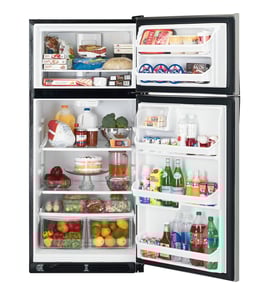



How to tell cubic feet of Kenmore refrigerator by model number?
For Kenmore model 10674932400, the model number alone usually does not state the exact cubic-foot capacity; the most reliable way is to look up the capacity in the 10674932400 owner's manual or estimate it by measuring the usable interior space and converting cubic inches to cubic feet.
Use this when you need a quick, practical estimate.
- Empty the refrigerator and remove bins/shelves that block measuring.
- Measure the refrigerator compartment interior: width, depth, height (in inches).
- Measure the freezer compartment interior the same way.
- Multiply each compartment’s measurements to get cubic inches.
- Add the two totals together.
- Divide by 1,728 (12 × 12 × 12) to convert to cubic feet.
- Cubic feet = (W × D × H in inches) ÷ 1,728
Kenmore model numbers help identify the product family and parts, but they are not a consistent “capacity code.” For many Kenmore refrigerators, the most dependable capacity source is the specification information in the manual.
| Method | What you get | Best for |
|---|---|---|
| Manual/spec lookup | Exact rated capacity | Buying, comparing, resale listings |
| Interior measurement | Close estimate of usable space | Planning storage, bins, organizers |
| Model-number pattern guesses | Rough guess only | Quick context, not decisions |
Capacity affects how you shop for organizers, plan food storage, and compare replacement options. Measuring also helps because “usable” space can differ from the rated cubic feet due to shelves, ice maker space, and air channels.
Last updated: January 2026
Is top mounted refrigerator better than bottom mounted?
A top-mount refrigerator like Kenmore 10674932400 is “better” when you want strong value, simple organization, and typically lower purchase and repair costs; a bottom-mount is “better” when you want fresh-food items at eye level and easier access to the refrigerator section.
| Feature | Top-mount (freezer on top) | Bottom-mount (freezer on bottom) |
|---|---|---|
| Everyday access | Freezer is easiest to reach | Refrigerator shelves are easiest to reach |
| Cost and complexity | Typically simpler design | Typically more complex features |
| Storage style | More basic, straightforward | Often more “fresh-food focused” |
| Best for | Budget, reliability, smaller kitchens | Frequent fridge use, less bending |
We recommend a top-mount layout when these priorities matter most:
- You use the freezer often (frozen meals, bulk storage)
- You want a simpler refrigerator with fewer features to maintain
- You prefer a lighter door load and straightforward shelving
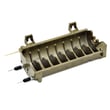
- You want easier service access for common items like the ice maker and door gaskets
For model-specific setup and care basics (clearances, cleaning, door handling), use the 10674932400 owner's manual.
A bottom-mount layout usually wins when:
- You access fresh food many times per day and want it at eye level
- You want wider refrigerator shelves and easier produce access
- You do not want to bend as much to reach the refrigerator section
The “best” style depends on what you reach for most. If your daily routine is mostly refrigerator items (milk, produce, leftovers), bottom-mount convenience can be a big quality-of-life upgrade. If you want a dependable, simpler layout with strong value, top-mount is often the practical pick.
Last updated: January 2026
What is the life expectancy of a top freezer refrigerator?
Most top-freezer (top-mount) refrigerators like Kenmore model 10674932400 typically last 10 to 15 years with normal household use. Consistent airflow, clean condenser coils, and tight door seals help you reach the upper end of that range; poor maintenance usually shortens it.
- Condenser coil cleanliness: Dust buildup makes the compressor run hotter and longer.
- Door gasket condition: Air leaks cause longer run times and moisture issues.
- Airflow inside the cabinet: Blocking vents can create temperature and moisture problems.
- Room conditions: Hot garages and tight enclosures increase workload.
- Ice maker and water system upkeep: Leaks or restricted flow can create avoidable failures.
Use these habits as your baseline, then follow any model-specific guidance in the 10674932400 owner's manual.
- Vacuum coils and the area around the base grille regularly.
- Keep food packages from blocking freezer and refrigerator vents.
- Clean and dry door gaskets; confirm the doors close squarely.
- Level the refrigerator so doors self-close and seal evenly.
- If equipped with an ice maker, shut off the water supply during long vacations.
| What you’re seeing | What it usually means | Typical next step |
|---|---|---|
| Warm temps, heavy frost, poor airflow | Defrost/airflow issue | Check vents, then diagnose defrost components |
| Water under/around unit | Drain or water supply issue | Inspect drain path and water line/valve |
| Loud fan noise | Fan blade/motor wear or ice contact | Inspect evaporator fan area |
| Runs constantly | Dirty coils, gasket leak, control setting, sealed system strain | Clean coils, check gaskets, verify settings |
A top-mount refrigerator is mechanically simpler than many other styles, so it often delivers a longer service life. Keeping airflow clear (as described in the manual) and reducing compressor run time are the two biggest drivers of longevity.
Last updated: January 2026