Owner’s manual
 Error Codes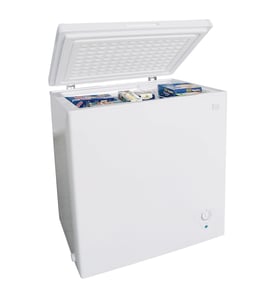



How to clean a Haier chest freezer?
To clean your Haier HFC9204ACW chest freezer, we recommend unplugging it first, washing the interior with a mild baking soda and warm water solution, then rinsing and drying completely before restoring power and resetting the temperature control.
Safe cleaning steps (HFC9204ACW)
- Turn the temperature control to OFF, then unplug the freezer.
- Remove food and baskets; keep food in a cooler if needed.
- Wash interior surfaces with a mix of warm water + baking soda (a few tablespoons per quart is a common ratio).
- Rinse with clean warm water, then dry with a soft cloth.
- Clean the exterior with a soft cloth and mild cleaner; avoid abrasive pads.
- Plug the freezer back in and set the control to the recommended setting; allow several hours to cool before reloading.
If you are cleaning because of odor
Odors usually come from spills, frost buildup, or unsealed food. After cleaning:
| Issue | What to do | Result |
|---|---|---|
| Food odors | Rewrap food tightly, discard questionable items | Prevents recurring smells |
| Frost buildup | Defrost when frost reaches about 1/4 inch | Better airflow and efficiency |
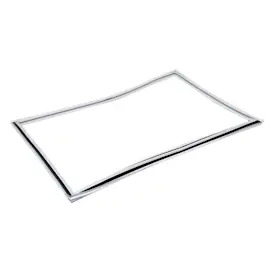
| Lid not sealing | Wipe the gasket and mating surface clean | Helps maintain 0°F storage |
Defrost first if there is heavy frost
If frost is thick, defrosting makes cleaning faster and prevents water from refreezing during wipe-down.
- Turn control OFF and unplug.
- Open the lid and let frost melt naturally (no mechanical devices).
- Drain meltwater using the drain plugs; wipe the interior dry.
For the drain plug replacement part used during defrosting, see drain plug WR01X29625.
Why it matters
A clean, dry interior helps the HFC9204ACW hold temperature more consistently (near 0°F at the recommended setting), reduces odors, and can lower energy use by keeping frost under control.
For model-specific operating and care details, follow the HFC9204ACW owner's manual.
Last updated: February 2026
How to drain a Haier chest freezer?
To drain a Haier HFC9204ACW chest freezer, we drain it during manual defrost: turn the temperature control to OFF, unplug the freezer, then remove the interior and exterior drain plugs so meltwater flows into a pan placed under the outer drain. See the HFC9204ACW owner's manual for the exact drain-plug locations and steps.
Step-by-step: draining during defrost
- Move food to a cooler or another freezer.
- Turn the temperature control to OFF and unplug the power cord.
- Place a shallow pan or tray in front of the freezer under the outer drain plug.
- Unscrew and remove both drain plugs:
- Interior drain plug (inside the cabinet)
- Exterior drain plug (outside the cabinet)
- Let water drain into the pan; empty the pan as needed to prevent overflow.
- When defrosting is complete, wipe the interior dry and reinstall both drain plugs.
- Plug the freezer back in and reset the temperature control (the manual recommends starting at 4).
What to avoid (important safety and damage prevention)
- Do not use mechanical devices to speed defrosting.
- Do not use boiling water (it can damage the freezer).
- Do not puncture or scrape the liner (refrigerant tubing can be damaged).
- Do not use an extension cord; plug into a grounded 3-prong outlet.
Quick checklist: before you restart
| Item | What we look for | What to do |
|---|---|---|
| Drain plugs | Both installed snugly | Reinstall interior and exterior plugs |
| Interior | Dry, no standing water | Wipe with a soft cloth |
| Temperature control | Set correctly | Start at 4, then adjust after 24 hours |
| Power | Proper outlet | Use a grounded 3-prong outlet |
Why it matters
Draining through the plugs keeps meltwater controlled, helps prevent floor leaks, and lets the freezer return to normal cooling faster after defrosting.
Last updated: February 2026
What are the parts of a chest freezer?
A Haier HFC9204ACW chest freezer is built around a sealed refrigeration system (compressor, condenser, capillary tube, evaporator) plus user controls and cabinet parts like the lid, hinges, and baskets. These parts work together to pull heat out of the freezer and hold food near 0°F.
Main chest freezer parts (what they do)
- Compressor: pumps refrigerant through the system and drives cooling.
- Condenser: releases heat to the room as refrigerant condenses.
- Capillary tube (metering device): controls refrigerant flow into the evaporator.
- Evaporator: absorbs heat from inside the cabinet to create freezing temperatures.
- Temperature control: sets how cold the freezer runs (the manual recommends starting at setting 4).
- Cabinet and lid system: lid, gasket, hinges, and liner keep warm air out.
- Storage components: baskets help organize food.
Common user-serviceable parts you may replace
These are typical wear or damage items on the HFC9204ACW:
- Control panel knob WR01X29617 (sets temperature; can crack or strip)
- Drain plug WR01X29625 (used during manual defrost; can get lost)
- Refrigerator basket WR71X29613 (organization; can bend or break)
- Haier door hinge WR13X29621 and Haier door hinge screw WR01X29623 (lid alignment and closing)
- Casters for moving the freezer, including Haier castor w/brakes WR01X29615 (locks should be on the front)
Quick reference: sealed system vs. cabinet parts
| Group | Examples | Typical symptoms when there’s a problem |
|---|---|---|
| Sealed refrigeration system | compressor, condenser, capillary tube, evaporator | not freezing, runs constantly, warm interior |
| Controls and electrical | temperature control, indicator light, power cord | won’t start, inconsistent temps, lights not behaving |
| Cabinet and hardware | lid, gasket, hinges, baskets, drain plug, casters | frost buildup, lid won’t seal, water during defrost, hard to move |
Why it matters
Knowing which parts are “sealed system” versus “cabinet and hardware” helps you plan the right repair. Hardware items (like hinges, drain plug, baskets, and casters) are straightforward to replace, while sealed-system issues typically require a technician.
Where to confirm locations and settings
For diagrams, parts and features, and the recommended starting temperature setting, use the HFC9204ACW owner’s manual.
Last updated: February 2026
What can cause a chest freezer to stop working?
A Haier HFC9204ACW chest freezer can stop working because it is not getting power, the temperature control is set to OFF, or the compressor is in its normal off-cycle. We recommend following the step-by-step checks in the HFC9204ACW owner's manual before replacing parts.
Quick checks (most common causes)
- Confirm the freezer is plugged into a grounded 3-prong outlet (no adapter, no extension cord).
- Check the home breaker or fuse; reset or replace if needed.
- Make sure the temperature control is not set to OFF; set it between 1 and 7.
- If you just adjusted settings or restored power, wait 30 to 40 minutes for the compressor to restart.
- Verify the lid is fully closed and not blocked by packages.
- If the room is outside the recommended range (55°F to 110°F), cooling performance can be affected.
What to do next (in order)
- Set the control correctly: Turn the dial to 4 (recommended) and allow several hours to cool before adding food.
- Watch the alarm light: The red indicator can stay on after plugging in until the interior temperature drops (this is normal during initial pull-down).
- Check airflow and placement: Keep recommended clearances (typically 4 inches around the unit) and do not block the top.
- Rule out a door-seal issue: If the lid is ajar or the gasket is dirty, the freezer may struggle and seem like it is not working.
Symptoms and likely causes
| What you notice | Likely cause | What we recommend |
|---|---|---|
| No lights, no sound | Power issue | Outlet, breaker/fuse, cord connection checks |
| Runs sometimes, then stops | Normal compressor cycling | Wait 30 to 40 minutes, then recheck temperature |
| Runs a lot but not cold enough | Lid not sealing, frequent openings, warm food load | Close lid fully, limit openings, allow time to stabilize |
| Not cooling after setup | Control set wrong or not enough time | Set to 4; wait several hours, then verify |
Why it matters
A “dead” freezer is often a simple power or control setting issue. Confirming power, control position, and normal compressor cycling prevents unnecessary part replacement and helps protect stored food.
Last updated: February 2026
Why is my chest freezer leaking water from the bottom?
Water under a Haier HFC9204ACW chest freezer is usually defrost meltwater that is not being drained correctly, or condensation from warm air leaking past the lid seal. During manual defrost, water can collect at the bottom and should exit through the interior and exterior drain plugs as described in the HFC9204ACW owner's manual.
What to check first (most common causes)
- Drain plugs not fully installed after defrosting; even a small gap can let water seep out.
- Drain plugs opened without a pan or the pan overflowed during defrost.
- Lid not sealing (gasket dirty, warped lid, or freezer not level), causing heavy condensation that drips down.
- Recent defrosting; residual water can remain in the cabinet and leak later if the drain area is not dried.
Quick fix: verify the drain and dry the cabinet
- Turn the temperature control to OFF and unplug the freezer.
- Check that both the interior and exterior drain plugs are present, seated, and snug.
- Wipe any standing water from the bottom of the freezer.
- If you are defrosting, place a tray under the outer drain and monitor it so it does not overflow.
Helpful parts for drainage and organization
| Symptom | What to inspect | Related part (if needed) |
|---|---|---|
| Water appears after defrost | Missing or damaged drain plug | Drain plug WR01X29625 |
| Water seems like condensation | Lid seal and lid alignment | Clean and recheck seal |
| Water sloshing inside | Water pooled at bottom | Dry interior, confirm plugs |
Why it matters
Water leaks can lead to slippery floors, cabinet corrosion, and temperature swings if warm air is entering. Fixing the drain-plug seal and lid sealing keeps the freezer efficient and helps protect stored food.
If it still leaks
- Confirm the freezer is on a solid, level surface.
- Reduce lid-open time and check for frost buildup around the lid area.
- Follow the manual defrost and draining steps in the HFC9204ACW owner's manual.
Last updated: February 2026