Owner’s manual
 Error Codes


What size is LFX25991ST?
The LG LFX25991ST is a 36-inch-wide French door, bottom-freezer refrigerator. For exact cabinet and door-swing measurements (width, depth, height, and clearance needs), we recommend confirming the specifications in the LFX25991ST owner's manual.
Typical dimensions you should plan for
Most 36-inch LG French door refrigerators of this style fall into these common ranges (your exact numbers can vary by configuration and door position):
- Width: about 35 3/4 in. to 36 in.
- Height: about 69 in. to 71 in.
- Depth (case): about 34 in. to 36 1/2 in.
- Depth with doors open: often 47 in. to 50 in.
- Water pressure (if connected): typically 21 to 121 PSI
How to measure for fit (so it installs cleanly)
Use a tape measure and check these before delivery or moving the unit:
- Opening width at the front and back (some alcoves taper)
- Height to the lowest cabinet or trim above the refrigerator
- Depth to the wall plus clearance for the water line
- Door swing clearance (including handles)
- Pathway clearance (doorways, turns, and stairs)
Quick planning table
| What you are checking | What to measure | Why it matters |
|---|---|---|
| Cabinet opening | Width, height, depth | Prevents binding and vibration |
| Door swing | Depth with doors open | Ensures drawers and doors fully open |
| Water hookup | Supply location and pressure | Helps avoid leaks and low ice production |
Why it matters
A refrigerator that is “36-inch” class can still vary in depth and door-open clearance. Confirming the exact specs helps prevent installation issues, poor door alignment, and restricted airflow that can affect cooling performance.
Last updated: January 2026
What is the most common problem with the LG refrigerator?
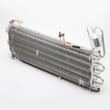
For the LG LFX25991ST, the most common customer-reported issue is a cooling problem (refrigerator or freezer not staying cold). In this model family, cooling complaints are often tied to the sealed system (compressor, condenser, evaporator) or airflow/defrost components that can restrict cold-air circulation.
Quick checks we recommend first
- Confirm the doors close and seal fully; warm air leaks can mimic a cooling failure.
- Make sure vents inside the fresh food section are not blocked by food packages.
- If the unit is in a hot, humid area or the doors are opened often, expect more condensation and temperature swings.
- Listen for fan noise; a failed evaporator fan can cause warm temperatures even if the compressor runs.
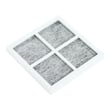
- If odors are present, set the air filter to MAX; if odor remains after 24 hours, replace the filter.
Parts that commonly relate to cooling complaints
If basic checks do not help, these model-matched parts are often involved in “not cooling” symptoms:
| Symptom | Common area to inspect | Example model-matched part |
|---|---|---|
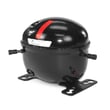
| Warm refrigerator and/or freezer | Sealed system cooling | Refrigerator compressor TCA38091801 |
| Poor heat release, long run times | Condenser area | Refrigerator condenser coil ACG73645004 |
| Frost buildup, warming over time | Defrost sensing/control | Refrigerator defrost sensor assembly 6615JB2005R |
When to use built-in diagnostics
This LG refrigerator supports Smart Diagnosis through LG support. We follow the steps in the LFX25991ST owner's manual to lock the display and transmit data when instructed by the service agent.
Why it matters
Cooling problems can lead to food spoilage and higher energy use. Catching airflow restrictions, door-seal issues, or defrost problems early can prevent the sealed system from running excessively.
Last updated: January 2026
Why is my LG refrigerator leaking from the bottom?
On the LG LFX25991ST, a leak that shows up at the bottom is most often caused by defrost water not draining correctly (a clogged or frozen defrost drain) or by meltwater/condensation overflowing the drain pan. Clearing the drain path and checking door sealing usually stops the leak.
Quick checks we recommend first
- Look for water under the crisper drawers (often points to a defrost drain issue).
- Check the freezer floor for a thin sheet of ice (common when the drain is frozen).
- Inspect the door gaskets for gaps, tears, or areas not sealing.
- Confirm the refrigerator is level; a forward tilt can encourage water to spill out.
- If the leak is near the dispenser area, check for ice melt or a slow drip from the water line.
Step-by-step: clear a clogged or frozen defrost drain
- Unplug the refrigerator.
- Remove food and bins as needed to access the rear interior panel (freezer section is the most common location for the drain trough).
- Melt any visible ice in the drain trough using warm water (not boiling) and towels.
- Flush the drain hole with warm water until it flows freely to the drain pan.
- Reassemble and restore power.
For model-specific access points and panel removal guidance, use the LFX25991ST manual.
Parts that can be involved (when the leak is not just a clog)
If clearing the drain helps only temporarily, these related items are common suspects:
- Cracked or mispositioned drain pan (water spills before it evaporates)
- Door not sealing (excess frost leads to heavy defrost water)
- Ice maker area warming when turned off (ice melts and can drip)
- Internal water line seep (slow leak that tracks to the bottom)
Helpful part examples for this model
| Symptom | What to check | Example part on this model |
|---|---|---|
| Water appears after heavy frost | Defrost sensing and defrost performance | Refrigerator defrost sensor assembly 6615JB2005R |
| Leak seems tied to dispenser use | Water line routing and connections | Refrigerator water tubing MJU62070602 |
| Condensation and sweating near doors | Door sealing and alignment | Refrigerator door gasket, right ADX72930461 |
Why it matters
A recurring bottom leak can lead to ice buildup, poor cooling airflow, and water damage to flooring. Fixing the drain and sealing issues early also helps the compressor and evaporator system run more efficiently.
Last updated: January 2026