Owner’s manual
 Error Codes


How can I tell how many cubic feet my Whirlpool refrigerator is?
For your Whirlpool GSF26C4EXS03 side-by-side refrigerator, the most accurate way to confirm cubic feet (total capacity) is to look up the model’s specifications in the GSF26C4EXS03 owner's manual. If you need a quick estimate, you can calculate interior volume from measurements.
Best ways to find cubic feet (most accurate first)
- Check the specs in the manual for your exact model (best match to how the refrigerator is rated).
- Look for a rating label inside the fresh food section (often on a side wall or ceiling area); some units list capacity there.
- Estimate by measuring the interior (useful if labels are missing or unreadable).
- Avoid guessing from the model number; model numbers do not reliably encode capacity.
How to estimate cubic feet by measuring
- Measure the usable interior of the fresh food section (in inches): height × width × depth.
- Do the same for the freezer section.
- Add both volumes together.
- Convert cubic inches to cubic feet:
- Cubic feet = (cubic inches) ÷ 1,728
Quick conversion table
| What you have | Convert to cubic feet |
|---|---|
| Total cubic inches | Divide by 1,728 |
| One compartment only | Measure both sections, then add |
Why the manual number can differ from your measurement
Manufacturer “cubic feet” is typically based on standardized methods and may not match tape-measure results because shelves, bins, air channels, and liners reduce usable space.
Related maintenance that helps performance
If you are checking capacity because storage feels tight due to poor cooling or ice buildup, these checks often help:
- Confirm doors seal fully and close on their own
- Keep vents clear (do not block air returns)
- Replace the water filter on schedule if water flow is slow
- Address frost buildup that reduces freezer space
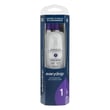
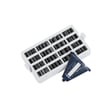
Helpful parts for this model include the refrigerator water filter EDR1RXD1 and refrigerator air filter W10311524.
Last updated: February 2026
What are the most reliable side-by-side refrigerators?
The most reliable side-by-side refrigerators are typically the simplest models with fewer dispenser and ice maker features, solid temperature control, and easy-to-service parts. For Whirlpool owners, keeping your GSF26C4EXS03 maintained (filters, door seals, airflow) is one of the best ways to maximize long-term reliability; see the GSF26C4EXS03 owner's manual for your model’s care and operating guidance.
What “reliable” usually means for side-by-side fridges
When we talk about reliability, we focus on the systems that most often cause service calls:
- Consistent cooling in both compartments (no warm freezer or warm fresh food section)
- Fewer ice and water dispenser issues (clogs, leaks, slow fill)
- Good door sealing (prevents frost, sweating, and temperature swings)
- Stable electronics (controls and sensors that do not drift)
- Easy-to-maintain filtration and airflow
What to look for when shopping (or comparing models)
Side-by-side refrigerators tend to last longer when they have fewer “extras” and when routine maintenance is easy.
- Choose simpler dispenser and ice maker designs when possible
- Prioritize models with readily available filters and common service parts
- Check that the doors close and seal easily (no sagging, no gaps)
- Avoid chronic frost buildup signs (often points to airflow or defrost issues)
- Plan on regular filter changes to protect valves and ice maker fill circuits
Reliability drivers you can control on your Whirlpool GSF26C4EXS03
Even a well-built refrigerator becomes “unreliable” when airflow and water systems are neglected.
| Maintenance item | What it prevents | Typical interval |
|---|---|---|
| Replace water filter | Slow water, poor ice production, valve strain | About every 6 months |
| Replace air filter | Odors, stale air circulation | About every 6 months |
| Clean door gaskets and confirm tight seal | Frost, sweating, temperature swings | Monthly quick check |
| Keep vents clear and avoid overpacking | Warm spots, long run times | Ongoing |
For this model, common maintenance parts include the refrigerator water filter EDR1RXD1 and the refrigerator air filter W10311524.
Why it matters
Most “unreliable fridge” complaints trace back to cooling airflow, defrost performance, or the ice and water system. Staying ahead of filters, seals, and vent blockage reduces strain on components like the water inlet valve, ice maker assembly, thermistor, and electronic control.
Last updated: February 2026
Does anyone make a 33 inch wide refrigerator?
Yes. Multiple brands make 33-inch wide refrigerators (including side-by-side, French door, and top-freezer styles). In real kitchens, the cabinet opening and required airflow matter as much as the listed width; many “33-inch” models measure slightly under 33 inches to allow clearance.
How to measure your space (so a 33-inch model actually fits)
Use these checks before you shop or replace a unit:
- Measure the cabinet opening width in at least 3 spots (top, middle, bottom).
- Confirm you have side clearance for door swing and ventilation (check the owner's manual for your current model’s requirements).
- Measure height to the lowest cabinet or soffit, including hinge clearance.
- Measure depth from the back wall to the front of counters, and note if you want counter-depth or full-depth.
- Plan a path for delivery (doorways, turns, and stairs).
What “33-inch wide” usually means
Manufacturers often list a width class (33-inch) rather than an exact cabinet-to-cabinet measurement.
| Spec you’ll see | What it affects | Typical reality |
|---|---|---|
| Advertised width (33-inch class) | Fit in the opening | Often slightly under 33 inches |
| Required clearance | Airflow, noise, efficiency | Varies by model |
| Door swing clearance | Can drawers open fully? | Often needs extra space |
| Depth (counter vs full) | How far it sticks out | Big visual difference |
If you are replacing Whirlpool GSF26C4EXS03
Your Whirlpool GSF26C4EXS03 is a side-by-side refrigerator; when replacing it with a 33-inch wide model, match these functional needs first:
- Ice maker and water dispenser features (if you use them)
- Water line location and access
- Electrical outlet location
- Door swing direction and handle clearance
- Interior capacity and shelf layout
Why it matters
A refrigerator that is “33 inches wide” on paper can still bind in the opening, rub cabinets, or run hotter if it cannot breathe. Measuring for clearance prevents return hassles and helps the new unit cool efficiently.
Last updated: February 2026
What is the biggest problem in a Whirlpool refrigerator?
The biggest problem we see in Whirlpool refrigerators like model GSF26C4EXS03 is cooling trouble (warm fresh food section, soft ice, or temperature swings). The most common root causes are restricted airflow from dirty condenser coils, a failing evaporator fan system, or a defrost problem that lets frost block the evaporator.
Most common “big” problems (and what they look like)
- Not cooling enough: food spoils, freezer struggles to hold 0°F
- Freezer OK but refrigerator warm: weak airflow from the freezer to fresh food
- Ice maker or dispenser issues: no ice, small cubes, slow water flow
- Loud or new noises: buzzing, clicking, or a fan rubbing sound
- Water leaks or puddles: often tied to a drain issue or water supply problem
Quick checks we recommend first (fast, high-impact)
- Confirm temperatures: set freezer near 0°F and refrigerator near 37°F.
- Clean condenser coils (unplug first): dust buildup can cause constant running and poor cooling.
- Check door sealing: a poor seal causes frost, moisture, and long run times.
- Listen for the evaporator fan: you should typically hear a steady fan sound when the compressor is running.
- Look for frost buildup on the freezer back wall: heavy frost points to a defrost system issue.
Common causes and likely parts (GSF26C4EXS03)
| Symptom | Most likely area | Parts that often relate |
|---|---|---|
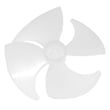
| Refrigerator warm, freezer cold | Airflow/evaporator fan | Evaporator motor 4389144, refrigerator evaporator fan blade WP2169142 |
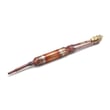
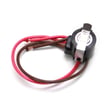
| Heavy frost on freezer back wall | Defrost system | Refrigerator defrost bi-metal WPW10225581, refrigerator heater WPW10495967 |
| No water or slow water at dispenser | Water supply/valve/filter | Refrigerator water inlet valve WPW10238100, refrigerator water filter EDR1RXD1 |
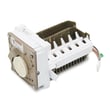
| Ice maker not making ice | Ice maker/water supply | Refrigerator ice maker assembly WPW10251076 |
Why it matters
Cooling and airflow problems can snowball quickly: the compressor runs longer, temperatures drift, and frost or heat load increases. Catching the issue early (coils, airflow, defrost) prevents food loss and reduces strain on major components like the compressor and electronic control.
Helpful model-specific resources
- Use the owner's manual for temperature settings, control features, and basic troubleshooting steps.
Last updated: February 2026