Installation guide
 Owner’s manual
 Error Codes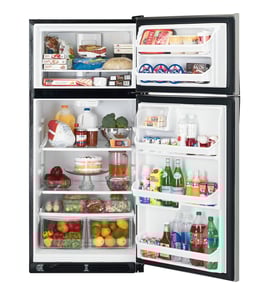



What is the upper part of a fridge called?
On the Frigidaire LFHT2117LB7 top-mount refrigerator, the upper section is the freezer compartment. It’s the coldest area of the appliance and is designed to keep foods frozen; it may also house the ice maker on models equipped for ice.
- Freezer shelves or a wire rack for frozen food storage
- An ice tray or optional ice maker area (if your unit is set up for it)
- A freezer door gasket that seals cold air inside
- Airflow vents that circulate cold air between freezer and fresh food sections
| Compartment | Typical purpose | Typical temperature setting |
|---|---|---|
| Freezer (upper on LFHT2117LB7) | Long-term frozen storage, ice production | About 0°F |
| Fresh food (lower) | Everyday refrigerated foods | About 37°F |
Knowing the correct compartment name helps when you’re looking up parts, troubleshooting cooling issues, or following setup steps like leveling and control adjustments in the LFHT2117LB7 owner's manual. For example, airflow problems in the freezer can affect temperatures in both sections.
From the installation and use guidance for this refrigerator:
- Keep required clearances for airflow (sides/top and back) so the freezer can cool properly.
- Level the cabinet so doors close and seal correctly; poor sealing can cause frost and warm temps.
- After changing temperature controls, wait about 24 hours before making more adjustments.
If you’re seeing a temperature display or diagnostic issue, use the Frigidaire refrigerator error codes reference to match the code to the freezer or fresh food system involved.
Last updated: January 2026
What are the disadvantages of a top mount fridge?
Top-mount refrigerators like the Frigidaire LFHT2117LB7 are reliable and space-efficient, but the main disadvantages are less convenient fresh-food access (you bend more), fewer premium organization features, and fewer built-in dispenser options compared with many bottom-freezer styles. See the LFHT2117LB7 owner's manual for model-specific features and setup details.
- Fresh-food section sits lower, so you bend more to reach everyday items.
- Freezer is at eye level, which is convenient for frozen foods but not for produce and drinks.
- Organization can be simpler, with fewer slide-out pantry drawers and wide deli zones than many bottom-mount designs.
- Less “premium feature” space, since the freezer compartment often takes the top real estate.
- Dispenser options are less common on many top-mount models (water and ice features vary by model).
| Feature | Top-mount (LFHT2117LB7 style) | Bottom-freezer style |
|---|---|---|
| Fresh-food access | Lower, more bending | Higher, easier daily access |
| Freezer access | Higher, easier reach | Lower, more bending |
| Storage layout | Often simpler | Often more flexible |
| Typical cost | Often lower | Often higher |
A top-mount feels “worse” when doors do not close smoothly or the cabinet is not leveled. During installation, we recommend:
- Keep clearances around the cabinet for airflow (commonly 3/8 inch at sides/top and 1 inch at the back).
- Level the refrigerator side-to-side and tilt it slightly back so doors close freely.
- Confirm door seals fully on all sides.
- Do not block the toe grille, since airflow matters for cooling performance.
These steps are outlined in the LFHT2117LB7 installation guide.
Choosing a refrigerator style is mostly about ergonomics and how you store food. If you access fresh foods far more than frozen foods, a bottom-freezer layout usually feels more convenient, even when cooling performance is similar.
Last updated: January 2026
Are top mount or bottom mount fridges better?
Top-mount and bottom-mount refrigerators are both good choices; the “better” option depends on how you use your kitchen. For a Frigidaire top-mount like model LFHT2117LB7, you typically get a simpler layout and often lower operating cost, while a bottom-mount usually puts fresh food at eye level for easier daily access.
| Feature | Top-mount (freezer on top) | Bottom-mount (freezer on bottom) |
|---|---|---|
| Fresh food access | You bend more often | More eye-level access |
| Freezer access | Easier to reach | More bending for freezer |
| Energy use (typical) | Often lower | Often slightly higher |
| Repair complexity | Often simpler | Often more features to service |
| Price (typical) | Often lower | Often higher |
- You want a straightforward, reliable refrigerator layout with fewer “extras.”
- You use the freezer frequently and want it at a comfortable height.
- You are trying to keep purchase price and long-term operating cost down.
- You have a tighter installation space and want a simpler cabinet footprint.
- You use fresh food far more than frozen food and want it at eye level.
- You prefer wider refrigerator shelves and easier access to produce drawers.
- You do a lot of meal prep and want less bending for everyday items.
Even the “best” style will disappoint if it is installed poorly. For LFHT2117LB7, proper clearances and leveling help the doors close correctly and keep temperatures stable. We recommend following the setup steps in the LFHT2117LB7 owner’s manual and using the LFHT2117LB7 installation guide for clearances, leveling, and water supply guidance (especially if your unit has an ice maker).
- Leave about 3/8 inch clearance at the sides and top.
- Leave about 1 inch clearance at the back for airflow.
- Level the cabinet so doors close freely; the unit should slope slightly from front to back.
- If you are not connecting water right away, keep the ice maker turned OFF.
Last updated: January 2026
What is the most common problem with a Frigidaire refrigerator?
The most common problem we see on Frigidaire refrigerators like model LFHT2117LB7 is a cooling complaint: the fresh food section gets warm, the freezer temperature drifts, or temperatures swing. In many cases, the root cause is airflow or heat-transfer related (condenser coils, fans, or door sealing) rather than a sealed-system failure.
These are the issues that most often create everyday cooling problems in a top-mount refrigerator:
- Dirty condenser coils: heat cannot release efficiently, so cooling performance drops.
- Evaporator fan airflow problems: weak airflow can leave the refrigerator section warm.
- Door gasket leaks: warm, moist air leaks in and forces longer run times.
- Defrost system issues: frost buildup blocks airflow and reduces cooling.
- Power or control settings: controls set too warm, or the unit is in a defrost cycle.
For model-specific operating and safety guidance (including powering off correctly and basic troubleshooting), use the LFHT2117LB7 owner's manual.
Start with these simple steps before replacing anything:
- Confirm the refrigerator is plugged in firmly and the outlet has power.
- Verify temperature controls are not set to “0” or the warmest setting.
- Make sure vents inside the refrigerator and freezer are not blocked by food packages.
- Check doors close fully and the cabinet is level so doors seal consistently.
- Clean dust from condenser coils and the area around the condenser fan (if accessible).
| Symptom | Most likely direction | What to check next |
|---|---|---|
| Freezer cold, refrigerator warm | Airflow issue | Evaporator fan, frost buildup, blocked vents |
| Both sections warm | Heat transfer or power issue | Coils, condenser fan, control settings, power |
| Frost on back wall of freezer | Defrost problem | Defrost thermostat, timer, heater circuit |
| Runs a lot, moisture/condensation | Air leak | Door gaskets, door alignment |
If troubleshooting points to a specific failure, these parts are commonly related to cooling and defrost complaints:
- Refrigerator condenser fan motor 242018301 (moves air across condenser coils)
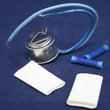
- Refrigerator defrost bi-metal thermostat 5303918202 (helps control defrost cycling)
- Refrigerator defrost timer 215846604 (controls defrost intervals on many designs)
Cooling problems usually get worse over time. Addressing airflow restrictions, dirty coils, or a weak fan early helps protect food, reduces energy use, and can prevent compressor strain.
Last updated: January 2026