Installation guide
 Owner’s manual
 Error Codes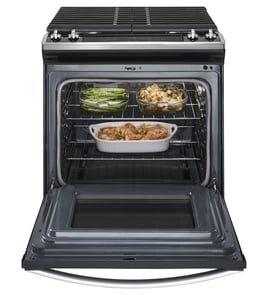








Why are gas stoves being discontinued?
Gas stoves are being limited or phased out in some areas mainly because burning gas can create indoor air pollutants (especially with poor ventilation) and because communities are pushing to reduce greenhouse-gas emissions by favoring electric alternatives. For your GE PGB918SEM1SS gas range, safe operation focuses on proper burner adjustment and good ventilation as described in the PGB918SEM1SS owner's manual.
What is driving the change
Several factors are influencing policies and consumer choices around gas cooking:
- Indoor air quality concerns from combustion byproducts (especially in tight homes)
- Climate goals that encourage electrification (moving from gas to electric)
- Local building-code changes that restrict new gas hookups in some jurisdictions
- Preference for induction and other electric cooking options
- Safety and performance expectations (vent hoods, make-up air, sealed burners)
What you can do if you keep a gas range
We recommend these practical steps to reduce exposure and keep performance consistent:
- Use a vent hood or ventilation fan when cooking; open a window when needed
- Watch flame color; a steady blue flame indicates better combustion than a yellow flame
- Avoid stove-top grills on sealed burners; they can cause incomplete combustion
- Do not use a wok support ring; use a flat-bottomed wok that sits on the grate
- Know where the gas shutoff valve is and how to turn it off
Quick guidance: common situations
| Situation | What to do | Why it helps |
|---|---|---|
| Yellow or lazy flames | Clean burner parts and confirm proper burner setup | Reduces incomplete combustion |
| Strong odors or irritation while cooking | Increase ventilation immediately | Lowers indoor pollutant buildup |
| Power outage | Light surface burners with a match if needed; do not try to operate the oven ignition | Oven gas flow is controlled by the igniter system |
| Oven will not heat | Check the igniter system; a weak igniter is a common cause | Restores reliable burner ignition |
Why it matters
Most “discontinuation” talk is about new construction and future product direction, not your current range. With correct burner operation, good ventilation, and safe installation practices, a gas range like the GE PGB918SEM1SS can be used safely and effectively.
Last updated: January 2026
What kind of gas is used for a stove?
Most stoves use either natural gas (from a home gas line) or liquid propane (LP) (from a tank). Your GE gas range PGB918SEM1SS is set up for natural gas from the factory; it can be converted for LP by changing the pressure regulator setting and burner orifices as described in the PGB918SEM1SS installation guide.
How to tell which gas your home uses
Check your fuel source before you connect or operate the range:
- Natural gas: supplied by a utility line (no propane tank on site)
- LP/propane: supplied by a tank (often outside the home)
- Range label and setup: the range must match the home fuel type
- Flame appearance: natural gas is typically soft blue; LP can show some yellow tipping
- Never run LP without conversion: operating without converting can cause high flames and unsafe combustion
Natural gas vs LP: quick comparison
| Fuel type | Typical supply | What the range needs |
|---|---|---|
| Natural gas | Utility gas line | Factory setup on PGB918SEM1SS |
| LP (propane) | Propane tank | LP conversion (regulator and orifices) |
What “LP conversion” means on this model
For the GE PGB918SEM1SS, LP conversion involves adjusting the pressure regulator and converting the burner orifices for propane use. The installation instructions also describe checking burner flame size and appearance after conversion.
Safety and setup reminders
- Shut off gas at the manual shut-off valve before any work
- Disconnect electrical power at the breaker/fuse box
- LP conversion is performed by a qualified installer or gas supplier
- After conversion, verify flame size and combustion quality visually
Why it matters
Using the wrong fuel setup can lead to poor burner performance, high flames, and incomplete combustion. Matching the range configuration to your home’s gas type helps cooking performance and safe operation.
Last updated: January 2026
Can you get a gas range with an electric oven?
Yes. You can buy a “dual fuel” range that uses a gas cooktop and an electric oven. Your GE PGB918SEM1SS is a gas range with electric ignition; it needs electrical power for the oven to light and run, even though the oven heat is gas.
How dual fuel differs from a gas range like GE PGB918SEM1SS
A dual fuel range combines gas burners on top with an electric bake/broil system in the oven. The GE PGB918SEM1SS uses gas for the oven burner, but it relies on electricity to ignite and control that gas burner.
What you can expect with GE PGB918SEM1SS:
- Cooktop burners spark-ignite with electricity.
- The oven and broiler cannot be lit during a power outage.
- If power fails while baking, the oven burner shuts off and will not relight until power is restored.
- Gas flow to the oven is controlled by the ignition system (gas will not flow unless the glow bar is hot).
Quick comparison
| Feature | Gas range with electric ignition (PGB918SEM1SS) | Dual fuel range |
|---|---|---|
| Cooktop | Gas | Gas |
| Oven heat source | Gas burner | Electric elements |
| Needs electricity | Yes (ignition/controls) | Yes (oven and controls) |
| During power outage | Oven will not operate | Oven will not operate |
Why it matters
If you want electric baking performance (electric elements, typically steadier dry heat), shop specifically for “dual fuel.” If your main concern is power outages, note that many modern gas ovens (including electric ignition designs) still will not bake without electricity.
Where to confirm your exact configuration
We recommend checking the fuel and ignition details in the PGB918SEM1SS owner’s manual and the electrical and gas requirements in the PGB918SEM1SS installation guide.
Last updated: January 2026
Why is my GE gas stove not igniting?
On the GE PGB918SEM1SS gas range, burners usually fail to ignite because the range has no power for the electric ignition, the controls are locked (LOC), the gas supply is off, or the burner parts and electrode area are dirty or misassembled. Check these basics first.
Quick checks (most common fixes)
- Confirm the range is plugged into a live, properly grounded outlet; electric ignition needs power.
- If you see LOC ON, turn off the Gas/Control Lockout (press and hold the lockout pad for about 3 seconds until LOC OFF).
- Make sure the gas supply valve is fully open.
- Remove burner caps and heads; clean and dry them, especially around the electrode area.
- Reinstall burner parts correctly so the cap sits flat and centered.
- If your home fuse blew or the circuit breaker tripped, reset it.
Cooktop vs. oven ignition (important difference)
Electric ignition affects both the cooktop and the oven, but the oven has an added safety behavior.
| What will not ignite | Common cause | What you will notice |
|---|---|---|
| Surface burners | Dirty/misaligned burner parts or no power | Clicking but no flame, or no clicking |
| Oven/broil burner | Power outage or weak igniter | No heat; oven will not light during an outage |
For oven and broil: during a power outage, the oven/broiler cannot be lit and gas will not flow unless the glow bar (igniter) is hot. See the PGB918SEM1SS owner’s manual.
When a part is likely needed
If the cooktop clicks but won’t light after cleaning and confirming gas and power, a failed ignition component is likely.
- For oven bake ignition problems (long preheat, no ignition), replace the oven igniter WB13K21.
- For broil ignition problems, the broil igniter circuit is often the issue; compare symptoms with the wiring diagram in the manual.
- If multiple surface burners stop sparking, the spark system (module or wiring) is a common culprit.
Why it matters
A burner that does not ignite can allow gas to accumulate briefly before lighting, which can cause delayed ignition and uneven cooking. Restoring reliable ignition improves safety and performance.
Last updated: January 2026